- Name the level first: refresh, evolution or full rebrand; most established firms need an evolution.
- Audit recognition with customers, not the board: marketers tend to misjudge how strong their own assets are.
- A rebrand is justified when the business has changed and the current brand stands in its way.
- Budget and plan the rollout across every Arabic and English touchpoint, not only the logo design.
A company that has traded for twenty years usually reaches the branding question from one of two directions. Either the brand looks dated next to newer competitors and the sales team is embarrassed by the company profile, or something in the business has genuinely changed: a merger, a new market, a new generation in charge. Both feel like a reason to “rebrand”. Only one of them usually is.
The difference matters because an established company has something a start-up does not: recognition. Customers, engineers, procurement officers and drivers on the road already know what you look like. A full rebrand spends that recognition to buy something new. A refresh keeps it and makes it work harder. This article gives you a way to decide which one you need before you brief anyone.
Refresh, evolution, rebrand: agree the words first
Boards often argue about branding because people are using the same word for different jobs. Use three levels:
| Level | What changes | What stays | Typical signal |
|---|---|---|---|
| Refresh | Typography, layouts, photography style, templates, the way the logo is applied; minor redrawing of the mark | Name, symbol, core colour, positioning | The brand is right but looks tired or inconsistent |
| Evolution | The logo is redrawn or simplified, the colour palette is extended, the Arabic and English lockups are rebuilt, messaging is updated | Name and the assets customers recognise most | The business has grown or broadened, but its reputation is an asset |
| Rebrand | Name and/or symbol, positioning, often the whole visual system | Usually only the legal entity and the people | The business itself has become something different |
Most established firms that say they need a rebrand actually need an evolution. Naming the level early stops a refresh project from drifting into a rename, and stops a real repositioning from being reduced to a new font.
The level also decides how much of the company the project reaches. Use this table to scope it before anyone is briefed:
| Level | Typical deliverables | Touchpoints affected | Who must be told |
|---|---|---|---|
| Refresh | New templates and layouts, photography direction, updated brand guidelines | Digital channels, presentations, company profile, proposals and other documents | Staff, and the agencies and suppliers who produce your material |
| Evolution | Redrawn logo, rebuilt Arabic and English lockups, extended palette, updated messaging and guidelines | Everything a refresh touches, plus signage, vehicles, uniforms and packaging, usually replaced in phases | Staff, key accounts, distributors and suppliers |
| Rebrand | New name and/or symbol, positioning, a complete visual and verbal system | Every surface, plus trademarks, commercial registrations, bank and tax records, and tender and vendor-registration files | All customers, distributors, suppliers, banks, the authorities you are registered with, and the market |
Step one: find out which assets carry recognition
Marketing research has a precise way of describing what you would be giving up. Kevin Lane Keller’s widely cited model of customer-based brand equity (Journal of Marketing, 1993) defines it as the difference that brand knowledge makes to how customers respond to your marketing, built on brand awareness and on strong, favourable and unique associations held in memory. A rebrand resets part of that knowledge. A refresh tries to keep it.
In practice, recognition is attached to specific assets, and each one can be judged on fame (how many buyers link it to your brand) and uniqueness (whether they link it to you rather than to competitors), the two measures in Jenni Romaniuk’s Building Distinctive Brand Assets (2018). Research reported by Marketing Week found marketers’ own judgements of their assets rarely accurate, so the full method is worth following: see how to run a distinctive brand assets audit.
So audit your assets with customers, not in the boardroom. For a typical Gulf or Egyptian company, the list looks like this:
- The name in both scripts. Many customers know a company by its Arabic name, others by an English acronym. Find out which one people actually say on the phone and write on purchase orders.
- The Arabic wordmark. In older companies the Arabic lettering is often a hand-drawn calligraphic form with more recognition than the English logo. It may need redrawing for screens, but replacing it outright can cost more recognition than anything else you change.
- The colour. A colour seen for years on trucks, site hoardings, uniforms and showroom façades is often the most famous asset a company has, even if nobody inside thinks of it as one.
- The symbol. Test whether people can identify the symbol without the name. If they cannot, it is a candidate for change; if they can, it is a candidate for careful redrawing.
- Everything else that repeats: a tagline, a vehicle livery layout, a shopfront format, even a short phone number.
A practical test we suggest: show twenty to thirty customers, distributors and suppliers each asset with the name removed and ask whose it is. It is not a formal research study, but it gives you evidence from outside the boardroom rather than internal opinion. Then sort the results:
| What the test shows | What to do with the asset |
|---|---|
| Customers recognise it and link it only to you | Keep it; refine the drawing and how it is applied |
| Customers recognise it but confuse it with others | Evolve it to make it more ownable |
| Customers link it to you but few notice it | Keep it and use it far more consistently |
| Nobody recognises it | Free to change at little cost |
Step two: test the business trigger
Recognised assets tell you what you would lose. The business trigger tells you whether losing it is worth it. A full rebrand is justified when the current brand describes a company that no longer exists, or stands in the way of the company you are becoming.
| Trigger | Usually points to | The question to ask |
|---|---|---|
| Merger or acquisition | Rebrand or a deliberate brand-architecture decision | Which name carries more trust with the buyers you want to keep, and can one absorb the other? |
| Entry into a new country | Often evolution, sometimes rebrand | Does the name read well, and is it available to register, in the new market? Does it signal the wrong country of origin or a narrow local scope? |
| New positioning (for example, from trader to manufacturer, or from contractor to solutions provider) | Evolution or rebrand | Does the current name or symbol actively contradict the new story? |
| New buyer (for example, moving from small retailers to government procurement or international partners) | Usually evolution | Does the brand look credible to this buyer, or does it simply look old? |
| Generational handover in a family business | Usually refresh or evolution | Is the change about the company, or about the new leadership wanting a visible mark of its own? |
| Trademark conflict or reputational damage | Rebrand | Can the problem be solved legally or operationally without abandoning the name? |
| The brand “looks old”, a competitor has a new logo, a new manager wants a change | Refresh | What has changed for the customer, rather than for us? |
If you sell through dealers, see rebranding a manufacturer without losing dealers.
On the new-market row, remember that trademark protection is obtained market by market: WIPO describes filing with each country’s trademark office or using the Madrid System to cover several territories. Check availability of any new name or symbol in every market you sell in before design work starts, not after.
What one long-established Gulf brand shows
A recent regional example shows how persistent a heritage name can be. In 2022 Etisalat Group changed its group identity to e&, positioning itself as a technology and investment group; its own announcement noted that the telecoms business continued under the name “etisalat by e&”. On 6 October 2026, in a filing to the Abu Dhabi Securities Exchange reported by The National and Khaleej Times, the company announced it would return to the Etisalat name as it marks 50 years since its formation, calling it “a name that reflects our heritage, our strategy and our ambition for the AI era”.
Whatever the strategic reasons, the lesson for a smaller company is simple: a name customers have used for decades is not easily replaced, and a hybrid (“old name by new group”) can let a business keep that recognition while signalling change. If a company of that scale kept its founding name at the customer-facing level and has now brought it back, a 25-year-old distributor should think hard before dropping its own.
The second lesson is cost. A brand lives on far more surfaces than a website. As one example of scale, Gulf News reported in 2018 on a Dubai Municipality project, described as worth Dh8 million, to update the logo across its vehicle fleet. Your fleet will be smaller, but the principle holds: every changed asset has to be reproduced on vehicles, signage, uniforms and packaging, documents, tender and vendor-registration files, and in the Arabic and English versions of each.
A five-question decision test
Answer these as a leadership team, using the customer audit from step one rather than personal taste.
- Has the business itself changed (ownership, scope, market or buyer), or only our view of the brand? If only our view, refresh.
- Does any current asset actively harm us with the buyer we want: a legal conflict, a misleading name, a reputation we need to leave behind? If no, a full rebrand is hard to justify.
- Which assets pass the recognition test? Each one that passes should be kept or evolved, not replaced, unless question 2 says otherwise.
- Can we fund the rollout, not just the design? List every touchpoint and estimate the work to change it. A rebrand applied to half the touchpoints looks like two companies.
- Can we explain the change to customers in one sentence? “We have merged and now offer X” is a reason. “We wanted a modern look” is a reason to refresh.
How the choice plays out in practice
Two of RX’s published projects illustrate two sides of the decision. For Egyptian Maritime Services, a freight, shipping and customs-clearance company, the business already had experience, operational depth and trust; what lagged was a visual presence that did not reflect it. The work refined the identity and built a consistent system around it, carried through the company profile, stationery, email signature and social presence. That is the typical situation for an established firm: the reputation is the asset, and the brand’s job is to catch up with it.
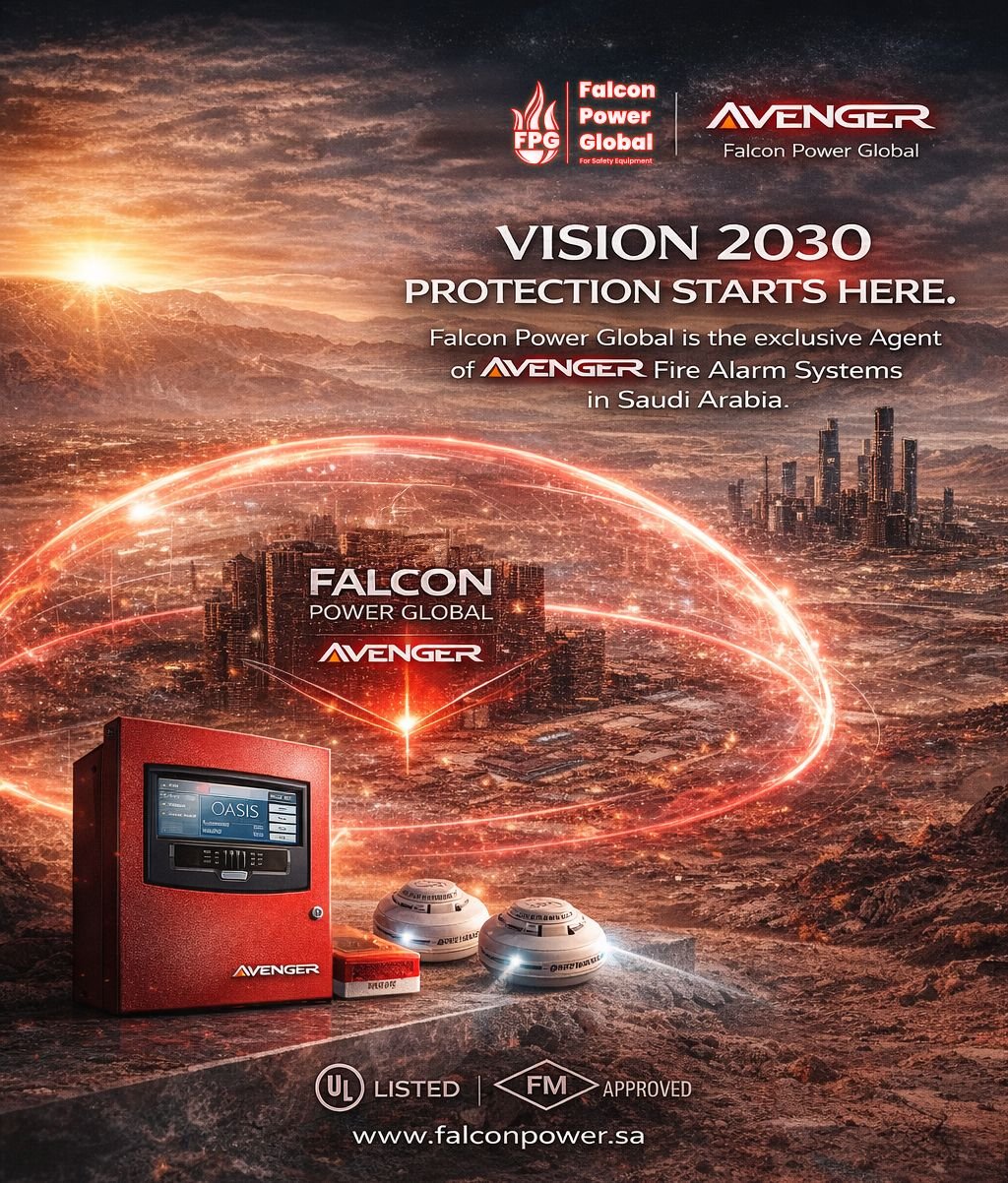
Falcon Power Global shows the evolution level in practice. It is a young company rather than a heritage brand, but the decision is the same: as the Saudi supplier grew into an authorised agent for international brands, RX evolved its launch identity into FPG, a flame that holds the company’s initials, with a clear path from the first identity so recognition was not lost.
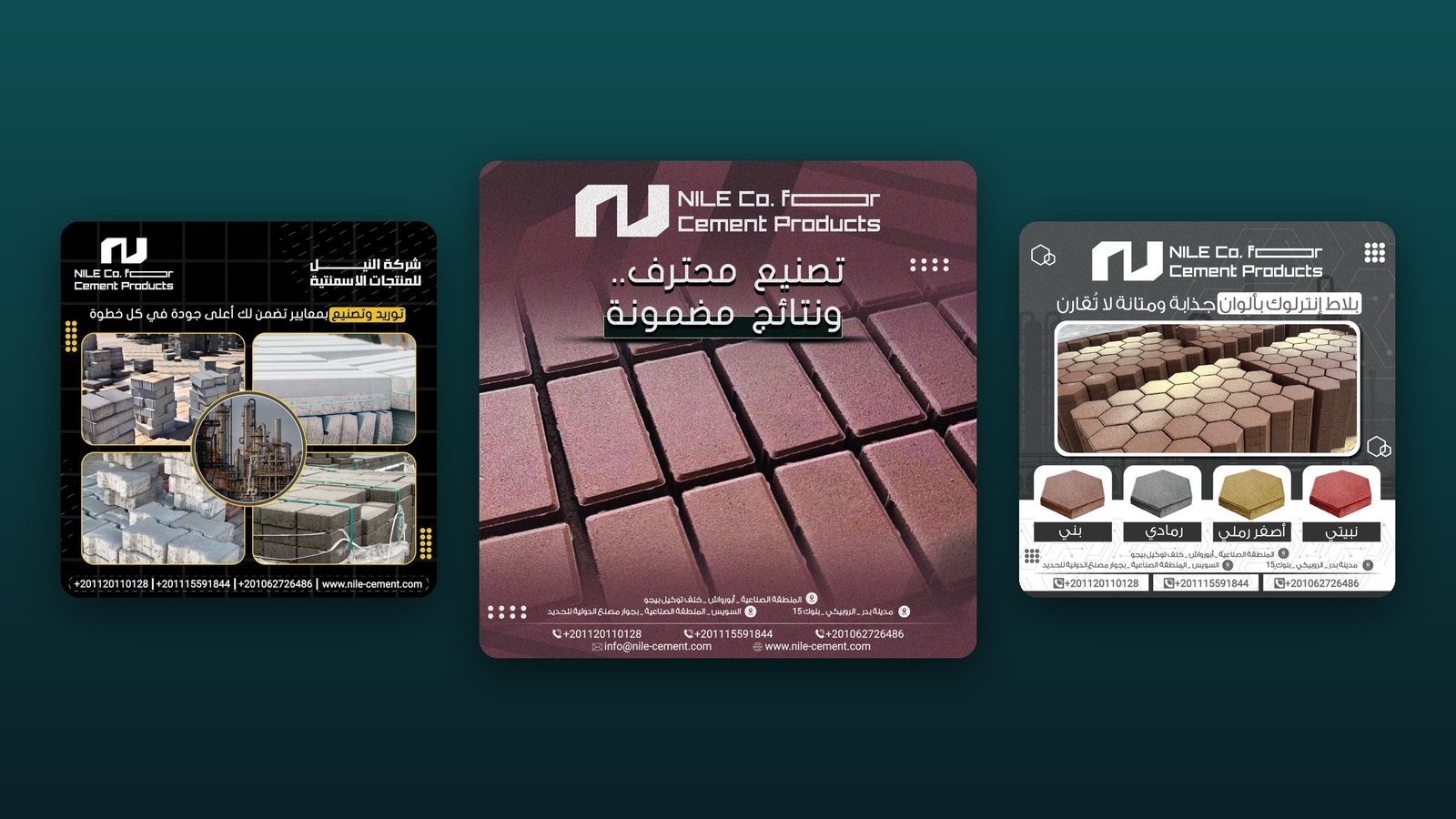
The Nile Cement project shows the other half of good brand management: deciding what never changes. Its feed uses rotating visual seasons to keep high-frequency content fresh, while the logo, footer and contact system stay fixed. Established companies can use the same logic. Decide which assets are permanent, and allow everything else to move.
Whichever level you choose, plan the rollout as carefully as the design. The order of work, from legal and registrations to physical surfaces, is set out in our rebrand rollout plan.
Write down your level and your one-sentence reason before you brief anyone. If the team cannot agree on either, that disagreement is the first thing to settle; RX’s brand identity work starts there, from what has changed in the business, not from the logo. A business diagnosis session is a lower-commitment way to test your answers to the five questions with people who have not been looking at your logo for twenty years.
Frequently asked questions
What is the difference between a rebrand and a brand refresh?
A refresh updates how the brand is expressed (typography, layouts, imagery, templates) while keeping the name, symbol, core colour and positioning. A rebrand changes the name or symbol and usually the positioning, because the business itself has become something different.
When should an established company rebrand rather than refresh?
When the business has genuinely changed, through a merger, a new market, a new positioning or a new type of buyer, and the existing name or symbol actively stands in the way, for example through a trademark conflict, a misleading name or a reputation the company needs to leave behind.
How do we know which brand assets to keep?
Test them with customers, distributors and suppliers: show each asset without the name and ask whose it is. Assets that are widely recognised and linked only to you should be kept or carefully evolved; assets nobody recognises can change at little cost.
Should we change our Arabic logo when we modernise the English one?
Design the two together. Older Arabic wordmarks often carry more recognition than the English logo, so redraw them for clarity on screens and signage rather than replacing them, unless the customer test shows they are not recognised.
Is a new logo enough to signal that the company has changed?
Rarely. Customers notice change through what they experience: what you offer, who you serve and how consistently the brand appears. If you cannot explain the change in one sentence, a refresh is usually the more honest choice.
- Journal of Marketing (SAGE), Conceptualizing, Measuring, and Managing Customer-Based Brand Equity (Kevin Lane Keller) (1993-01-01).
- Oxford University Press Australia, Building Distinctive Brand Assets (Jenni Romaniuk) (2018-03-16).
- Marketing Week, Marketers' judgement of brand asset strength 'rarely accurate', study finds (Journal of Brand Management study, Brus, Hartnett, Faulkner and Driesener).
- e&, Etisalat now rebranded as e& at the group level (2022-11-04).
- The National, UAE's e& revives original Etisalat branding as it focuses on AI growth (2026-10-06).
- Khaleej Times, UAE's Etisalat marks 50 years, returns to founding brand name (2026-10-06).
- Gulf News, Dh8m project to modify logo on Dubai Municipality vehicles (2018-11-05).
- World Intellectual Property Organization (WIPO), Trademarks.