- Agree the name in both scripts first: transliteration, translation or hybrid each has consequences.
- Design Arabic and English lockups together, with a fixed visual size ratio, plus a script-free symbol.
- List every typeface with its licence type and holder; owning the logo does not mean owning the font.
- Write right-to-left, numeral and mixed-text rules into the guidelines and test on real signage, vehicles and documents.
Almost every brand brief in the Gulf and Egypt says “bilingual”. Far fewer specify what that means. The result is familiar: an English logo designed with care, and an Arabic version added weeks later by setting the name in whatever Arabic font was installed. On the signboard, the two halves look like they belong to different companies.
A bilingual identity is not a logo with a translation underneath. It is one system that works in two scripts, two reading directions and, often, two sets of numerals. This guide sets out what a proper system includes, written as a specification you can hand to a designer or use to check what you have been given.
Start with the name, not the lettering
Before anyone draws a letter, agree how the name exists in each language. There are three common routes, and each has consequences.
- Transliteration: the same name written in both scripts, so it sounds the same. Check how it reads in Arabic: some Latin sounds have no single Arabic equivalent, and a transliteration can land on an unintended word.
- Translation: the meaning carried across, so the two names differ. This is clear for descriptive names but splits recognition, because customers may know you by two different words.
- Hybrid: a distinctive name kept in both scripts, with a descriptor (“Trading”, “Engineering”, “Logistics”) translated.
Record the decision, the exact spelling in both scripts and the pronunciation. It will be needed for your commercial registration, trademark filings, domain and social handles, and every document your team writes. In Saudi Arabia, the national Arabic language policy approved by the Council of Ministers promotes wider Arabic use in contracts, certificates, signage and invoices, and a separate, older Council of Ministers resolution already requires foreign companies to use Arabic when corresponding with government authorities. The policy sets out principles rather than detailed rules, so check for later guidance in your sector. Either way, your Arabic name is not a secondary asset.
The lockup set: what should be delivered
The core of the system is a set of logo arrangements designed together. A complete set usually includes:
- Arabic-only and English-only lockups, each strong enough to stand alone on a shopfront, a social avatar or a uniform.
- A combined horizontal lockup, with a clear rule for which script sits on which side. In Arabic-first contexts the Arabic usually leads on the right; state whether the order flips for English-first materials or stays fixed.
- A combined stacked lockup, with a defined hierarchy: are the two names equal in weight, or does one lead?
- A symbol or monogram that works without either script, for app icons, favicons, embroidery and vehicle doors.
- Matched optical size and weight. Arabic letterforms have taller ascenders and deeper descenders than Latin, as the W3C’s Arabic layout requirements note. Setting both names at the same point size rarely makes them look the same size. The designer should balance them visually and fix the ratio in the guidelines.
- Clear space and minimum size for each lockup, tested at the smallest real use: a pen, a label, a profile picture.
Ask to see the Arabic and English concepts presented side by side from the first round. If the Arabic appears only after the English is approved, it is being treated as an adaptation, not designed.
Typography and the licence question
The brand needs an Arabic typeface and a Latin typeface that look related: similar stroke contrast, similar proportions, similar personality. Some families are designed with both scripts together, which makes pairing easier. Whichever you choose, check the licence before the guidelines are finalised, because the fonts will be used by your team, your website and your suppliers long after the designer has finished.
| Licence type | What it usually allows | What to check |
|---|---|---|
| Open-source (SIL Open Font License) | Use in logos and commercial products, and embedding in documents and websites. The OFL FAQ answers “Yes” to using OFL fonts for logos. | Reserved Font Names: a modified version cannot keep the original name without permission. IBM Plex, for example, is released under the OFL with the reserved name “Plex” (licence file). |
| Subscription font services | Commercial use while the subscription is active. Adobe Fonts, for instance, covers desktop and web use for subscribers. | If the subscription ends, finished PDFs and images still display, but editable files show missing fonts. Font files cannot be passed to printers or collaborators, and embedding in mobile or desktop apps needs a separate foundry licence. |
| Commercial foundry licences | Defined by the foundry’s own licence agreement, often split into desktop, web, app and other uses. | The number of users or devices, whether web and app use are included, and whether your signage and fabrication suppliers need their own licence. |
Right-to-left rules, numerals and mixed text
Most failures in bilingual identities happen not in the logo but in everything set around it. The guidelines should cover these rules explicitly.
Direction and layout
Arabic is written right to left, and when Arabic is the main language the whole page structure runs right to left too, according to the W3C Arabic Layout Requirements. That means Arabic layouts should be mirrored versions of the English grid, not the English layout with Arabic text dropped in. Specify which elements mirror (column order, alignment, arrows that imply direction) and which do not (the logo symbol, product photography, charts with a fixed timeline).
Numerals
The W3C document describes three numeral families: European (0–9), Arabic-Indic (٠–٩) and Eastern Arabic-Indic (۰–۹). It notes that Eastern Arab regions such as Egypt and Saudi Arabia traditionally use Arabic-Indic digits, while Western Arab regions use European digits. Decide which set your Arabic materials use for prices, phone numbers, dates and specifications, and check that the Arabic typeface includes well-drawn glyphs for it. Also fix the details: the W3C notes that in Arabic text the percent sign and currency signs sit to the left of the number, which surprises designers used to Latin layouts.
Mixed Arabic and English in one line
Product names, model numbers, email addresses and URLs will appear inside Arabic sentences. The W3C explains that Latin runs keep their left-to-right order inside right-to-left text, and that punctuation between the two takes the paragraph’s direction, which is where brackets and full stops end up in the wrong place. Your guidelines should include worked examples of the company’s real mixed strings, such as a model number in an Arabic headline, so whoever designs the next catalogue gets them right.
Letter joining
Arabic letters join, and the shape of a letter changes with its position in the word. The W3C cautions that styling individual letters, for example colouring one, must not break the joins, and that letter spacing should not be added between joined letters. Wide tracking, a common Latin logo technique, does not translate. If you need to lengthen an Arabic word, use letterforms or kashida designed for it, sparingly.
On the website
For the Arabic version of a site, the W3C’s guidance on right-to-left text in HTML is to declare direction in the markup with dir=”rtl” on the html element, not through CSS, and to write styles with logical start and end values so the layout mirrors automatically. If your developer builds the English site first and “flips” it later, ask how they will handle this. Language folders, hreflang and switchers are covered in our guide to Arabic and English website structure.
How the system behaves on real touchpoints
A bilingual identity should be tested where it will actually live. The table lists what to specify for the common ones.
| Touchpoint | What to specify |
|---|---|
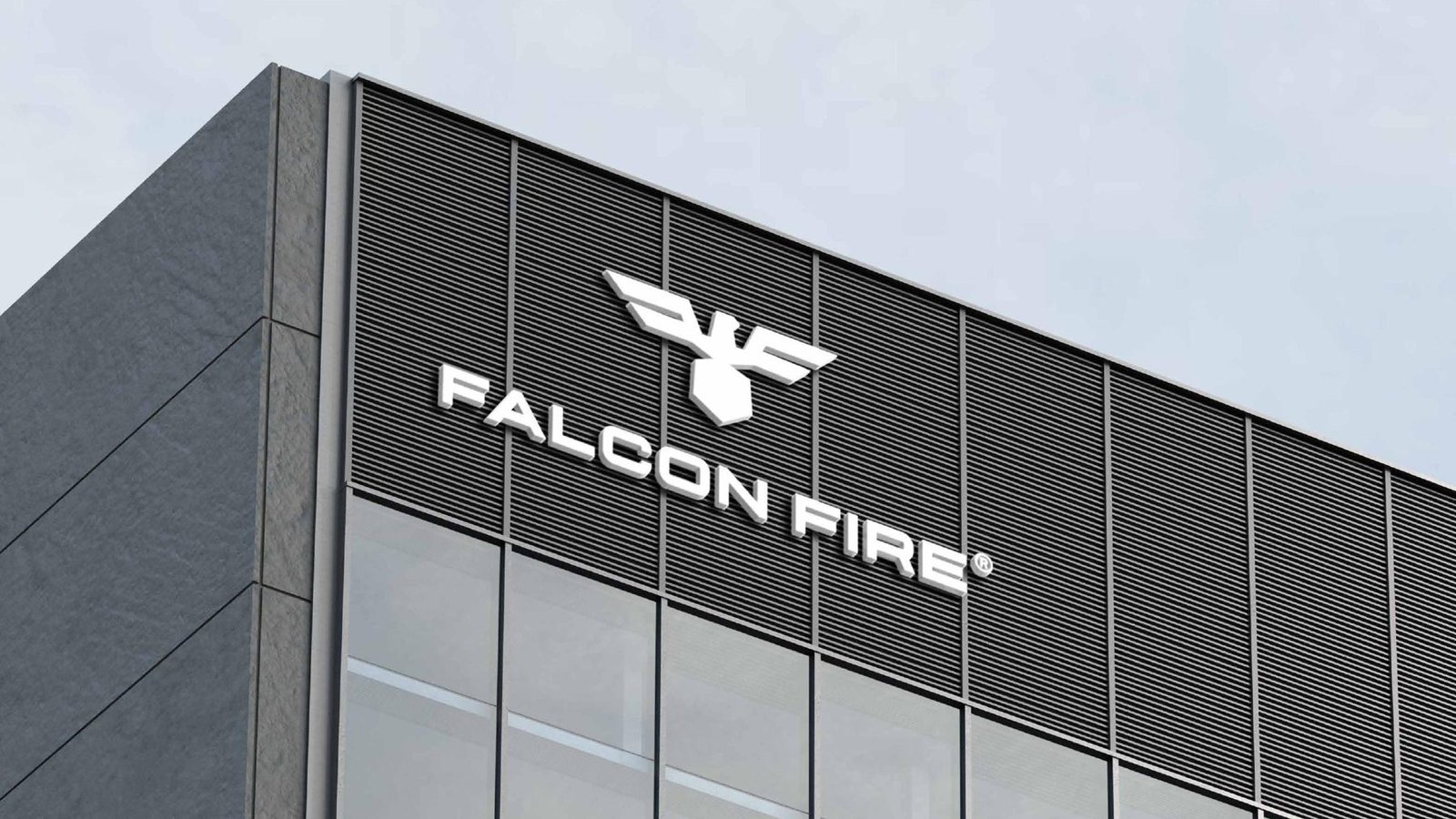
| Shopfront and building signage | Which lockup, relative size of each script, viewing distance, illuminated versus non-illuminated versions, and production-ready vector files for the fabricator. In Dubai, shopfront signs must now be horizontal, with Arabic above English and a single trade name (Gulf News, May 2026); see our Dubai shopfront sign permit guide. |
| Vehicles and fleet | Separate layouts for the left and right sides of the vehicle, so that arrows and other directional graphics point forward on both sides; rear-door layout; phone number format in each script. More in our fleet branding guide. |
| Social media | Avatar (usually the symbol), Arabic and English post templates with mirrored grids, caption order for bilingual posts, and numeral style for prices and dates. |
| Documents and company profile | Arabic-first and English-first versions of letterhead, quotation and invoice; a decision on bilingual single documents versus separate language versions. |
| Website | Language switcher placement, mirrored navigation, Arabic web font licence, and how product names in Latin script are styled inside Arabic pages. |
| Uniforms and merchandise | One-colour versions of each lockup, minimum embroidery size and which script is used on small items. |
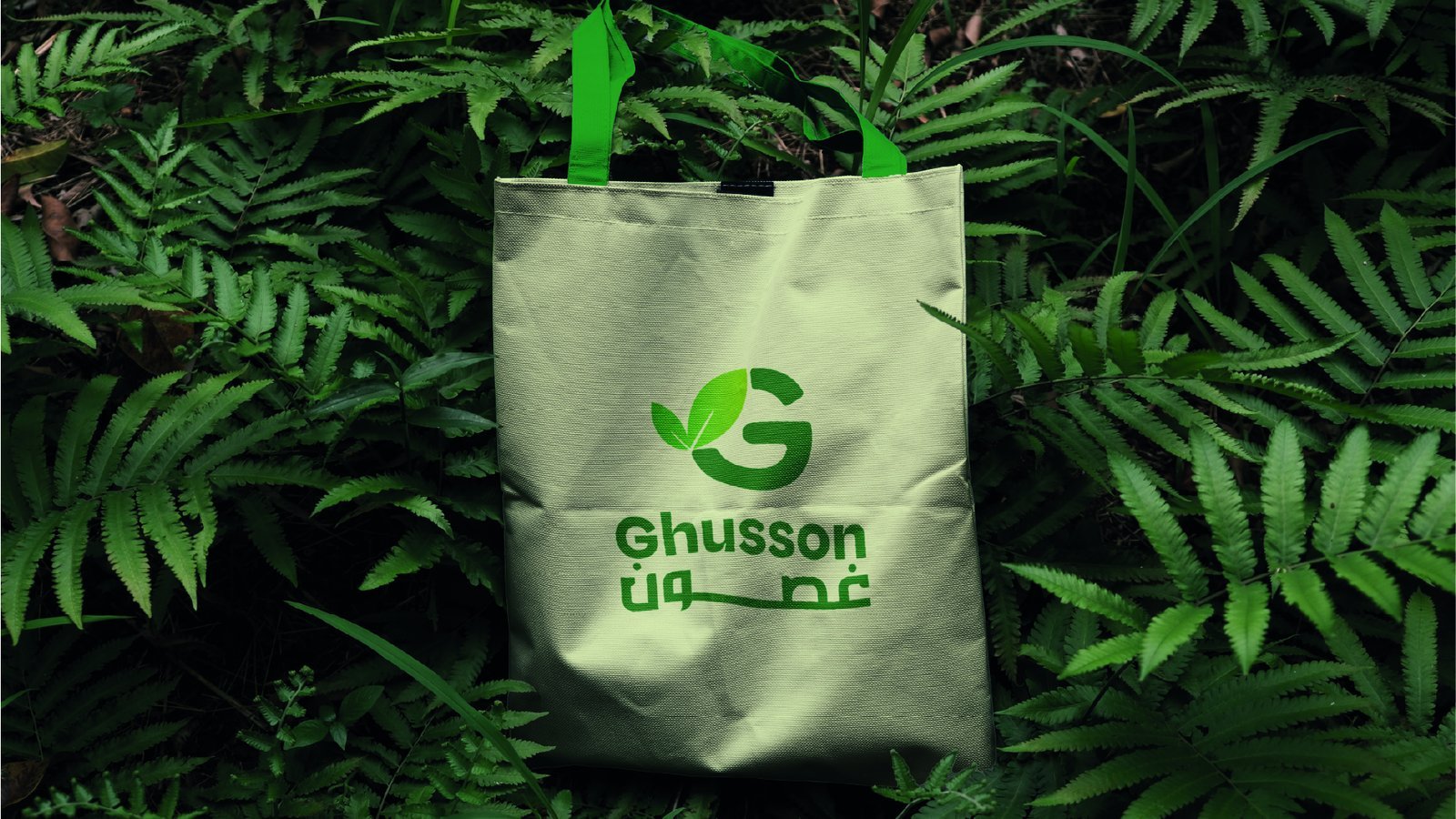
A lockup that looks balanced on a screen can fail at the scale, distance or angle where it is actually used, which is why physical brand applications and signage deserve their own mock-ups before approval. The Ghusson identity is an example of a bilingual system carried from tote bags to packaging.
A buyer’s checklist before you approve
Use this list at the final presentation. If any answer is “we’ll do that later”, agree when and in writing.
- The name is agreed in both scripts, with spelling and pronunciation recorded.
- Arabic-only, English-only, horizontal and stacked lockups exist, plus a script-free symbol.
- The size ratio between the two scripts is fixed in the guidelines.
- Both typefaces are named, with licence type and licence holder listed for desktop, web and any app use.
- The numeral set for Arabic materials is decided and supported by the font.
- Layout rules show mirrored Arabic and English grids, with examples of mixed-script lines.
- The system has been mocked up on your real signage, vehicle, social and document formats.
- You hold the vector masters and editable files for every lockup.
Getting this right once is far cheaper than correcting signs, vehicles and stationery already produced. Before the next production or fabrication order, put this checklist next to your current files and list every “no”; those gaps go into the brief, whether your own team fixes them or a brand identity designer builds both scripts as one system. Our guide to what bilingual brand guidelines should include covers how to write the rules down.
Frequently asked questions
Can I use a free Arabic font in my logo?
Often yes. Fonts released under the SIL Open Font License can be used in logos and commercial products. Check for Reserved Font Names and keep a copy of the licence with your brand files.
Which numerals should Arabic brand materials use?
Decide deliberately. The W3C notes that Eastern Arab countries such as Egypt and Saudi Arabia traditionally use Arabic-Indic digits, while European digits are used in Western Arab regions. Choose one set for prices, dates and phone numbers and confirm your Arabic font supports it.
Why do vehicles need two layouts?
Because the two sides of a vehicle mirror each other. Graphics that imply movement, such as arrows or swooshes, usually point towards the front on both sides, and a layout copied from the left side can look as if it is going backwards on the right. The Arabic and English text has to stay readable on each side too.
- W3C Internationalization Working Group, Arabic & Persian Layout Requirements (2025-10-02).
- W3C Internationalization, Structural markup and right-to-left text in HTML.
- SIL Open Font License, OFL FAQ.
- IBM / GitHub, IBM Plex licence (SIL OFL 1.1).
- Adobe Help Center, Font licensing.
- CMS, Saudi Arabia's National Arabic language policy: What businesses need to know (2026-03-24).
- Gulf News, One trade name only: Dubai tightens shopfront signage rules (2026-05-12).