- On paper, Arabic and English suit a flip-book: the halves bind on opposite edges of one spine, so both covers sit upright and the halves meet in the middle.
- Avoid sharing a flip-book as one PDF; export a separate PDF per language, each starting at its own cover.
- Email is usually a tighter size limit than WhatsApp: keep a light sharing PDF and a high-resolution version per language.
- Work from one approved master content document so the Arabic and English editions do not drift apart.
Most bilingual company profiles run into trouble before a single page is designed. Someone asks for “the profile in Arabic and English”, the designer picks a format by habit, and three months later the team finds that the PDF opens upside down on a phone, the Arabic version is missing two service lines, or the file is too heavy to email to a procurement inbox.
The format decision is cheap to make at the start and expensive to change at the end. This article compares the three formats that Gulf and Egyptian companies actually use, shows how each one behaves on paper and as a shared PDF, and sets out the production rules that keep the two languages equal. It is about format and production. If your profile is going to a pre-qualification evaluator, read our guide to structuring a profile for pre-qualification first, because the evaluator’s criteria decide the content.
The three formats and what each one is really for
Every bilingual profile is a version of one of these:
- The flip-book. One bound document with an English cover on one side and an Arabic cover on the other. Each half opens from its own cover, and the two halves meet in the middle.
- Two language editions. Two separate documents, one in Arabic and one in English, designed as a matched pair with the same structure and visuals.
- Bilingual spreads. One document where every page or spread carries both languages, usually Arabic on one side and English on the other, or in parallel columns.
| Flip-book | Two editions | Bilingual spreads | |
|---|---|---|---|
| Physical copy | One object serves every visitor | Two stocks to manage | One object, heavier on text |
| Shared as PDF | Awkward unless split | Cleanest | Works, but small text on phones |
| Reader experience | Each reader sees only their language | Each reader sees only their language | Every reader sees both |
| Content length | Suits long profiles | Suits long profiles | Suits short profiles only |
| Risk of imbalance | Medium | Highest (editions drift apart) | Lowest (gaps are visible) |
| Updating | Both halves reissued together | Each edition can be updated alone | Every change touches both languages |
None of these is right in general. The right answer depends on where the profile is read: in someone’s hands at a meeting or exhibition, or on a phone screen after a WhatsApp message.
On paper: why the flip-book works so well for Arabic and English
Arabic is read right to left, and the W3C’s Arabic Layout Requirements note that when Arabic is the main script, “the layout and structure of pages and documents are also set from right to left.” Adobe’s Middle Eastern scripting guide for InDesign states the consequence for bound documents: “in an Arabic or Hebrew publication, binding is on the right.” To an English reader, an Arabic book opens from what looks like the back cover.
That is what makes the Arabic-English flip-book practical. In a flip-book for two left-to-right languages, one half is usually laid out upside down so that both covers can face outwards. With Arabic and English that is not needed: the English half reads from a cover bound on the left, the Arabic half from a cover bound on the right of the same spine, so turning the profile over brings the Arabic cover up the right way. Each half reads in its natural direction until the two meet at the centre spread. A visitor at a stand, a consultant at a meeting or a guest at a launch receives one object and opens it from their own side.
Points to settle before design starts:
- The centre spread. Both halves end in the middle. Decide what sits there: a shared map, a client logo wall, or a contact page that works in both languages. Do not leave it to chance.
- Equal page counts. If the Arabic half runs to 24 pages and the English half to 20, one half looks thinner and the meeting point moves off the centre. Aim for the same count in both halves.
- Spine text. A profile thick enough to carry text on the spine needs a decision on which language the spine favours, or a bilingual spine.
- Binding. Saddle stitching and perfect binding can both work for a flip-book. Agree the method with your production partner early, because each one sets its own limits on the total page count and on how the centre spread behaves.
Two separate editions remain the better physical choice when you know your audience. A company that mostly meets Arabic-speaking government clients and English-speaking international partners in separate rooms can hand each the right edition without carrying a document that is half irrelevant to them.
On screens: what happens when the profile goes out on WhatsApp and email
In practice, most profiles in the region are now read as PDFs. They are sent after a call, attached to a quotation in a WhatsApp sales flow, or forwarded inside a buyer’s company. This is where format choices made for paper often break.
The flip-book problem in PDF
A PDF holds its pages in a single sequence. Export a flip-book as one file and one language reads in order while the other runs from its last page to its first, so its reader has to go to the end of the file to find the cover and then scroll backwards. On a phone, many readers will not bother.
The fix is simple: keep the flip-book for the physical copy and export two separate PDFs for sharing, one per language, each starting at its own cover. If the design file is set up for this from the start, the extra work is small. In InDesign, for example, Adobe’s scripting guide notes that binding is controlled by the document’s page binding setting, so the Arabic edition can be set to bind on the right and keep its spreads in Arabic order when it is exported on its own.
File size is a real constraint, but not the one people assume
WhatsApp is rarely the bottleneck. In May 2022 WhatsApp announced that users can send files “up to 2GB in size at a time”, far more than any company profile needs. Email is stricter:
- Google’s help centre says the attachment limit for personal Gmail accounts is 25 MB; for work and school accounts the Google Workspace administrator sets the limits, and attachments over the limit are replaced with a Google Drive link.
- Microsoft’s Exchange Online limits give a default maximum message size of 35 MB for sending and 36 MB for receiving, which administrators can change. Microsoft also notes that messages routed outside its datacentres are subject to an additional 33% encoding increase, and lists 10 MB as the default for on-premises Exchange Server organisations.
These figures are set by each provider and can change, so check the current help pages before you fix a target size for your own files.
You do not control the recipient’s mail server, and a procurement inbox at a large organisation may be set lower than the defaults. A practical approach is to produce more than one PDF from the same design file:
- A sharing version per language, with compressed images, small enough to attach comfortably to an email together with a quotation and quick to open on mobile data.
- A high-resolution version per language, for production and for clients who ask for it, shared as a download link rather than an attachment.
Name the files so the language is obvious before anyone opens them, for example CompanyName-Profile-EN-2026.pdf and CompanyName-Profile-AR-2026.pdf. A sales team that has to open a file to find out which language it is will eventually send the wrong one.
Bilingual spreads on a phone
Bilingual spreads survive the move to PDF better than flip-books, because there is only one reading order. The cost is legibility: two languages share every page, so text runs smaller, and on a phone the reader has to zoom to read either one. If most of your readers will meet the profile on a phone, bilingual spreads only work when the content is short and the pages are designed for it.
Keeping Arabic and English equal
The most common failure in bilingual profiles is not visual. It is that one language quietly becomes the real profile and the other becomes a summary of it. The English edition lists every project, the Arabic lists the main five. The Arabic has a chairman’s message the English never received. A certification was added to one edition last year and not the other.
Readers notice. An Arabic-speaking decision-maker who receives a thinner version can reasonably conclude that they are the secondary audience. A few working rules prevent this:
- Keep one master content document. Write and approve the content once, section by section, with both languages side by side. Design from that document, never from the previous edition.
- Translate for meaning, then review for tone. Literal translation produces Arabic that reads like a translation. Have a native Arabic writer adapt the copy, and a second person who knows the business check technical terms, product names and certifications.
- Match the structure, not the word count. The two languages rarely fill the same space, so plan layouts with room to breathe in both. What must match is the section list, the project list, the figures and the claims.
- Check every number twice. Years of operation, fleet sizes, project values, phone numbers and licence numbers are where editions drift. Decide which numeral style your Arabic edition uses and apply it consistently; our article on bilingual Arabic-English identities covers numerals and mixed text in more detail.
- Update both, or neither. Treat the two languages as one release. If the English edition is updated, the Arabic edition gets the same change in the same release.
Production setup that saves rework
A few decisions in the design file make every later update faster.
- Build the grid to mirror. The Arabic layout should be a mirrored version of the English grid, with columns, alignment and directional arrows reversed, while the logo symbol, photography and charts with a fixed timeline stay as they are.
- Set text direction at the start. Adobe’s InDesign scripting guide describes a story direction setting for the main direction of a text story, and a paragraph direction setting that “controls the order of multidirectional text inside the paragraph.” Setting these correctly at the start, rather than fixing lines one by one, helps keep English product names and model numbers in the right place inside Arabic sentences.
- Use a type pairing that was designed to work together. Arabic and Latin fonts with matching weights and proportions keep the two editions looking like one brand. Confirm the licence covers the use, including embedding in PDFs.
- Keep shared assets shared. Photography, icons, maps and charts should be linked from one source so that a new project photo updates both editions.
- Proof in both languages, separately. A native Arabic reader should proof the Arabic edition as a reader would, from cover to back, not only check that the text matches the English.
For the physical copy, the same discipline applies at the production stage: agree paper and finish, check proofs of both halves against the approved files, and confirm colour on both covers, since the Arabic cover is as much a first impression as the English one. When RX develops company profiles as part of its brand identity work, production supervision means exactly this: agreeing materials, reviewing proofs and checking them against what the client approved.
Which format fits your company
Use these as starting points, not rules. If you are a founder still deciding whether you need a profile at all, or an investor deck, start with pitch deck or company profile.
Choose a flip-book for physical copies if
- You hand out profiles at exhibitions, launches or site visits where you do not know in advance which language each visitor prefers.
- Your profile is long, with service lines, projects and certifications, and would be unreadable as bilingual spreads.
Then export two separate PDFs for digital sharing.
Choose two editions if
- Your profile is mainly shared as a PDF by your sales team over WhatsApp and email.
- Your audiences are clearly separated, for example Arabic for local government and contractors, English for international principals and partners.
- You expect to update one language more often, for instance to add tenders or projects for a specific market. Accept that you will need the parity check above at every release.
Choose bilingual spreads if
- The profile is short: a capabilities brochure, a single service line or a startup that does not yet have a long project list.
- You want every reader to see both languages, for example when the document itself is a statement that the company works equally in both.
A useful test: count the pages your English content needs. If it is more than a handful of spreads, bilingual spreads will force you to cut content or shrink text, and one of the other two formats is the better choice.
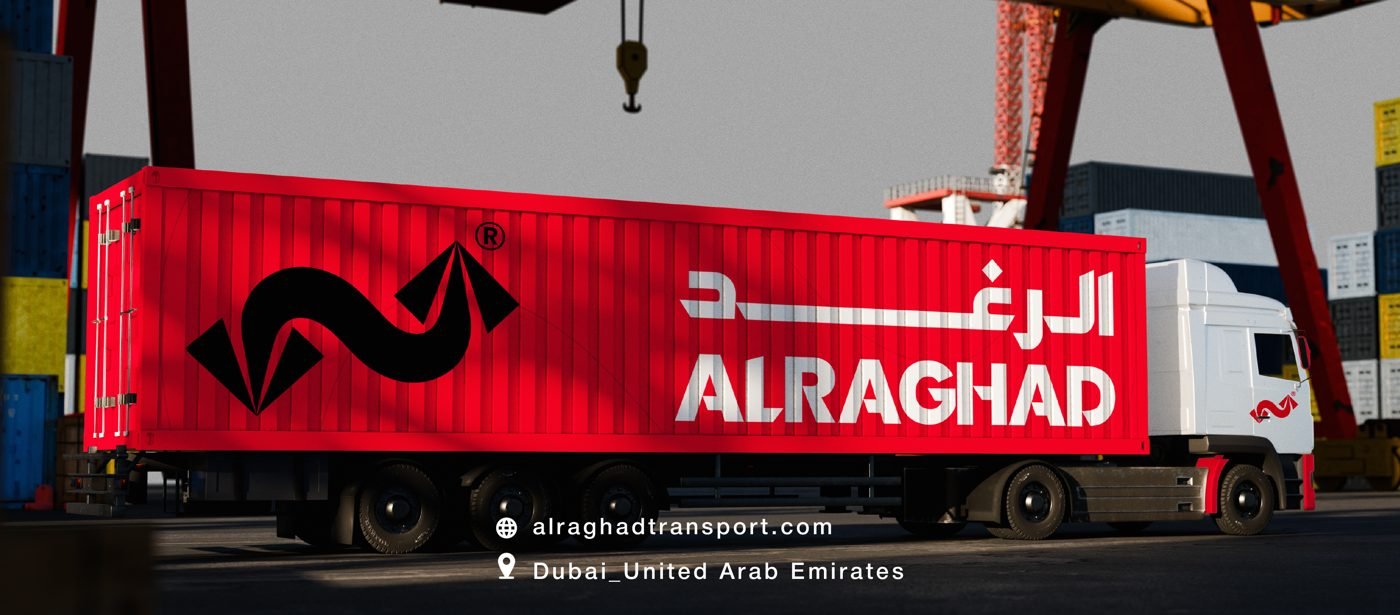
For a sense of scope, the company profile in RX’s case study for freight company Alraghad runs to 28 pages and covers every service line from road transport to customs clearance, and the profile in the YAMA Engineering Systems case study runs to 38 pages. Documents of that length are where the format decision above matters most.
Frequently asked questions
Should a company profile be one bilingual document or two separate files?
For physical copies handed out where you do not know the reader's language, a flip-book works well. For profiles shared mainly as PDFs over WhatsApp and email, two separate language files are cleaner. Bilingual spreads suit only short profiles.
What file size should a company profile PDF be for email?
Small enough to attach with a quotation without hitting limits. Google's help page gives 25 MB for personal Gmail accounts and Microsoft gives a 35 MB default for sending from Exchange Online, but recipient servers can be set lower and the limits can change, so keep a compressed sharing version and send the high-resolution file as a link.
Does the Arabic version of a profile need the same content as the English one?
Yes, in structure and substance: the same sections, projects, clients, certifications, figures and contact details. Word counts will differ, but any difference in content should be a deliberate, documented decision.
- W3C, Arabic & Persian Layout Requirements.
- Adobe Developer, Middle Eastern Scripting Guide (InDesign UXP recipes).
- WhatsApp Blog, Reactions, 2GB File Sharing, 512 Groups (2022-05-05).
- Google Gmail Help, Send attachments with your Gmail message.
- Microsoft Learn, Exchange Online limits.