- A pitch deck answers an investor's question (can this grow?); a company profile answers a buyer's (can they deliver?).
- Public guidance from Sequoia, the Founder Institute and Hub71 centres the deck on problem, market, traction, team and the ask, not on a services list.
- If the reader may pay you for work, send the profile; if they may own part of the company, send the deck; if both, start with the profile.
- Share one positioning line, identity system and fact sheet across both, but keep narrative, evidence and ownership separate.
Many founders end up with one PDF trying to do two jobs. It opens with a market-size slide, moves into a services list, shows client logos next to a funding ask, and ends with a phone number. Investors are likely to find it vague and buyers to find it odd: why is a supplier telling them how much money it wants to raise?
A pitch deck and a company profile are aimed at different people who ask different questions. This guide sets out who each one is for, what belongs in each, which one to send in situations that are less clear-cut, and how to build both from a single brand system without letting either one water down the other.
Two readers, two questions
An investor reading your deck is asking whether this company could become much bigger and whether you are the team to make that happen. A buyer reading your profile has a narrower and more immediate question: can this company deliver what we need, reliably, and how do we get in touch?
Almost every other difference follows from those two questions.
| Investor pitch deck | Client-facing company profile | |
|---|---|---|
| Reader | Investors, accelerator panels, some strategic partners | Prospective clients, procurement teams, consultants, distributors |
| Core question | Can this become a large, valuable business? | Can this company do the job for us? |
| Centre of gravity | Problem, market, traction, team, the ask | Services, method, proof, contact |
| Tone | Ambition backed by evidence | Capability backed by evidence |
| Numbers that matter | Growth, unit economics, use of funds | Projects delivered, capacity, approvals, response times |
| What it must never show | Padding that hides weak traction | Your fundraising plans, burn rate or valuation |
| Lifespan | One round; rewritten for the next | Updated regularly, used for years |
The last row in that table is the easiest to miss. A deck is built around a single moment, a round or an application. A profile is a working sales document that your team will forward again and again. They age at different rates, so they should not depend on each other.
What the investor deck has to cover
Many investors and accelerators publish their expectations, so you do not need to guess at the structure. Three public sources agree on the core.
- Sequoia Capital’s business-plan guidance lists ten parts: company purpose, problem, solution, why now, market potential, competition and alternatives, business model, team, financials and vision. It asks for the purpose to be stated in a single declarative sentence, and it treats financials as something to include only if you have them.
- The Founder Institute’s deck templates (October 2018) give an 11-slide problem–solution version: cover, problem, solution, product, traction, business model, market, competition, go to market, team and ask. They also give shorter team-led and traction-led openings for founders whose strongest card is the team or the numbers. Two of its warnings are useful here: don’t combine frameworks, because each one has a specific purpose, and don’t let the deck run too long.
- Abu Dhabi’s Hub71 Access programme asks applicants for a PDF pitch deck that covers problem, solution, value proposition and business model; competition, market, traction and funds raised; the founding team; and plans for Hub71 and Abu Dhabi.
The Hub71 list is a good reminder that regional programmes often add their own questions on top of the standard structure, in this case your plans for the emirate. Read each programme’s application page before you adapt the deck. Saudi Arabia’s Monsha’at business accelerators page, for example, says only that requirements vary from one programme to another, so check each call for applications on its own terms.
None of these lists has a services catalogue in it, or a page of client logos without context, or a contact page doing the work of a closing argument. Wherever you mention customers in a deck, they are there as evidence of traction (who pays, how much, how often, whether they come back), not as a portfolio. We covered slide-by-slide discipline, honest charts and appendix strategy in our guide to pitch deck design for GCC founders, so we won’t repeat it here.
What the company profile has to cover
A profile is built around four things: services, method, proof and contact. A buyer, a procurement officer or a consultant who is shortlisting suppliers wants to find each one within seconds.
- Who you are, in one paragraph. What you do, for whom and where. Leave out the origin story unless it explains a capability, such as a founder’s long experience in the trade.
- Services or products, organised the way buyers buy. Group them by the problem they solve or the project stage, not by your internal departments.
- How you work. Your process, quality controls, who the client deals with, and what happens after delivery. For a young company this section does a lot of work, because a clear method reassures buyers when your track record is still short.
- Proof. Projects or clients you are permitted to name, with scope and outcome described honestly. Add certifications, approvals and registrations where they genuinely apply, and team credentials.
- Contact and next step. A named person, a direct number, the email address that actually gets answered, and what the reader should send you, such as drawings, a bill of quantities or a brief.
The profile should never contain your funding round, your burn, your valuation or how big a market you hope to capture. To a buyer, “we are raising” can sound like “we may not be here next year”. If you have raised money and the investor’s name genuinely reassures clients, one line in the “who we are” paragraph is enough.
If your profile has to exist in Arabic and English, settle the format before design starts; our piece on bilingual company profile formats compares the options.
Which document for which audience
Most situations are clear. The useful decisions are the grey areas in between. The table below covers the ones founders most often ask about.
| Situation | Send | Why |
|---|---|---|
| Angel, venture investor or accelerator application | Pitch deck | They are assessing the business as an investment, not buying from it. |
| Prospective client after a first call | Company profile | They need capability and proof, then a reason to request a quotation. |
| Vendor registration or pre-qualification | Company profile, adapted to the criteria (see our guide to company profiles for pre-qualification) | Evaluators score against fixed requirements; investment content is irrelevant to them. |
| Strategic partner or corporate considering an investment | Both, at different stages | Lead with the profile to show you can operate; share the deck once investment is actually on the table. |
| International brand assessing you as its distributor or agent | Company profile plus a short market-entry presentation | They are judging your coverage, team and plan for their brand, not your valuation. |
| Bank or lender | Ask what they require | In our view a lender is more likely to want its own forms and your financial statements than a deck, so ask before sending anything. |
| Senior hire you are recruiting | Profile, then the deck under confidentiality if equity is part of the offer | Candidates want to see a real operation first and the growth story second. |
One more grey area is worth a sentence. Founders sometimes send the deck to a big prospective client to look ambitious. In our judgement this tends to work against you: the client may start asking about your runway rather than your delivery, and your growth targets can read as pressure on them.
One brand system, two documents
The two documents should clearly come from the same company, so a reader who sees both recognises the brand at once, while saying different things. The way to get there is to decide in advance which layer is shared and which is specific to each document.
The shared layer
- Positioning line and company description. Use one approved sentence about what you do in both documents. If the deck says “logistics technology platform” and the profile says “freight forwarder”, someone who sees both will notice.
- Identity rules. Logo usage, colour system, typography in both languages, grid, iconography, photo style and chart style.
- Core facts. Founding year, locations, team size, registrations and named clients. Keep them in one fact sheet that both documents pull from, so numbers never disagree.
- Master templates. A cover, a section divider, a content page and a data page, built once and then adapted.
What stays separate
- Narrative order. The deck runs from problem to opportunity to ask. The profile runs from capability to method to proof to contact.
- Density. A deck sent to be read alone needs short, self-explanatory slides. A profile can carry more detail per page, but only if the page still scans quickly.
- Evidence type. Deck evidence is growth and economics. Profile evidence is delivered work and credentials.
- Owner and update cycle. The founder owns the deck and rewrites it each round. Sales or marketing owns the profile and updates it whenever a project, approval or service changes.
As an illustrative example (not a client), a two-year-old facilities services company raising a seed round might share a cover style, colour system and photo direction across both documents. The deck would open with the problem of fragmented maintenance contracts and the size of the opportunity. The profile would open with the services it runs today, its response process and three named sites. Both come from one design system and tell two separate stories.
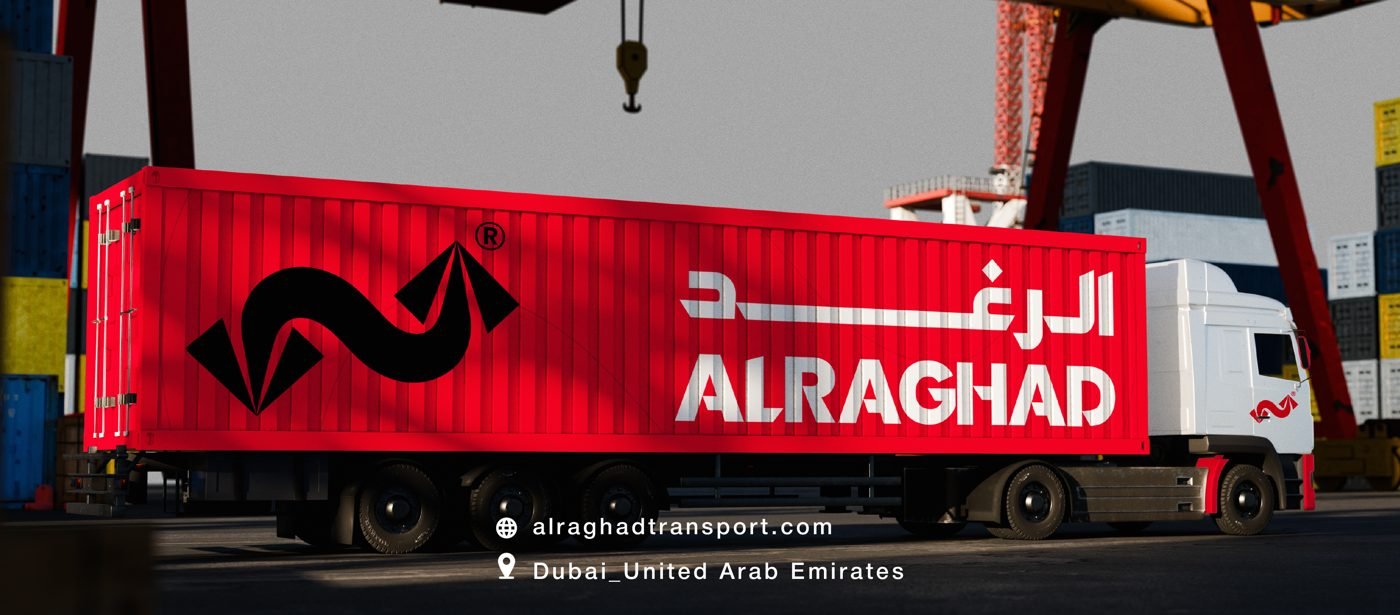
This is the work our brand identity and positioning service covers: the positioning and visual system first, then the company profiles and presentation decks built on it, with source files handed over so your team can keep both current. For freight company Alraghad, for instance, the company profile was built on the same identity as the rest of the brand.
How one document dilutes the other
When the two documents get mixed up, the problems tend to be the same ones each time. Check both files for these before either goes out.
- Investment language leaking into the profile. Market size, total addressable market (TAM), “disrupting the industry”, funding stage. Buyers want to know about delivery, not your exit plans.
- Profile padding leaking into the deck. Long service lists, mission-and-values pages, a logo wall without revenue context, generic team photos. Each one pushes the traction slide further back.
- Different numbers in each document. If the deck says 40 clients and the profile says 25 projects (illustrative figures), someone will ask which is true. Pull both from the single fact sheet and label each figure precisely.
- A “universal” version. A single document written for everyone ends up written for no one. The Founder Institute’s own warning not to combine frameworks applies here too.
- Confidential figures in a document that gets forwarded. Profiles get forwarded freely. Keep anything you would not want a competitor to see in the deck, and send the deck only to people you have chosen.
- No one owns the profile. Founders often put real effort into the deck and leave the profile untouched for a year. For a company that already sells, the profile is often the document that does more of the day-to-day selling, so assign someone to keep it current.
A short working plan
- Write the one-sentence company description and agree it with your co-founders.
- Build the fact sheet: every number, date, name and registration, each with its source and the date it was last checked.
- Set the identity rules and master templates (see building a PowerPoint template system), or confirm that your existing brand guidelines cover documents in both languages.
- Draft the profile first if you sell today, or the deck first if a round is imminent, but plan both at the same time.
- Check the deck against the published structure of the investor or programme you are approaching. Check the profile against your buyer’s actual shortlisting criteria.
- Put a review date on the profile, and a rewrite trigger on the deck: the next round.
If you are not sure what to put first in either document, the problem is often one of positioning rather than design. Our marketing strategy and research work starts with exactly that question: who decides, what they compare you against, and what proof will move them.
Frequently asked questions
Can I use my pitch deck as a company profile?
Not well. A deck is built around market size, traction and a funding ask, which tell buyers little about delivery and can make them worry about your stability. Build a separate profile around services, method, proof and contact.
Should a startup company profile mention that we are raising investment?
In our view, usually not. Buyers care about whether you can deliver and will still be there. If a named investor genuinely reassures clients, a single line in the company description is enough; leave valuation, burn and round details for the deck.
What should a seed pitch deck include?
Published guidance broadly agrees on the core: a purpose or elevator pitch, problem, solution, market, competition, business model, team and the ask, with traction (Founder Institute) or why now and financials if you have them (Sequoia). Programmes such as Hub71 add their own questions, so read each application page before adapting the deck.
Which do I send to a corporate that might become both a client and an investor?
Start with the company profile to show you can operate, and share the pitch deck only once an investment conversation has actually started, ideally under confidentiality.
Do both documents need the same design?
They should share one brand system (positioning line, logo, colour, typography, templates and a single fact sheet) so they clearly come from the same company, while keeping a different narrative order, density and type of evidence.
- Sequoia Capital, Writing a Business Plan.
- Founder Institute, These Are the 4 Most Important Pitch Deck Templates You Need (2018-10-09).
- Hub71, Access Programme: Apply.
- Monsha'at (General Authority for Small and Medium Enterprises), Business Accelerators.