- Lock everything that drives recognition: name forms, logo, colour, type, positioning, claims and terminology.
- Localise channel mix, register, timing, imagery, offers and proof, but within written ranges per market.
- Platform ad reach differs sharply: Snapchat's reaches far more of Saudi Arabia's population, while LinkedIn's registered membership is far higher in the UAE (DataReportal, late 2025).
- Use a group brand book plus one market annex per country, with an approval matrix that lets local teams move.
A company that sells in Riyadh, Dubai and Doha usually ends up with one of two problems. Either head office pushes the same campaign into every market and wonders why it lands well in one country and flat in the others, or each country team builds its own version of the brand until the three markets look like three different companies. Neither is a creative problem. Both come from never deciding, in writing, which parts of the brand belong to the group and which belong to the market.
Start with one question: what must a buyer recognise in every market?
Regional brand strategy in the GCC is less about “standardise versus localise” and more about separating recognition from relevance. Recognition is what lets a buyer in Doha connect your ad with the stand they saw in Dubai and the proposal that arrived from your Riyadh office. Relevance is what makes the message feel written for them. Recognition should be identical everywhere; relevance should be built locally.
A useful test for any brand element is to ask three things:
- Would changing it break recognition? If a buyer seeing two versions side by side would wonder whether they come from the same company, the element is core.
- Is it a promise or an execution? What you stand for and what you guarantee is a promise and stays fixed. How you express it this month, in this channel, is execution and can flex.
- Is the difference between markets real and evidenced? “Saudi customers are different” is not a reason to localise. A different channel mix, a different regulator, a different calendar moment or a different buyer is.
The fixed core: what stays the same in every Gulf market
These elements belong to the group. Country teams use them; they do not adapt them.
| Element | What “fixed” means in practice | Why it cannot flex |
|---|---|---|
| Name and Arabic name | One approved Arabic and one approved English form, used everywhere, including on licences, tenders and invoices | Two spellings across markets look like two companies, and cause problems on official documents |
| Logo and lockups | The same master files and approved Arabic, English and bilingual lockups; no local redraws | Local redraws are the fastest way a regional brand drifts |
| Colour and typography | One palette with exact values for screen and production; licensed Arabic and Latin typefaces | Colour and type do much of the recognition work; unlicensed font substitutions break it quietly |
| Positioning and promise | The same one-sentence positioning and the same core claims in every market | A buyer who works across two GCC states will notice a company promising different things |
| Proof standards | One rule for what counts as evidence: certificates, approvals, project references | Claims made in one market get repeated in another; they must hold up everywhere |
| Core messaging pillars | Three to five pillars that every campaign maps to | Without them, local campaigns fragment into unrelated messages |
If your Arabic and English names, lockups and type system are not yet settled, fix that before any regional rollout; our guide to what a proper bilingual Arabic-English identity system includes covers the details.
What flexes by market, and how far
The aim of the flexible layer is bounded adaptation: each element gets a clear range.
Channel mix
Channel planning is the clearest case for localisation because the audiences differ in measurable ways. DataReportal’s Digital 2026 country reports, published in November 2025 using platform figures from late 2025, show contrasts that should change a regional plan:
| Platform (late 2025) | Saudi Arabia | UAE | Qatar |
|---|---|---|---|
| Snapchat ad reach, % of total population | 72.9% | 44.9% | 39.5% |
| LinkedIn registered members, % of total population | 34.6% | 87.6% | 57.5% |
| Facebook ad reach, % of total population | 50.8% | 85.0% | 76.6% |
| X ad reach, % of total population | 43.1% | 25.0% | 20.8% |
Sources: DataReportal, Digital 2026: Saudi Arabia, Digital 2026: United Arab Emirates and Digital 2026: Qatar. Two caveats matter. Ad reach is what platform ad tools report, not monthly active users, and DataReportal warns the two can differ substantially. LinkedIn figures count total registered members, not active users, so they are not directly comparable with the other platforms. The data is roughly a year old at the time of writing; check the current reports before you commit budget.
A plan that leads with LinkedIn in the UAE and treats Snapchat as optional may need to be reversed for a consumer audience in Saudi Arabia. For a closer comparison across all six GCC states, see our analysis of social media reach across the GCC.
Tone, timing and seasonal moments
The same moment can call for a different register in different markets. A Marketing Society round table on Ramadan marketing, held with The Trade Desk and Campaign Middle East, gave a useful illustration. The group CMO of Diriyah Company said Ramadan in Saudi Arabia “becomes a moment that feels very authentic, very meaningful and personal”, and noted that its rituals remain highly respected there. The VP of marketing and PR at Atlantis described a different commercial reality in Dubai: “It’s now peak season in Dubai”, adding that the dips in visitation and rates Ramadan used to bring are no longer the case. Both are speakers’ own examples rather than a formal country comparison, but in our view the lesson for a regional brand is that the promise stays the same, while the tone, imagery and pace of media spend are set per market (The Marketing Society, Ramadan round table summary).
National days work the same way. Saudi Arabia marks Founding Day on 22 February, commemorating the first Saudi state in 1727, and National Day on 23 September, marking the 1932 unification (Saudipedia; Gulf News). The UAE marks its National Day, now widely referred to as Eid Al Etihad, on 2 December (UAE Ministry of Health and Prevention; Khaleej Times). Qatar celebrates National Day on 18 December, with a slogan announced each year by the organising committee (Qatar News Agency). One generic “national day post” for all three will feel lazy in each. For B2B companies, our guide to Ramadan for B2B companies in the Gulf covers how to plan around the season.
Imagery, offers and proof
People, places and settings in photography should look like the market they appear in; a Riyadh audience notices a Dubai skyline. Offers, payment terms, warranties and service levels often differ legally and commercially between countries, so they belong in the local layer, but they must be written using the same structure and the same core claims. Local project references are usually the most persuasive proof you have; a Qatari buyer would rather see work delivered in Doha than a bigger project elsewhere.
Language: Modern Standard Arabic, Gulf dialect and English
In our experience, language is where regional brands most often get the balance wrong, in both directions. Our recommendation is to decide the register by content type, not by country alone, and to write those decisions down. What follows is editorial judgement, not a rule; test it with native writers in each market.
- Formal and permanent material such as company profiles, website service pages, proposals, tender documents, packaging and signage in our view usually works best in Modern Standard Arabic, which is widely understood across Arabic-speaking markets and suits documents that stay in use for years.
- Conversational and short-lived content such as social video, stories, voice-overs and some ad copy may justify a lighter, more local register, particularly for consumer audiences. If you use dialect, use the right one for the market and have it written or reviewed by a native writer from that market, not translated from English or from another country’s script.
- English, we would expect, carries more weight in markets and sectors with large international workforces and multinational buyers. The UAE’s high LinkedIn membership above is consistent with that, but it is an inference: DataReportal does not measure language preference. Treat English as a full brand language with its own approved copy, not as a translation of the Arabic, or the other way round.
Country rules that a regional plan must respect
Some of the local layer is regulation, not taste. Individuals who advertise brands on social media need a Mawthooq licence in Saudi Arabia (Saudipedia), where the Ministry of Commerce has also warned businesses against promoting visiting celebrities who lack it, which matters when one creator is used across several markets (Gulf News, December 2024), and an Advertiser Permit in the UAE, now overseen by the National Media Authority; what a brand must check before paying a creator is set out in our guide to the UAE Advertiser Permit for brands hiring creators.
The implication for a regional brand is that a creator who is approved for your Dubai campaign is not automatically cleared to promote you in Saudi Arabia, and the other way round. Build a licence check per market into your creator brief and approval process. This is a summary for planning purposes, not legal advice; check the current rules with the regulator or a qualified adviser in each country before you contract.
National events also come with their own visual rules. Khaleej Times reported in October 2025 that the Eid Al Etihad team publishes brand guidelines, including logo, colour, typography and co-branding rules, with one visual system across the seven emirates that local partners can adapt to their own identity (Khaleej Times). If you co-brand, follow those guidelines; the model itself, one locked system with defined room for local partners, is the structure a regional company brand needs.
A guideline structure each country team can follow
The output of the brand identity work is a two-layer guideline set (our guide to what brand guidelines must contain covers the group book itself): one group brand book that never changes by country, and a short annex for each market that defines the flexible layer. A useful structure looks like this:
| Document | Owner | What it contains |
|---|---|---|
| Group brand book | Group marketing | Name forms, logo and lockups, colour, typography, positioning, messaging pillars, proof standards, terminology sheet |
| Market annex (one per country) | Country marketing lead, approved by group | Channel priorities and their evidence, language register by content type, dialect reviewer, local calendar moments, imagery rules, offer and warranty wording, local regulatory checks, approved local references |
| Campaign brief template | Shared | Which pillar the campaign serves, what is fixed, what the market may adapt, who approves |
| Approval matrix | Group marketing | What a country team can publish on its own, what needs group sign-off, and the response time for each |
The approval matrix is the piece most companies skip and the one that decides whether the system works. If every local post needs head office approval, country teams will work around the guidelines. A workable split is that anything inside the market annex can be approved locally, while anything touching the core, such as a new claim, a new lockup, a co-branded asset or a new tagline, goes to group.
For example, a distributor with offices in Riyadh and Dubai might lock its name, logo, product terminology and warranty promise at group level, let the Riyadh team lead with Snapchat and short video in Arabic for its retail and trade audience, and let the Dubai team lead with LinkedIn and bilingual content for project consultants, with both teams briefing campaigns against the same three pillars. Buyers who meet the company in both cities see one brand; each market sees content that makes sense to it.
Signs the balance is wrong, and what to fix first
- Your materials in two countries look like two companies. The core is not locked or the files are not controlled. Fix the master files and the terminology sheet first.
- Country teams keep asking head office for permission on routine content. The market annex is missing or too vague. Write it, and give local approval rights within it.
- The same campaign performs well in one market and poorly in another. Check the channel mix, register and timing against that market’s annex before blaming the creative.
- Claims differ between markets. This is a proof-standard problem and the most serious one, because buyers and procurement teams compare documents. Align claims before the next tender or proposal goes out.
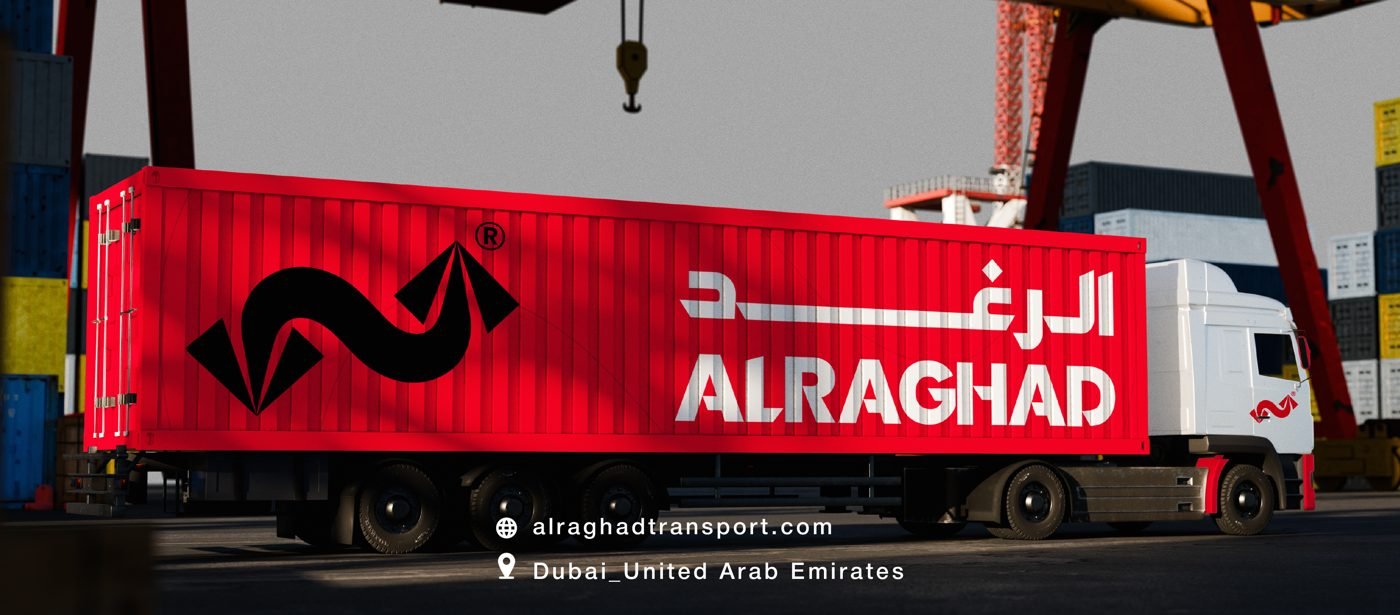
The first fix is usually the cheapest. Put the group brand book next to what each country team published last quarter and list every difference in name form, logo file, colour and claim; that list is the brief for your market annexes. For a related example, our work for Alraghad, a road, sea and air freight company (UAE, Egypt and the GCC), covered a bold red identity, a company profile and a daily social campaign.
Frequently asked questions
Should a company use the same brand in Saudi Arabia, the UAE and Qatar?
In most cases, yes. Keep one name, logo, colour system, positioning and set of claims, and adapt the channel mix, language register, timing, imagery and offers for each market under written rules.
Should Gulf marketing be written in Modern Standard Arabic or dialect?
Decide by content type. In our view, formal and long-lived material such as profiles, proposals, website pages and packaging usually suits Modern Standard Arabic, while short social content may use a local register, written or reviewed by a native writer from that market.
What should a market annex to brand guidelines contain?
Channel priorities with their evidence, language register by content type, the dialect reviewer, local calendar moments, imagery rules, offer and warranty wording, local regulatory checks such as creator licences, and approved local project references.
Can one influencer promote a brand in both Saudi Arabia and the UAE?
Only if they meet each country's rules. Saudi Arabia requires a Mawthooq licence for individuals advertising on social media, and the UAE requires an Advertiser Permit, now overseen by the National Media Authority. Check the current rules in each market before contracting; this is not legal advice.
- DataReportal (Kepios), Digital 2026: Saudi Arabia (2025-11-08).
- DataReportal (Kepios), Digital 2026: The United Arab Emirates (2025-11-05).
- DataReportal (Kepios), Digital 2026: Qatar (2025-11-08).
- The Marketing Society with The Trade Desk and Campaign Middle East, Ramadan round table: executive summary.
- Saudipedia, What is the Saudi Founding Day?.
- Gulf News, Saudi Arabia: What is the difference between National Day and Founding Day (2024-09-20).
- UAE Ministry of Health and Prevention, Eid Al Etihad.
- Khaleej Times, Why UAE National Day is now called Eid Al Etihad (2025-10-27).
- Qatar News Agency, Organizing Committee unveils National Day slogan (2025-11-08).
- Saudipedia, What Is the Mawthooq License? (2023-06-18).
- Gulf News, Saudi Arabia tightens rules on influencer ads with mandatory licensing (2024-12-02).
- Al Tamimi & Company, UAE Introduces Mandatory Advertiser Permit for Content Creators (2025-12-11).
- Gulf News, UAE's content creator licence deadline has been extended (2025-10-22).