- Organise the site the way shippers describe a job: lane, mode, cargo, scope and timing.
- Lane pages work only when each carries lane-specific detail; near-identical city pages can fall under Google's doorway abuse policy.
- Ask for five things in the first form, keep WhatsApp and call routes visible, and track every route as a conversion.
- Show licence names and numbers by market (TGA and ZATCA in Saudi Arabia, Dubai Customs codes, Egypt's customs authority), checked against current rules, rather than generic badges.
Most freight forwarding websites in the region open the same way: a container ship at sunset, the line “We deliver worldwide”, and a menu that lists Sea Freight, Air Freight, Land Freight and Customs Clearance. The page is accurate. It is also almost useless to the person who arrived on it.
A shipper does not search for “worldwide delivery”. An importer in Riyadh searches for a way to move a part-container load of spare parts from Guangzhou to Dammam before a project deadline. A trader in Cairo wants a price for reefer containers out of Alexandria. Each of them has a lane, a mode, a cargo type and a date in mind, and wants a quotation they can compare. This guide shows how to build a forwarder’s website and ads around that reality, so the site produces quote requests your sales team can actually price.
Start from how shippers describe a shipment
Before any design work, write down how your buyers describe a job when they first contact you. Pull the last 30 quote requests from email and WhatsApp and note the words they used. In most forwarding businesses, a request is built from the same five pieces:
- Lane: origin and destination, often a city or port pair (Shanghai to Jeddah, Jebel Ali to Riyadh, Alexandria to Dammam).
- Mode: sea (full container or part load), air, road, or a combination.
- Cargo: general cargo, chilled or frozen, dangerous goods, oversized project cargo, vehicles, personal effects.
- Service scope: port to port, door to door, with or without customs clearance, warehousing or insurance.
- Timing: ready date and the date the goods must arrive.
These five pieces are your site architecture, your ad groups and your form fields. If the homepage and menu are organised only by mode, a shipper with a lane in mind has to translate their need into your internal vocabulary. Most will not bother.
A note on demand: do not build twenty lane pages because a phrase “sounds popular”. Use your own quote history first, then Google Search Console data (what queries already show your site) and Keyword Planner in your Google Ads account to see which lanes and cargo types people actually search for in your markets. If you have no data yet, start with the lanes you already move most often and price best. Those are the pages most likely to convert, because you can make a credible offer on them.
Route pages that help buyers, not doorway pages
Lane pages are the most useful thing a forwarder can add to a website, and also the easiest to get wrong. Google’s spam policies list doorway abuse, including “having multiple domain names or pages targeted at specific regions or cities that funnel users to one page” and “creating substantially similar pages that are closer to search results than a clearly defined, browseable hierarchy”. Fifty pages that differ only by the city name in the title fall into that pattern, and they do nothing for the buyer either.
A lane page earns its place when it contains information that is specific to that lane. For example, a page for sea freight from China to Saudi Arabia could cover:
- The origin ports you load from and the Saudi ports you deliver to, and whether you offer inland delivery to Riyadh or other cities.
- Full container and part-load options, with the cargo types you handle and those you do not.
- Typical transit ranges you are prepared to stand behind, stated as ranges and dated, not promises.
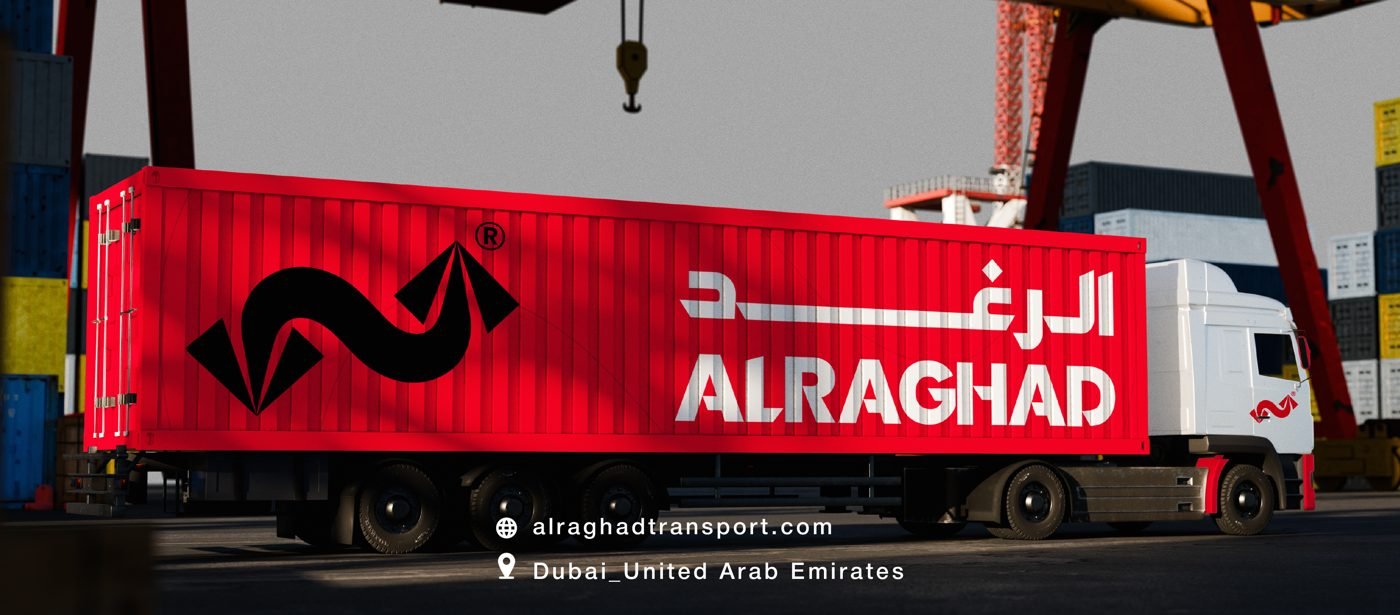
- What the shipper needs to prepare on their side (commercial invoice, packing list, any product-specific certificates), and which parts you handle. Documents are also content: for Alraghad, a road, sea and air freight company, RX produced a guide series on the documents every UAE shipment needs, from the commercial invoice and packing list to the certificate of origin and bill of lading.
- How customs clearance works at the destination and whether you clear in-house or through a licensed broker.
- A short quote form pre-filled with the lane, so the buyer does not retype it.
Organise these pages in a hierarchy a buyer can browse: services by mode, then lanes under each mode, then cargo specialisms that cut across lanes (reefer, dangerous goods, project cargo). If your site is bilingual, each Arabic page should be written for Arabic searches, not machine-translated from the English one; a mirrored Arabic and English structure keeps both languages useful.
- H2 Ports and inland delivery: the two loading ports, delivery at Dammam, and whether you truck onward to Riyadh or Jubail.
- H2 Part-load and full-container options: when LCL makes sense, when to switch to a full container, cargo you do not accept.
- H2 What to prepare: commercial invoice, packing list and any product certificates, with what you handle for the shipper.
- H2 Customs clearance at Dammam: in-house or through a named licensed broker, and how the importer authorises the broker.
- H2 Get a quote: the form arrives pre-filled with Origin: Shanghai, Destination: Dammam, Mode: Sea LCL; the WhatsApp button opens with “Hello, I need an LCL quote Shanghai to Dammam, ready date __, approx __ CBM.”
| Page type | Job it does | Must contain |
|---|---|---|
| Mode page (sea, air, road) | Explains capability | Equipment and load types, cargo you handle, coverage, link to each lane |
| Lane page | Answers a specific search | Ports or cities, service scope, preparation checklist, clearance, pre-filled form |
| Cargo specialism page | Qualifies specialist jobs | What you handle, what you need from the shipper, relevant permits or handling capability |
| Customs clearance page | Captures clearance-only requests | Markets and ports covered, licence details, documents required |
| Proof page | Supports every other page | Licences, memberships, insurance arrangements, sample shipments, client sectors |
A quote form short enough to finish on a phone
The form is where most forwarding sites lose the request. A twenty-field form asking for HS codes, Incoterms, exact dimensions and the consignee’s tax number looks thorough, but a buyer comparing three forwarders on a phone will fill in the shortest one. Ask for what you need to send a first indication, then collect the detail in the conversation.
A practical first-step form:
- Origin (city or port) and destination (city or port), pre-filled on lane pages.
- Mode, with an “advise me” option.
- Cargo type and approximate volume or weight, or number of containers.
- Ready date.
- Name, company, mobile with country code, email.
Then add one optional field for “anything else we should know” and an upload for a packing list. Tell the buyer what happens next and when: “A rate specialist will contact you on WhatsApp or email.” Only promise a response time your team meets consistently.
Hand the request to WhatsApp without losing it
In Saudi Arabia, the UAE and Egypt, many shippers prefer to continue the conversation on WhatsApp. That is an advantage if the handover is designed, and a leak if it is not. Three rules keep it working:
- Carry the context. A WhatsApp button on a lane page should open a chat with a pre-filled first message naming the lane, so your team knows what the buyer was looking at.
- Use a business number owned by the company, not a salesperson’s personal phone, so conversations stay with the business when people change roles.
- Qualify in the first reply. Ask the same three or four questions every time (cargo, volume, ready date, scope including clearance) so a one-word “price?” becomes a priceable request.
If you run ads that open WhatsApp directly, the same logic applies to the ad’s first message; set the campaign goal around conversations that reach a qualified request, not message volume. Whatever the route, record where each request came from. A form submission, a WhatsApp click and a phone call should each be tracked as a conversion, or you will not know which lanes and campaigns produce work.
Proof a shipper checks before sending cargo
A shipper is handing you goods they cannot see for weeks. The website has to answer “Is this company licensed, insured and able to do what it claims?” before the buyer asks. Generic badges do not do that; specific, checkable details do.
Licences, by market
Requirements change, so confirm the current rules with the authority before publishing, and show licence names and numbers exactly as they appear on your documents.
| Market | What applies | What to show |
|---|---|---|
| Saudi Arabia | Reports at the launch in November 2021 said the Transport General Authority’s unified logistics licence covers land, air and sea freight forwarders, with applications through the Naql e-gate (Argaam, Ajel); check the current requirements with the TGA. Customs clearance is licensed separately, under rules approved by ZATCA in 2023 as summarised by LexisNexis Middle East; check the current text with ZATCA. | Commercial registration, TGA logistics licence, and your customs broker licence number if you clear in-house. Importers authorise a broker on ZATCA’s Fasah platform using that number (ZATCA), so it is information buyers genuinely need. |
| UAE (Dubai) | Dubai Customs’ services guide says agents holding a Clearing and Forwarding licence from the Dubai Economic Department may also clear cargo on behalf of consignees, provided they have a customs business code and written authorisation from the goods’ owner. Brokers request a Dubai Customs no-objection certificate to issue, amend or cancel a trade licence with brokerage activity (Dubai Customs Services Guide 2025). | Trade licence activity, Dubai Customs client code, and which emirates and free zones you clear in. Rules differ between emirates and free zones, so name the ones you cover. |
| Egypt | According to the WTO TFA Database summary and Youm7 reporting, Customs Law No. 207 of 2020 allows clearing goods for others only under a licence from the customs authority, valid for two years and renewable; check the current text with the Egyptian Customs Authority. | Commercial register, customs clearance licence and its validity, and the ports you work through. |
If you clear through a partner broker rather than in-house, say so plainly. Buyers respect a clear explanation more than a vague “full customs services” line that they later find is subcontracted.
Beyond licences
- Insurance and liability: explain whether you arrange cargo insurance, and where your standard trading conditions can be read.
- Networks and memberships: list forwarding associations or agent networks you belong to, with the countries they give you coverage in. Do not display logos of networks you have left.
- Real shipments: short, factual descriptions of moves you have handled (cargo, lane, any complication you solved), with client permission. A project-cargo move with a photo of the loading is worth more than ten stock images.
- People: names and direct contacts for the people who quote and follow up, especially on lane pages.
A company profile carries the same proof offline. RX built the identity, company profile and daily social campaign for Alraghad, a road, sea and air freight company, and the identity, profile and digital presence for Egyptian Maritime Services, a maritime services company. RX also built the Alraghad Transport website: sea, air and land services, shipment requests, shipment tracking and a full Arabic version.
Ads that match lanes, not slogans
Paid search is the fastest way to test which lanes bring requests, provided the campaign mirrors the site structure. Group keywords by lane and mode, send each group to its lane page, and write ads that repeat the lane and the scope (“Sea freight China to Dammam, door to door with customs clearance”). Google describes landing page experience as “how relevant and useful your landing page is to people who click your ad”, and it is one of the three Quality Score components (Google Ads Help). In our reading, a lane ad pointing to the homepage fails that test before the buyer reads a word.
Three further habits matter for forwarders:
- Exclude the wrong buyers. Job seekers, courier tracking searches and very small personal shipments can absorb budget. Review search terms weekly and add negatives.
- Bid on value, not clicks. One container request is worth far more than a dozen parcel inquiries. Track quote requests as conversions and, once you have volume, import qualified or won requests so bidding learns what a good lead looks like.
- Keep the account in the company’s name, so campaign history and conversion data stay with the business whoever manages it.
Low search volume per lane is common in B2B, and some lanes may show only a few searches a month; judge campaigns on requests and priced quotations over several weeks, not on daily clicks.
What to fix first
If your current site is a generic homepage with four service pages, do not rebuild everything at once. Work in this order:
- Proof page and licence details. It supports every other page and costs only time to assemble.
- Short quote form, WhatsApp and call routes on every page, each tracked as a conversion.
- Three to five lane pages for the lanes you already move most and price best, written with lane-specific detail.
- A small search campaign on those lanes, pointed at those pages, reviewed weekly.
- Expand to new lanes and cargo specialisms only where your quote history or search data shows demand.
Inbound is half the pipeline; for outbound outreach to importers, see our separate guide.
Then review monthly: requests by lane, by route (form, WhatsApp, call), and how many became priced quotations. That review tells you which page to write next, which is a better guide than any keyword list.
Pull your last 30 quote requests before changing anything: which lanes, which route (form, WhatsApp or call), and how many became priced quotations. RX’s website design and performance marketing teams can map that list against your pages and campaigns, lane by lane, if you bring it to a business diagnosis session.
Frequently asked questions
How many lane pages should a freight forwarder start with?
Three to five, for the lanes you already move most often and price best. Add more only when your quote history, Search Console or Keyword Planner data shows real demand for a lane.
Will lots of city-to-city pages hurt my SEO?
They can. Google's spam policies list pages targeted at specific regions or cities that funnel users to one page as doorway abuse. Each lane page needs genuinely specific content: ports, scope, documents, clearance and a lane-specific form.
What should a freight quote form ask for?
Origin, destination, mode, cargo type with approximate volume or weight, ready date and contact details. Collect HS codes, Incoterms and exact dimensions in the follow-up conversation.
Which licences should a forwarder show on its website?
Those that apply in each market you serve, shown exactly as on your documents: for example the TGA logistics licence and customs broker licence number in Saudi Arabia, your trade licence activity and Dubai Customs code in Dubai, and your customs clearance licence in Egypt. Rules change, so confirm the current requirements with each authority first.
Should Google Ads for a forwarder send traffic to the homepage?
Not for lane or service searches. Send each ad group to the page that matches the lane and scope in the ad; Google rates landing page experience on how relevant and useful the page is to the person who clicked.
- Google Search Central, Spam policies for Google web search (doorway abuse).
- Google Ads Help, About Quality Score.
- Argaam, Saudi transport authority hands out first 32 logistics licenses (2021-11-18).
- Ajel, Saudi transport authority issues first 32 logistics service licenses (2021-11-18).
- LexisNexis Middle East, Saudi Arabia: Rules for Practicing Customs Clearance Profession Adopted (2023-05-04).
- Zakat, Tax and Customs Authority (ZATCA), Customs Broker Authorization (e-service).
- Dubai Customs, Dubai Customs Services Guide 2025 (2025).
- WTO Trade Facilitation Agreement Database, Egypt: Use of customs brokers (Article 10.6.2).
- Youm7, Conditions for licensing legal entities to practise customs clearance (2025-12-20).