- Prospect only on lanes where you have real capacity and prices you can defend.
- Tie every message to a moment the importer already faces, such as the Lunar New Year falling just before the expected start of Ramadan in 2027.
- Saudi, UAE and Egyptian rules make consent central to direct marketing, so design outreach to earn and record permission.
- Measure quotation requests and first shipments per lane, not connection acceptances or opens.
A typical first message to an importer’s supply-chain manager reads something like this: “Dear Sir, we are a leading freight forwarder offering competitive rates for sea, air and land freight worldwide. Please share your requirements.” It names no lane, no cargo and no reason to reply now, so it gets deleted. The forwarder concludes that outreach doesn’t work in logistics and goes back to waiting for referrals.
Outreach can work for forwarders, but only as a system: a short list of importers chosen by lane and commodity, messages tied to a moment the buyer is already thinking about, and a process that respects the platform rules and the data-protection laws in Saudi Arabia, the UAE and Egypt. This guide covers that system. If your problem is that inbound visitors don’t turn into quote requests, start with our guide to lead-generation websites for freight forwarders; this one is about going to the buyer first.
Why the rate pitch fails, and what an importer will answer
An importer does not change forwarders because a stranger says “competitive rates”. Switching carries risk: a missed vessel, cargo held at the port, a clearance error that lands on the importer’s own record. The person you write to is judged on goods arriving on time and on cost, so the first message has to suggest that talking to you lowers their risk on a specific shipment, not that you are cheaper in general.
In our view, three kinds of message are far more likely to get a reply:
- A message about their lane. “We load weekly part-container consolidations from Ningbo to Dammam” is relevant to someone who imports from Ningbo. “Worldwide coverage” is relevant to nobody.
- A message about their timing. A note that arrives as they plan seasonal stock or review an annual freight contract is useful. The same note in a quiet month is noise.
- A small, low-risk ask. “Can I send a quotation for your next shipment on this lane, to compare against your current rate?” is easier to accept than “Can we have a meeting to present our company?”
Everything below is built on those three points.
Build the target list by lane and commodity
Start from what you already do well, not from a database. Pull your last year of shipments and list the lanes, modes and cargo types where you have real capacity, reliable partners and prices you can defend. Those are the only lanes worth prospecting on. A forwarder that is strong on China to Saudi Arabia less-than-container-load (LCL) cargo and on Jebel Ali to Riyadh trucking has two outreach programmes, not one.
Then find importers who move goods on those lanes. Useful, legitimate signals include:
- Distributors and agents who announce new brands or exclusive agencies from a supplier country you serve.
- Exhibitors at trade shows in your sector, whose product categories you can match to your cargo strengths.
- Companies opening a warehouse, branch or new market, which often brings new routes and new forwarder relationships.
- Your own past quotation requests that never became shipments, where you already have a relationship and a record of the lane.
Within each importer, the people who decide are often spread across functions: a supply-chain or logistics manager who owns the shipments, a procurement manager who runs the forwarder selection or tender, and in smaller companies the owner or general manager. Plan to reach the logistics owner first with something operational, and procurement when there is a tender or contract review.
Moments worth writing about
A moment is something that is happening to the importer anyway, where your message saves them time or risk. These are the ones forwarders can use most often. Treat the timings as prompts to check against your own shipment history, not as rules.
| Moment | Why it matters to the importer | What your message can offer |
|---|---|---|
| Chinese New Year before Ramadan | In 2027, the first day of the Lunar New Year falls on 6 February (Hong Kong Observatory calendar). Ramadan is expected to begin on or around 8 February, an astronomical projection by the UAE’s Astronomy Centre reported by Khaleej Times and The National; the official date depends on moon sighting. Importers selling into Ramadan demand from Chinese suppliers face both at once. | Latest cargo-ready dates you can still commit to on the lane, space options, and what happens if a factory ships late. |
| Annual freight contract or tender review | Procurement compares forwarders on paper; being on the shortlist is the goal. | A request to be included, and a ready vendor-registration pack: licences, insurance arrangements, lanes, references. |
| A new service on a lane | A new direct sailing, consolidation or trucking route can shorten transit or reduce handling. | One factual line on what changed and which of their shipments it could affect, with dates you can stand behind. |
| A new brand, branch or market | New suppliers or destinations mean the current forwarder may not cover the lane. | Your experience on that specific lane and the documents the importer will need to prepare. |
| A disruption or rule change | Port congestion, rerouting or a customs procedure change creates uncertainty. | A short, sourced explanation of what it means for their lane. Useful even if they don’t switch. |
Only claim a disruption or new rule you can link to an official or carrier source. A forwarder that sends one wrong alert loses the credibility the whole approach depends on.
Writing the LinkedIn and email messages
Each message should do four things: show you know their lane, name the moment, make one small ask, and make it easy to say no.
LinkedIn connection note
Hello Khalid, I run the China–Saudi LCL desk at [Company]. I saw [Importer] has taken on [brand] from Guangdong. We consolidate weekly from Shenzhen to Dammam and Riyadh, so I’d like to connect and share lane updates when they’re useful. No sales sequence.
Keep it short, send it from a real person’s profile, and don’t follow an accepted connection with an immediate pitch. A profile that clearly shows the lanes and cargo you handle does half the work; if your sales team’s profiles still say only “Sales Executive”, fix those first. RX’s LinkedIn and personal branding service writes and manages profiles like these, with the member keeping control of the account and approving what goes out.
First email
Send this only where the rules below allow it: for example, to a contact who agreed at an exhibition meeting to hear from you, or through a supplier-registration or procurement route the importer published.
Subject: Ningbo–Jeddah cargo before Chinese New Year
Hello Sara, with Chinese New Year on 6 February and Ramadan expected around two days later, the latest safe cargo-ready date for Ningbo–Jeddah full containers is earlier than many importers expect. We have weekly space on that lane and can confirm cut-off dates for your suppliers. Would a quotation for your next shipment be useful as a comparison? If this isn’t relevant, reply “no” and I won’t write again. [Name, title, company, address, phone]
Notice what the email does not include: an attached company profile, a list of every service, or a rate you cannot hold. Send the profile only when asked. Once the buyer replies, move quickly to the questions you need to price the shipment.
Follow-up
One follow-up after about a week, adding something new (a schedule change, a document checklist for that lane), is reasonable. A third message with no reply usually is not. Record the outcome and move on; a “not now” importer is a candidate for the next relevant moment, not for a weekly chase.
The rules that limit outreach in Saudi Arabia, the UAE and Egypt
This is the part most outreach advice skips, and it is where forwarders working across the region can get into trouble. What follows summarises official texts and named law-firm commentary as of 31 October 2026. It is not legal advice; these rules are changing, so check the current text with a qualified lawyer in each market before you start.
| Market | What the sources say | What it means for outreach |
|---|---|---|
| Saudi Arabia | The PDPL (Article 25) allows an email or postal address to be used for advertising only with the recipient’s consent and a clear way to stop, and (Article 26) allows marketing use of personal data collected directly from the person with their consent. The Implementing Regulation (Articles 28 and 29) adds documented consent, a clearly named sender and an opt-out as easy as or easier than giving consent. The telecom regulator’s spam regulations (Version Three, October 2022, issued by CITC, now the Communications, Space and Technology Commission, CST) require express opt-in to promotional messages and calls, do not count consent contained in privacy policies or service contracts, and bar address-harvesting software. | Unsolicited promotional email or calls to named individuals are hard to square with these texts. SDAIA’s draft amendments to the Implementing Regulation are under public consultation until 5 November 2026 and, as law firms summarise them, would strengthen consent, withdrawal and opt-out; they are proposals, not rules. Our guide to Saudi PDPL and direct marketing covers the detail. |
| UAE | The UAE government portal says Federal Decree-Law No. 45 of 2021 prohibits processing personal data without the owner’s consent, with exceptions. Clyde & Co reads it as allowing marketing use of personal data only with consent, with opt-out mechanisms, and DLA Piper notes the Article 17 right to object to processing for direct marketing. The law does not apply in free zones with their own data protection law, such as the DIFC and ADGM. | Treat marketing to individuals as consent-based, and check which regime applies to the importer and to you. The Executive Regulations that are meant to add detail and start a six-month compliance period were reported as not yet published (DLA Piper, January 2025), and we found no published text when we checked in October 2026. Check the current position before relying on this. |
| Egypt | Al Tamimi (updated 4 February 2026) reports that the Executive Regulations of Law No. 151 of 2020 were issued by Ministerial Decree No. 816 of 2025 on 1 November 2025, starting a one-year compliance window. Sending marketing by any electronic channel needs prior explicit consent, electronic records proving it, a clearly identified sender, an accessible way to refuse or withdraw, and a licence or permit from the Personal Data Protection Centre (PDPC). The window ended on 31 October / 1 November 2026, depending on the reading; no extension had been announced when we checked on 31 October 2026, so PDPC licences and documented consent are now required and enforcement is expected. | Cold electronic marketing to Egyptian contacts without consent and a PDPC licence or permit is not a realistic option. Fix consent records first, then the licence position, before any Egyptian campaign (see Egypt’s data law and the marketing licence). |
LinkedIn has its own rules. Its User Agreement limits scraping, bots and tools that automate connection requests or messages, so check it before anyone installs one. If someone else manages a salesperson’s profile, the access and approval points in our guide to managed LinkedIn profiles apply.
Taken together, these rules push a forwarder toward a permission-first design rather than mass cold sending:
- Use routes the importer opened. Supplier-registration portals, published procurement contacts, tender invitations and exhibition meetings exist so that suppliers can approach the company. Ask your lawyer how the rules treat a generic company inbox compared with a named person’s address.
- Make the first touch personal and specific, one to one, from a named sender with full company details, never from a bulk tool.
- Turn interest into recorded consent. When an importer says yes to lane updates, record the date, channel, wording and what they agreed to, and offer the same updates by email or WhatsApp only with that consent.
- Stop on the first no, on every channel, and log it so nobody else in the company writes again.
- Don’t buy or scrape lists. The Saudi PDPL expects marketing data to be collected directly from the person, the Saudi spam regulations bar address-harvesting software, and Egypt’s regulations expect everyone in the chain to be able to show where the data came from and that consent was given.
Run it as a weekly system
Outreach stops working when it depends on one salesperson’s mood. A simple weekly routine keeps it steady:
- Monday: add five to ten researched importers per lane to the CRM, each with the lane, cargo type, decision-makers and the moment you plan to use.
- Tuesday to Thursday: send personal connection notes and first messages, and post one useful lane update on the salespeople’s LinkedIn profiles, so that a prospect who looks you up sees relevant expertise.
- Friday: review replies, log opt-outs, move interested importers to “quotation requested”, and schedule the one follow-up where it is justified.
Measure what leads to work, not activity. The numbers that matter are replies that ask a question, quotation requests on the target lanes, and quotations that turn into a first shipment. Connection acceptances and email opens say little. If a lane produces replies but no shipments, the cause is more often price or service fit on that lane than the messaging.
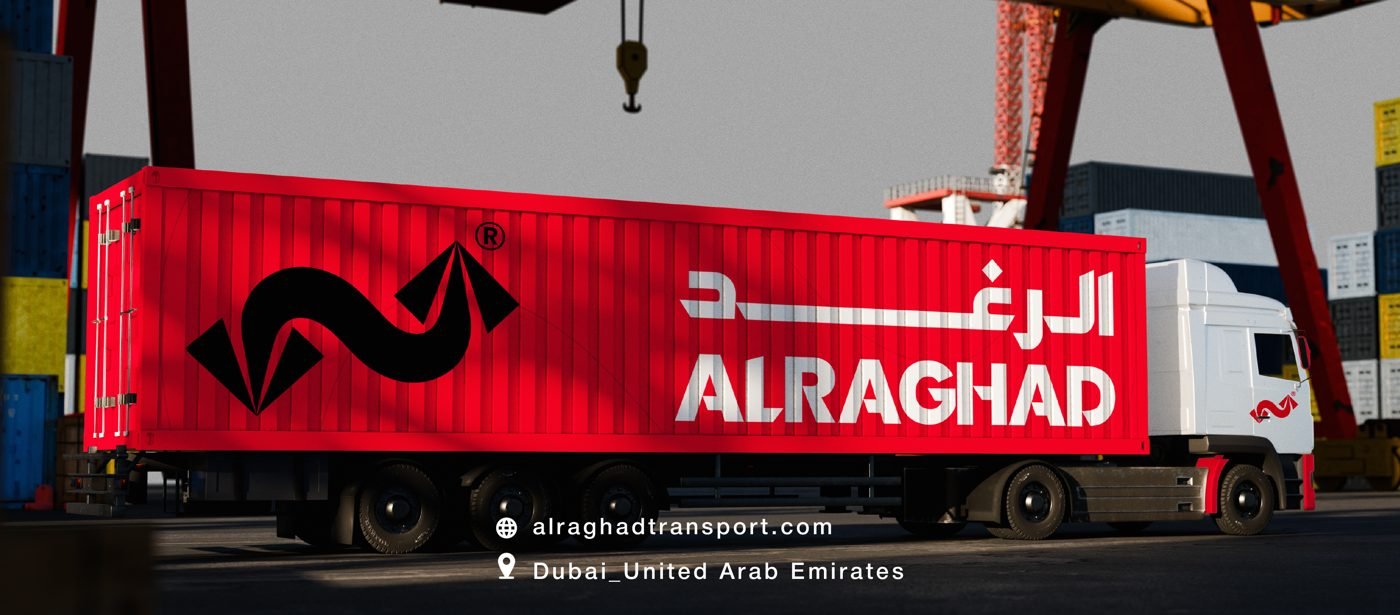
Keep the sales tools ready before you start: a one-page lane sheet per programme, a vendor-registration pack, and a quotation template that states validity, inclusions and exclusions clearly. When an importer replies, the speed and clarity of what comes next decides more than the first message did. RX builds this kind of messaging and sales kit as part of its sales enablement work, and built a bold red identity, a company profile and a daily social campaign for Alraghad, a road, sea and air freight company.
Frequently asked questions
How do I get clients for a freight forwarding business without cold-calling lists?
Pick the lanes and cargo types you handle best, research a short list of importers who ship on them, and contact the logistics or procurement owner with a specific message tied to a current moment, such as a seasonal cut-off or a contract review. Use supplier-registration portals and tender invitations where importers run them.
Can I send cold emails to importers in Saudi Arabia?
Be careful. The Saudi PDPL and its Implementing Regulation require consent before an email address is used for marketing, a clearly named sender and an opt-out that is as easy as giving consent, and the telecom regulator's spam rules require express opt-in for promotional messages and calls. SDAIA's draft amendments, under consultation until 5 November 2026, may tighten this further. Ask a Saudi lawyer how this applies to your messages before sending any campaign.
Is it allowed to use LinkedIn automation tools for outreach?
LinkedIn's terms limit scraping, bots and third-party tools that automate activity on the platform. Read its current User Agreement and help guidance before using any tool that sends requests or messages, and keep the member in control of their own account.
- Saudi Data and AI Authority (SDAIA), Personal Data Protection Law (Arabic).
- Saudi Data and AI Authority (SDAIA), Implementing Regulation of the Personal Data Protection Law (Arabic).
- Clyde & Co, The SDAIA publishes draft amendments to the Implementing Regulations of the PDPL (2026-10-08).
- Communications and Information Technology Commission (now CST), Regulations for Curbing SPAM Messages & Calls (Version Three) (2022-10).
- The UAE Government portal (u.ae), Data protection laws (2025-12-04).
- Clyde & Co, UAE issues landmark personal data protection law (2021-11-30).
- DLA Piper Data Protection Laws of the World, Data protection in the United Arab Emirates (2025-01-27).
- Al Tamimi & Company, From policy to practice: Egypt issues executive regulations of the Personal Data Protection Law (2026-02-04).
- Hong Kong Observatory, Gregorian-Lunar Calendar Conversion Table, 2027.
- Khaleej Times, When will UAE celebrate Ramadan, Eid Al Fitr, Eid Al Adha in 2027? Likely dates revealed (2026-09-01).
- The National, Ramadan 2027: UAE dates and Eid Al Fitr holiday (2026-10-06).
- LinkedIn, LinkedIn User Agreement.