- Compare three agencies on the same weighted criteria instead of relying on ranked lists.
- Under the Trade Names Law in force since April 2025, names can be non-Arabic but must not resemble any registered name.
- Law firms read Saudi Arabia's 2026 Copyright Law differently on who owns commissioned work by default, so the contract must assign the rights to you.
- Score rollout support and who actually does the work on evidence; a portfolio shows you little about either.
Search for a branding agency in Riyadh and the first page is mostly directories and “top 10” lists. Some of those lists are published by agencies that rank themselves near the top, and almost every firm on them is marked “price on request”. None of that tells you which studio will understand your business, write a name that works in Arabic and English, and stay long enough to put the brand on your signage, vehicles, profiles and proposals.
This guide replaces the ranking with a method. You shortlist three agencies, score each one against the same weighted criteria, and use a fixed set of questions in the pitch meeting so the answers can be compared side by side. It names no agencies. It is built for Riyadh companies, so it also covers the checks that are specific to Saudi Arabia: the trade name, the trademark search and who owns the work when the project is finished.
Before the pitch: three checks to do yourself
An agency can only be judged against a clear brief. These three steps take a few hours and make every pitch meeting more useful.
1. Know where your name stands under the Trade Names Law
Saudi Arabia’s new Trade Names Law and its implementing regulations took effect on 3 April 2025, replacing the 1999 regime (Gibson Dunn; Argaam). Two changes matter directly for branding:
- Language. A trade name may now consist of Arabic words, letters or numbers, or of words, letters or numbers in a language other than Arabic (Law of Tradenames, Article 4). An English-only name is no longer a problem in itself, but the registered name and the brand name still need to be planned together.
- Similarity. A name may not be similar to a trade name already reserved or registered in the Commercial Register, regardless of the type of business, or to a world-famous mark or a trademark registered or famous in the Kingdom (Article 7). According to Gibson Dunn’s summary of the regulations, a single-letter difference or an identical sound with different spelling can count as similar.
The law also lets a merchant dispose of a registered trade name independently of the business premises (Article 10). In practice, the name is now an asset in its own right, which is one more reason to treat naming as a strategic decision rather than a design detail.
2. Run a first trademark search
The Saudi Authority for Intellectual Property (SAIP) offers a public IP search engine covering trademarks, patents and other IP records in the Kingdom. A quick search for your current name, and for any name you are considering, will not replace a lawyer’s clearance search, but it shows you early whether a conflict is likely. Bring the results to the pitch: a good agency will ask for them.
3. Decide what kind of project this is
A new brand, a rebrand of an established company and a visual refresh are different projects with different risks. Write one paragraph on what is changing in the business (a new market, a new service line, a merger, a regional headquarters, a sale process) and what must not change. If you cannot write that paragraph yet, you may need strategy work before identity work, and that is worth knowing before you compare proposals.
The shortlist scoring sheet
Score each agency from 1 (weak) to 5 (strong) on every criterion, multiply by the weight and divide by 5. The maximum is 100. The weights below are a starting point; adjust them before the first meeting, not after, so the sheet stays honest.
| Criterion | Weight | What a 5 looks like | Agency A | Agency B | Agency C |
|---|---|---|---|---|---|
| Business understanding | 20 | Asks about buyers, decision-makers, competitors and sales cycle before showing any design | |||
| Arabic naming and typography | 15 | Shows Arabic and Latin logotypes designed together, with Arabic type handled by people who read it | |||
| Sector experience | 15 | Relevant work in your industry or a comparable B2B or B2C context, explained, not just shown | |||
| Who actually does the work | 15 | Names the strategist, designer and writer on your account and you meet them before signing | |||
| Process and decision points | 10 | A clear sequence with defined approvals, rounds and inputs required from your side | |||
| Rollout support | 15 | Can design and supervise applications: signage, vehicles, uniforms, profiles, presentations, digital | |||
| Contract terms and ownership | 10 | Written assignment of rights, delivery of all source files, clear scope and change terms | |||
| Total (out of 100) | 100 |
A filled-in sheet: how close scores get resolved
Hypothetical example. A Riyadh distributor of industrial pumps is rebranding before a regional launch. It keeps the weights shown above and scores three fictional agencies after the pitch meetings (score 1 to 5, multiplied by the weight, divided by 5).
| Criterion (weight) | Agency A | Agency B | Agency C |
|---|---|---|---|
| Business understanding (20) | 4 → 16 | 5 → 20 | 3 → 12 |
| Arabic naming and typography (15) | 5 → 15 | 3 → 9 | 4 → 12 |
| Sector experience (15) | 3 → 9 | 4 → 12 | 5 → 15 |
| Who actually does the work (15) | 4 → 12 | 4 → 12 | 2 → 6 |
| Process and decision points (10) | 4 → 8 | 4 → 8 | 4 → 8 |
| Rollout support (15) | 3 → 9 | 4 → 12 | 5 → 15 |
| Contract terms and ownership (10) | 5 → 10 | 5 → 10 | 1 → 2 |
| Total (out of 100) | 79 | 83 | 70 |
How the distributor reads it:
- C is out despite its strong portfolio rows. It scored 2 on who does the work, because the pitch team will not run the project, and 1 on ownership, because it resisted the assignment clause. Ownership is pass or fail, so C fails.
- A and B are four points apart, inside the five-point band. The tie goes to the highest-weighted criterion, business understanding, where B leads.
- B’s weakness is written into its contract. B scored 3 on Arabic typography, so the distributor asks B to name the Arabic type designer and to present Arabic and Latin concepts together in the first round.
Keep the completed sheet with the purchase file. It records why B was chosen if the decision is questioned later.
How to score each criterion
Business understanding
Watch what happens in the first twenty minutes. A strong agency asks what you sell, who signs the purchase order, who influences it and who you lose deals to. A weak one opens with its showreel. For a Riyadh contractor, distributor or industrial supplier, the person approving the brand is rarely the person buying from you, and the agency needs to understand both.
Arabic naming and typography
Ask to see bilingual identities where the Arabic was designed, not typed in afterwards (our guide to bilingual Arabic and English logos shows what to look for). Check whether the Arabic logotype holds up at small sizes, whether the Arabic and Latin versions share weight and rhythm, and whether the agency has proposed or tested names in both languages. If your trade name and your brand name differ, ask how they would handle that on signage, invoices and the website.
Sector experience
Experience in your sector shortens the learning curve, but it is not the only signal. Ask the agency to walk you through one relevant project: the problem, the decisions and what changed for the client’s sales team. A clear explanation of one project is worth more than twenty logos on a slide.
Who actually does the work
The people in the pitch are not always the people on the project. Ask for names and roles, and ask what happens if one of them leaves. Find out what is done in-house and what is handed to freelancers or partners, and who is accountable for the result either way.
Process and decision points
A good process tells you what the agency needs from you and when: interviews, approvals, access to customers, existing files. Ask how many concept routes you will see, how many revision rounds are included and what happens if none of the first routes is right. If the proposals differ in what they include, compare them against the brand identity scope levels and cost drivers before you score this row.
Rollout support
A logo is approved once. It is then reproduced hundreds of times by sign makers, vehicle wrappers, uniform suppliers, the people who produce your company profile and whoever builds the next exhibition stand. That is where a new identity drifts. Score this criterion on evidence, not promises:
- The applications list. Ask for every application the agency would design in your first year: branch signs, fleet, uniforms, company profile, tender templates, LinkedIn Page, website. Ask which of them are inside the fee.
- Supervision. Ask: “Who checks the proof from our Riyadh sign contractor before it is fabricated?” A 5 names the person and the step. A 1 says, “We send the files.”
- Local permits. Signs in Saudi Arabia are licensed through the municipal Balady platform; the Ministry of Municipalities and Housing runs an e-service for operational licences for advertising and promotional signs, which requires an active commercial register. Ask whether the agency has prepared sign artwork for a licence application before. (Professional recommendation: confirm the current requirements for your sign with your sign contractor.)
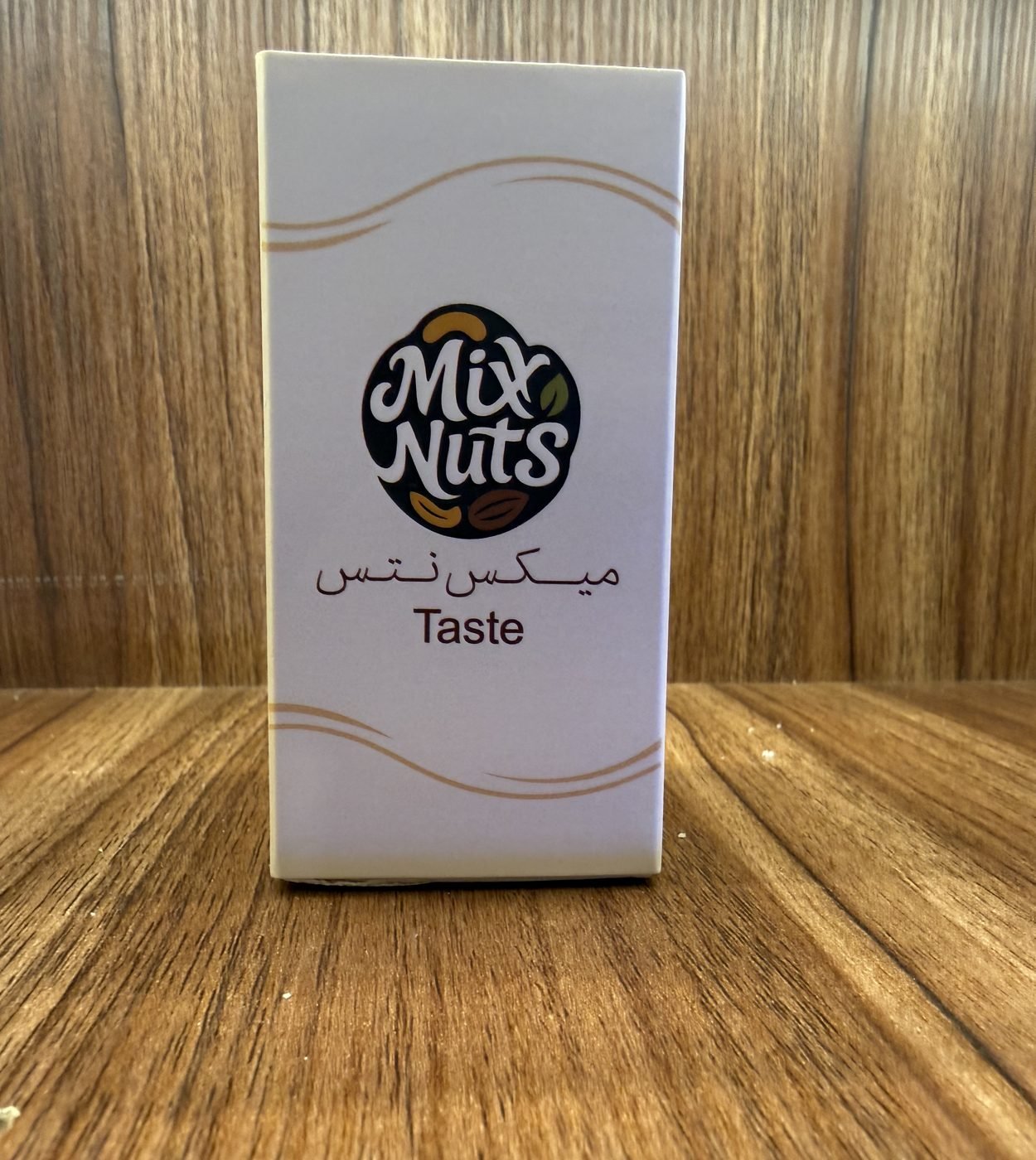
- Live-event proof. Openings and exhibitions are often where a new identity is first seen in public. Ask to see an identity carried through a launch or a live event. RX examples: the Mix Nuts grand opening in Riyadh, the exhibition campaign for Azeidk at Intersec Saudi Arabia 2025, and the event identity and campaign for Azeidk’s official event at the Hyatt Regency Riyadh.
- Guidelines in use. Ask for a guideline the agency wrote that a client’s own team uses today, not a presentation PDF.
For the full sequence after approval, see the rebrand rollout plan.
Contract terms and ownership
This criterion carries a low weight because it should really be a pass or fail. It is covered in detail below.
Twelve questions to ask in the pitch meeting
Ask every agency the same questions in the same order and write the answers into the sheet straight away.
- What do you need to know about our business before you can start, and how will you find it out?
- Who are the people who will work on our account, and will we meet them before we sign?
- Show us one bilingual identity you developed. How did you design the Arabic and the Latin versions together?
- How do you check a proposed name against the Commercial Register and SAIP records, and at what stage do you involve a lawyer?
- How many concept routes will we see, and how many revision rounds are included?
- What do you need from our side, and by when, to keep the project on schedule?
- Which applications are included in the scope, and which are quoted separately?
- Can you supervise production with our signage, vehicle and uniform suppliers?
- What will the brand guidelines contain, and who are they written for?
- Which files will we receive at the end, in which formats, and who owns them?
- How do you handle a change of direction halfway through?
- What support do you offer after launch, and what does a typical first year look like?
Listen for specific answers. “It depends” is acceptable only when it is followed by what it depends on.
Contract terms Saudi buyers should not skip
Law firms read Saudi Arabia’s Copyright Law, in force since 12 August 2026, differently on who owns commissioned work by default, so if you want to own the logo, files and guidelines, the contract has to assign them to you in writing. The logo copyright and handover guide sets out both readings and the handover checklist.
Before signing, confirm that the contract covers:
- Assignment of rights in all final approved work to your company, effective on payment.
- Source files: editable logo files, colour and type specifications, templates and guideline documents, listed by name.
- Fonts and stock: which licences are included, in whose name, and for which uses.
- Scope and changes: what is included, how extra work is approved and what counts as a revision.
- Name clearance: who is responsible for trade-name and trademark checks, and what happens if a proposed name is blocked.
- Confidentiality for anything shared about your business, customers or plans.
An agency that resists a clear ownership clause should score 1 on this criterion, whatever the quality of its portfolio.
Making the decision
Add up the scores, then read the sheet the other way round: which agency would you be most worried about if the project went wrong? Usually the scores and that instinct point in the same direction. If they do not, look at the “who does the work” and “business understanding” rows again; they are the rows a portfolio tells you least about.
If you are not sure the problem is the brand at all, settle that first. Sometimes the issue is positioning, a sales message or a channel plan, and an identity project would only make the same problem look better. That is the kind of question a marketing strategy and research phase is designed to answer.
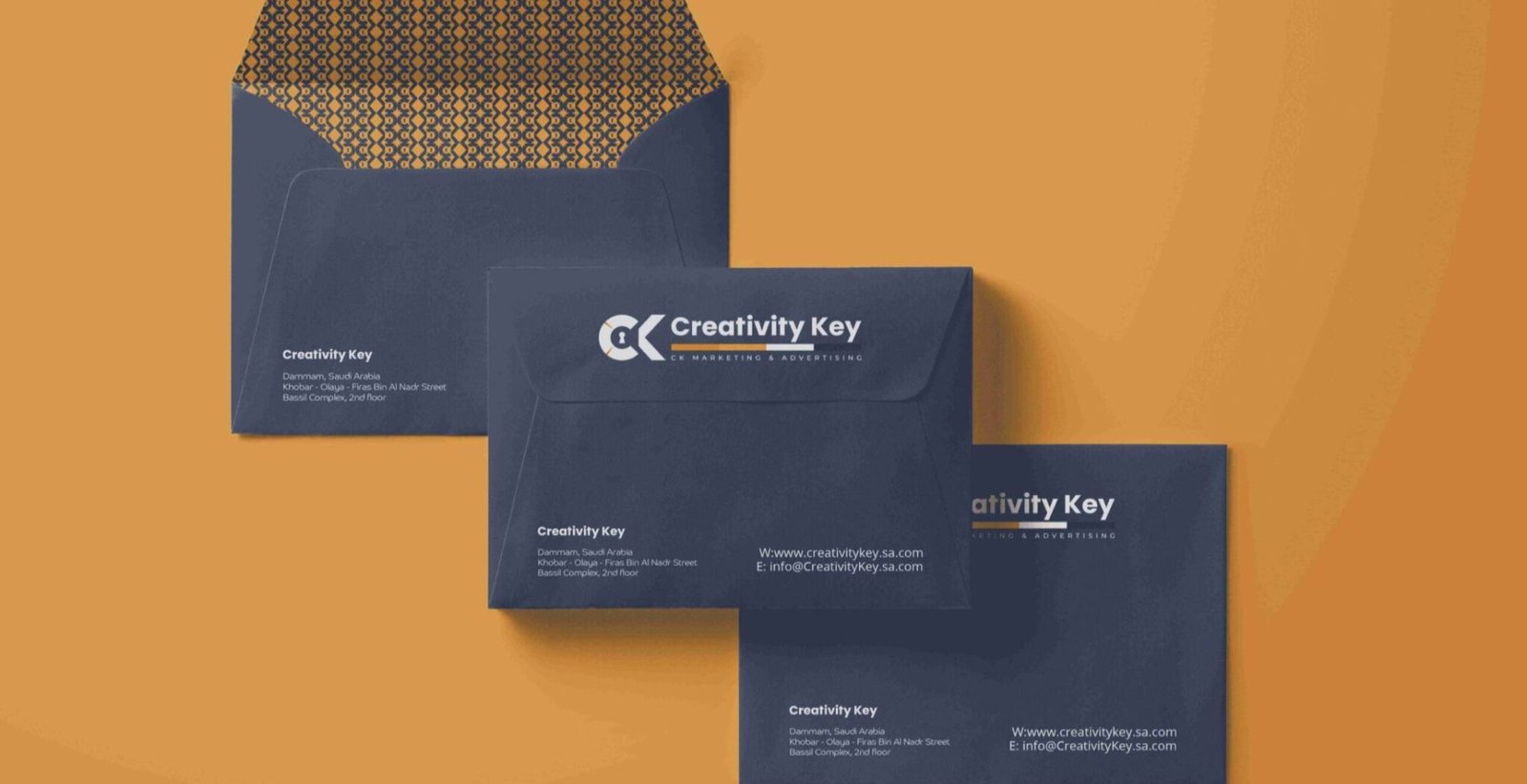
At RX Designer, brand identity and positioning work starts from the business, then moves to the logo, colour system, profiles and guidelines, as in the GCS case study, where a new fire-safety brand needed a credible entry into the Saudi market, and the Creativity Key project, full branding and digital campaigns for a Saudi digital media company. Whichever agency you choose, use the same sheet for all three and keep it on file: it is the clearest record of why you made the decision.
Frequently asked questions
Can a Saudi company register an English trade name?
Yes. Under the Trade Names Law in force since 3 April 2025, a trade name may consist of words, letters or numbers in a language other than Arabic, as well as Arabic. It must still not be similar to a name already reserved or registered.
Who owns the logo an agency designs for us in Saudi Arabia?
Not automatically. Law-firm readings of the Copyright Law in force since 12 August 2026 differ on who owns commissioned work by default: Baker McKenzie says it stays with the author unless the parties expressly agree otherwise, while Gowling WLG reads the Implementing Regulations as giving it to the commissioning party unless the contract says otherwise. Either way, the contract should assign the rights to your company in writing.
How many branding agencies should we shortlist?
Three is usually enough to compare approaches without turning the pitch into a beauty contest. Score each one on the same criteria and ask the same questions.
Should we check our name before or after hiring an agency?
Do a first check before. A quick search of SAIP's public IP search engine and a view of the Commercial Register position give the agency a clearer brief; a lawyer's clearance search should follow before a name is finalised.
- Gibson Dunn, Saudi Arabia's New Trade Name Law: Legal Update.
- Argaam, New commercial register, trade names laws effective as of April 3 (2025-04-01).
- Ministry of Investment of Saudi Arabia, Law of Tradenames (English translation).
- Saudi Authority for Intellectual Property, IP Search Engine.
- Baker McKenzie, Saudi Arabia: New Copyright Law modernises KSA IP framework (2026-07-20).
- Gowling WLG, Saudi Arabia Copyright Law: Implementing Regulations (2026-08-27).
- Ministry of Municipalities and Housing, Issuing an Operational License for an Advertising or Promotional Sign (2026-09-07).