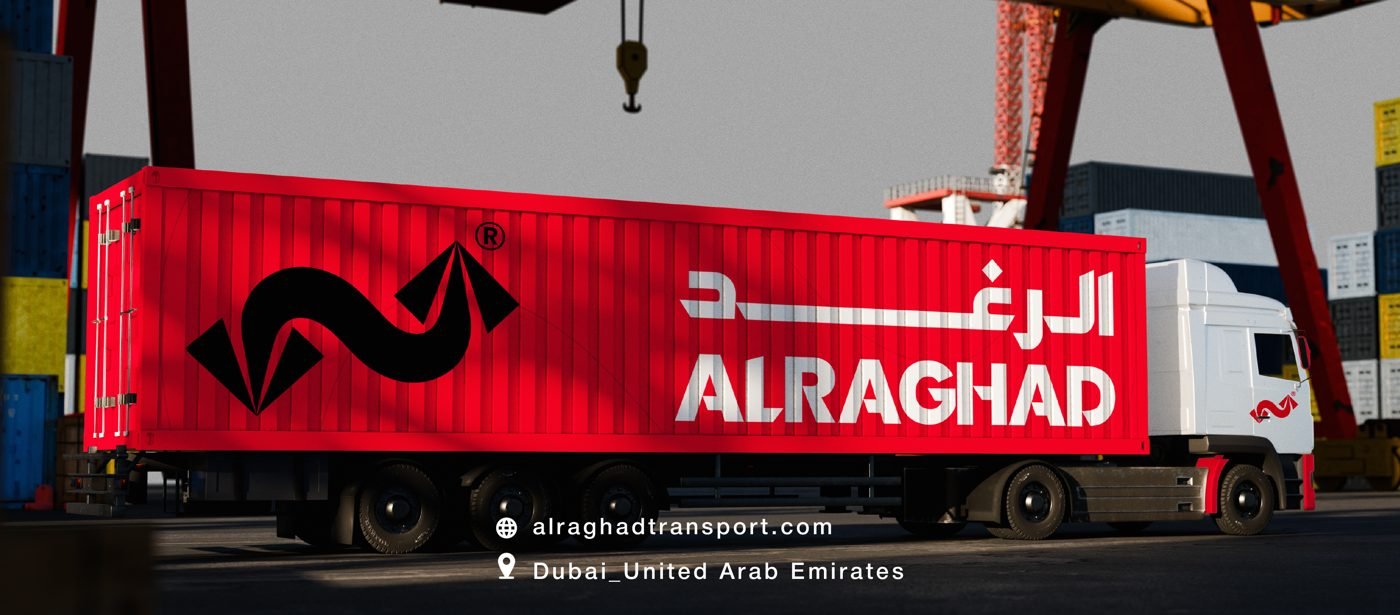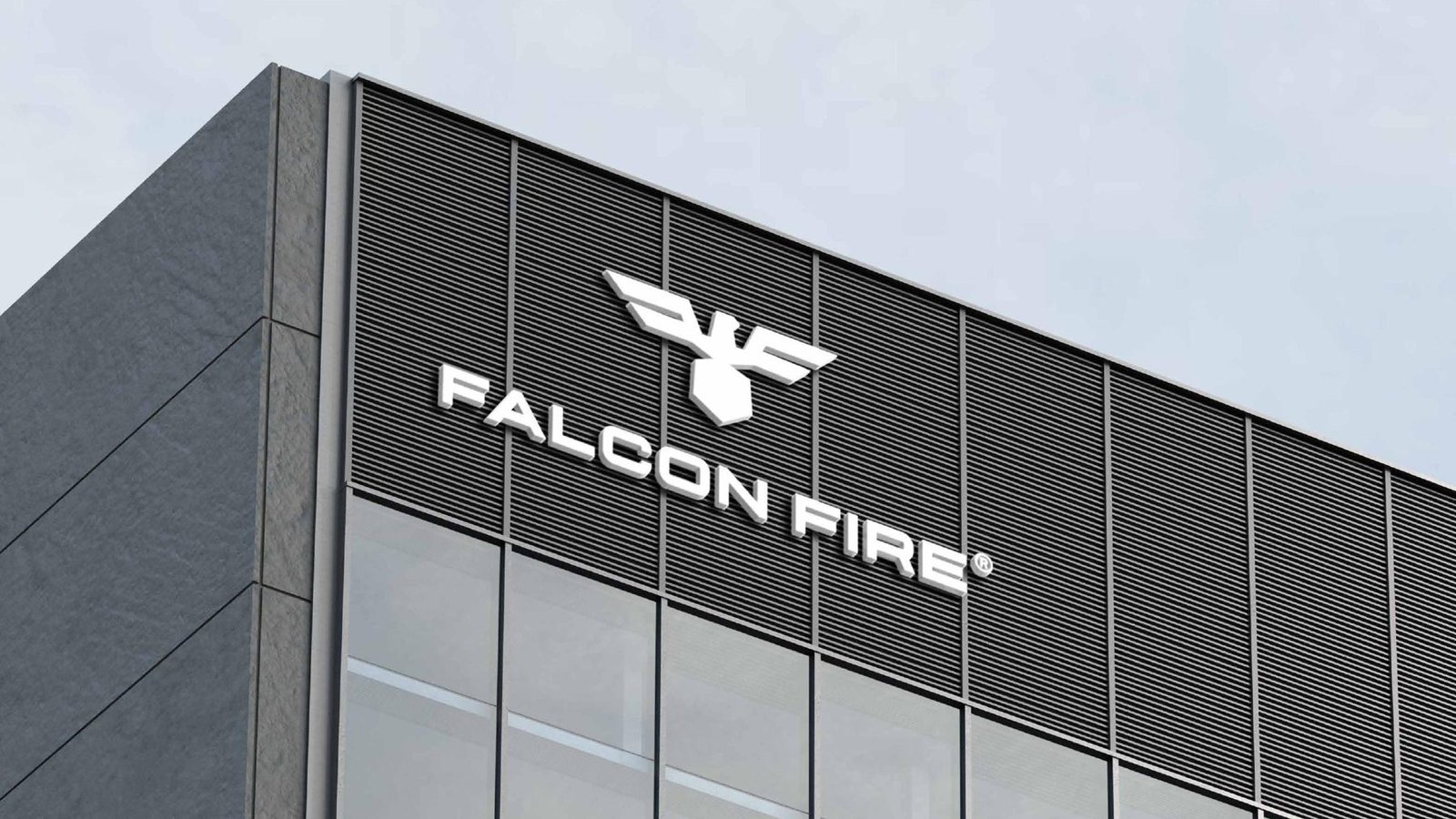
- Give each vehicle surface one job: sides say who you are, the rear carries one contact, doors identify.
- A livery system with a measured template per vehicle model keeps a mixed fleet looking like one company.
- Dubai and Ras Al Khaimah require a permit and set Arabic placement rules; Saudi Arabia limits how much of a commercial vehicle can be branded. Confirm current rules with the authority before production.
- Take durability from the film maker's bulletin for the exact product, which may place the Middle East in its hottest climate zone, and specify the overlaminate.
A truck spends most of its working day on highways, at port gates and outside customers’ sites. For a transport or service company, the fleet is often the brand people see most, yet its graphics are usually decided vehicle by vehicle, by whoever is fitting them that week. The result is a fleet that looks like several companies, with phone numbers nobody can read at 80 km/h.
This guide covers the four decisions that settle fleet graphics properly: what each surface must say, how one livery stretches across different vehicle models, which permits apply in Dubai, Ras Al Khaimah, Saudi Arabia and Egypt, and how to judge film durability in Gulf heat.
Design for distance and a few seconds of attention
Most people see a vehicle side-on, at a distance, while it or they are moving. Design for that view, not for the flat artwork on a screen.
- Give each surface one job. The sides say who you are and what you do, in a few words. The rear carries one contact route, because that is the surface drivers stare at in traffic. Doors and cab identify the company for security gates and site staff.
- Cut the copy. A name, a short service line and one contact are usually enough. A list of eight services or three phone numbers turns into texture at any distance.
- Choose one contact. A short website address or a single number is easier to remember than a full set of channels. Social icons are rarely legible on a moving vehicle.
- Use contrast, not detail. Large shapes in brand colours against a plain base read from far away; thin lines, gradients and small photography do not.
- Respect the body. Door handles, fuel caps, rivets, ribs and hinges cut through anything placed on them. Keep the logo and text on flat panels, and let the shapes of the livery run across the breaks.
- Design Arabic and English together. In the UAE and Saudi Arabia, both languages usually appear on the same panel. Treat them as one bilingual lock-up from the start rather than fitting Arabic in later, especially where rules decide where Arabic must sit (see below).
Test the layout at real scale before approval: place the design on a side elevation of the actual vehicle model and view it shrunk to the size a car driver would see it at 30 or 40 metres. If the name and the one contact do not survive, simplify.
One livery system for a mixed fleet
A fleet rarely has one vehicle type. Sedans for supervisors, pick-ups or vans for technicians, box trucks, tractor units and trailers all have different proportions. A single artwork stretched to fit each one is how a fleet ends up looking inconsistent. The fix is a livery system: a set of fixed rules plus a template for each model.
| Element | What to fix in the system |
|---|---|
| Base colour | Whether vehicles are bought in a standard factory colour (often white) or wrapped fully. A standard base makes repairs and replacement vehicles far simpler. |
| Brand shape | One graphic device (a band, a curve, a colour block) that runs in the same direction and position on every vehicle, so a sedan and a trailer are recognisably the same company. |
| Logo position and size | A rule based on the panel, for example the logo always sits on the front third of the side and on the cab doors, rather than one fixed size. |
| Text hierarchy | Name, service line and contact in fixed sizes relative to vehicle height, in both languages. |
| Rear panel | One contact route and, where relevant, the fleet or vehicle number. |
| Templates | One measured template per vehicle model and body type, including handles, windows, lights and openings, so new vehicles are branded from a file, not improvised. |
Decide early whether vehicles will be fully wrapped or partially branded. Partial branding on a standard base colour is usually quicker to repair after an accident and easier to remove when a vehicle is sold. Full coverage suits large flat surfaces such as box bodies and trailers, where the extra area actually adds visibility. In Saudi Arabia, the rules described below also limit how much of a commercial vehicle’s sides can be branded, which makes partial branding the practical starting point for vans and pick-ups.
Permits and official rules: Dubai, Ras Al Khaimah, Saudi Arabia, Egypt
Vehicle graphics are treated as advertising in several Gulf jurisdictions, with rules on language, coverage and approvals. The points below summarise the official texts we checked in October 2026. Rules and service conditions change, so confirm the current requirements with the authority before production.
Dubai
Decree No. 6 of 2020 Regulating Advertisements in the Emirate of Dubai lists vehicles among advertising media and requires a permit before any advertisement is displayed. The Roads and Transport Authority (RTA) is the entity responsible for permits for advertisements on vehicles. Among the permit holder’s obligations, the decree requires Arabic to be the main language, occupying at least 50% of the advertising medium and placed in the upper section or on the right-hand side, and requires the permit number and the name of the competent entity to be shown on the advertisement. Fines under the decree run from AED 1,000 to AED 15,000, doubled for a repeat of the same violation within a year, up to a maximum of AED 30,000.
The decree does not set out a separate exemption for vehicles carrying only a company name and logo. Plan for an RTA permit for branded company vehicles, and ask the RTA to confirm which permit category applies to your design before the graphics go on. Our guide to the vehicle advertising permit in Dubai sets out an artwork brief that passes.
Ras Al Khaimah
Ras Al Khaimah Municipality’s Vehicle Advertisement Permit (ZA08) covers fixed advertising stickers on vehicles of government entities and commercial companies, including cars, trucks, buses and motorcycles. The service card states that only vehicles owned by the benefiting company may be used, the trade name must match the trade licence, and Arabic text must sit at the top or on the right and cover at least 50% of the advertising space, with English allowed alongside. Applications need the vehicle registration, the trade licence and a visual of the design on the vehicle. The permit is valid for one year, and fees vary by vehicle type and whether coverage is partial or full.
Saudi Arabia
The Ministry of Municipalities and Housing’s requirements for advertising signs, listed as in force on the ministry’s site in October 2026, include a category for signs on vehicles that show the logo of the vehicle’s own owner, without advertising. In summary, as we read the requirements document:
- On commercial vehicles, the logo goes on the two sides only and may cover no more than 50% of each side, as a flat sticker with no protrusion, without blocking the side windows, the lights or the vehicle’s traffic and operating details.
- Goods trucks may be covered across the whole body except the roof and the front, again as a flat, non-three-dimensional sticker that does not cover the lights or the vehicle’s traffic and operating details.
- A municipal licence is required, and approval from the General Directorate of Traffic is needed where the licence covers vehicles or trucks.
Read the full document for the exact conditions on your vehicle type, and check the licence route through the municipality before the design is finalised, not after the graphics are fitted.
Egypt
Egypt’s Law No. 208 of 2020 regulates advertising and signage on public roads and requires prior authorisation from the competent authority. The text we were able to read is an unofficial copy published for reference (Université Laval), and it does not deal specifically with vehicles. Before branding a fleet in Egypt, check with the governorate or the competent authority whether a licence applies to your vehicles and what conditions come with it.
Film, overlaminate and Gulf heat
Vehicle film is a product with a stated life, and that life depends heavily on climate. Ask the production partner which film and which overlaminate they propose, then read the manufacturer’s bulletin for that exact product rather than relying on a general promise of “five years”.
As an example of what to look for, 3M’s product bulletin for IJ180mC (Bulletin 480, EU-PL 07/2017) divides the world into climate zones and places Africa and the Middle East in its hottest zone, with shorter expected life than in Northern Europe and shorter again on surfaces angled away from vertical, such as bonnets and roofs. The bulletin states that durability figures are not a guarantee, that they apply to the unprocessed film, and that protective laminates can improve the durability of finished graphics. 3M’s August 2020 bulletin for IJ180-10 and IJ180C gives a post-application temperature range of −60 to +107 °C and notes that the film is not intended for extended periods at those extremes.
What this means in practice:
- Specify film and overlaminate together, by product name, in the quotation, and keep the bulletins on file.
- Expect horizontal and angled panels to age first. Keeping key text and the logo on vertical sides protects the parts that matter most.
- Prefer lighter base areas. Dark, fully covered panels absorb more of the sun’s heat than white or light ones, which is one more reason to work with a light base colour where the brand allows it.
- Agree care and replacement. The bulletins tie durability to cleaning method and frequency. Give drivers and the washing contractor simple care rules, and plan a replacement cycle rather than waiting for panels to fade unevenly.
From approved design to the road
Most fleet problems appear between approval and fitting: a template from the wrong model year, a colour that shifts on film, a phone number updated on half the vehicles. If the livery is part of a wider rebrand, list every vehicle in the rebrand touchpoint inventory too. A short checklist prevents most of them:
- Measure or obtain templates for each vehicle model and year in the fleet.
- Approve the livery on every template, in both languages, against the permit rules for each emirate or country where the vehicles operate.
- Agree film, overlaminate and colour targets with the production partner, and approve a physical sample of the brand colours on the actual film.
- Check the first fitted vehicle against the approved file before the rest of the fleet is done.
- Keep the final files and templates in one place, so a replacement vehicle next year matches the rest.
Our guide to brand production supervision and colour quality covers proofs and colour checks in more detail.
Fleet graphics are one of the touchpoints RX designs within brand applications and signage: we design the livery and the templates, prepare production-ready files and supervise fabrication partners so the fitted vehicles match the approved design. For Alraghad, a road, sea and air freight company, the bilingual wordmark and red mark were applied to trucks, containers and social covers. For Falcon Fire in Dubai, the identity was designed to work from the business card to signage, PPE and a full-size truck.
Frequently asked questions
Do I need a permit to put my company logo on vehicles in Dubai?
Plan for one. Dubai's Decree No. 6 of 2020 lists vehicles as an advertising medium, requires a permit before any advertisement is displayed and makes the RTA responsible for vehicle permits; it does not set out a separate exemption for name-and-logo liveries. Ask the RTA to confirm which permit applies to your design before the graphics are fitted.
How much of a company vehicle can be branded in Saudi Arabia?
Under the Ministry of Municipalities and Housing requirements for advertising signs, commercial vehicles carry the owner's logo on the two sides only, up to 50% of each side, without blocking side windows or lights. Goods trucks may be covered except for the roof and the front. A municipal licence and General Directorate of Traffic approval apply. Check the current document before production.
What language rules apply to vehicle graphics in the UAE?
In Dubai and Ras Al Khaimah, the official rules require Arabic to occupy at least half of the advertising space and sit at the top or on the right, with English allowed alongside. Dubai also requires the permit number and the competent entity's name to be shown on the advertisement. Other emirates have their own rules, so check locally.
How long does a vehicle wrap last in the Gulf?
It depends on the specific film, overlaminate, surface angle, exposure and care. Manufacturers such as 3M list shorter expected life for their Middle East climate zone than for Northern Europe, and state that the figures are not guarantees, so read the bulletin for the exact product proposed.
- Dubai Legislation Portal, Government of Dubai, Decree No. (6) of 2020 Regulating Advertisements in the Emirate of Dubai (2020-02-14).
- Ras Al Khaimah Municipality, ZA08 – Vehicle Advertisement Permit.
- Ministry of Municipalities and Housing, Saudi Arabia, اشتراطات اللوحات الدعائية والإعلانية (Requirements for Advertising Signs) (2026-10-25).
- Ministry of Municipalities and Housing, Saudi Arabia, اشتراطات اللوحات الدعائية والإعلانية (PDF).
- Université Laval (CEFAN), L'aménagement linguistique dans le monde, Égypte: Loi n° 208 de 2020 portant réglementation de la publicité sur la voie publique (unofficial copy).
- Manshurat, Law No. 208 of 2020 on Regulating Advertisements on Public Roads (listing) (2020-11-30).
- 3M, 3M IJ180mC Product Bulletin 480 (EU-PL 07/2017) (2017-07).
- 3M, 3M Controltac Graphic Film IJ180-10 / IJ180C Product Bulletin (August 2020) (2020-08).