- Confirmed on 29 Oct 2026: Absa Bank Limited (DIFC Branch) holds a DFSA Category 4 licence covering arranging investments, advising on financial products and arranging and advising on credit.
- The release names regional corporates, sovereign-linked entities, institutional investors and trading houses as target clients; lending volumes and African countries covered are not stated.
- RX analysis: a counterparty reads your public information before it meets you, so consistent facts, a clear trade flow and a bilingual presence shorten the first conversation.
- Keep financials and customer names in a private data room; publish only what you can stand behind.
On 29 October 2026, Absa announced that Absa Bank Limited has opened a branch in the Dubai International Financial Centre (DIFC), regulated by the Dubai Financial Services Authority (DFSA). The stated purpose is to link Gulf capital and corporates with African markets. For a Gulf trading house or a company exporting into or out of Africa, the news is less about a new bank logo in Dubai than about a new kind of conversation: one where a bank asks structured questions about your company before it discusses structure, credit or investors. This article sets out what the announcement says and does not say, and then gives a practical readiness pack for a company that wants to be ready for those questions.
What was announced
- The entity. Absa Bank Limited (DIFC Branch) holds a DFSA Category 4 licence. According to the release, this lets the branch arrange deals in investments, advise on financial products, and arrange and advise on credit.
- The clients. The release names regional corporates, sovereign-linked entities, institutional investors and trading houses, served through Absa’s Corporate and Investment Banking products and its wider African network. It refers to “eligible clients”.
- The sectors. Infrastructure, energy, logistics, agriculture and fast-moving consumer goods. Enterprise’s summary lists four of these (it omits agriculture), so we rely on the release’s list of five.
- The people quoted. Cheryl Buss, CEO of Absa International, said the decision to establish a presence in Dubai reflects the growing importance of the Gulf. Clinton Clarke, Senior Executive Officer of the DIFC branch, said a Dubai presence allows closer engagement with clients.
- Timing. Enterprise notes that the opening had originally been targeted for the first quarter and that no reason for the delay was given. We do not draw any conclusion from that.
What the announcement does not say
Neither source states how much the branch will lend or arrange, whether it will book loans in Dubai, what products it will price, or which African countries it will cover first. Enterprise mentions only South Africa as Absa’s home market, and the release speaks only of “African markets” and Absa’s “African network”. A Category 4 licence, as described in the release, covers arranging and advising. It does not on its face tell you what balance-sheet capacity sits behind a given deal.
That matters for expectations. The named client groups are corporates, sovereign-linked bodies, institutional investors and traders. A mid-sized exporter may reach this desk through a larger counterparty, an adviser or another bank, not directly. The sensible reading is that more structured conversations about Africa-Gulf trade, credit and investors are becoming available in Dubai, not that financing is now easier to obtain.
RX analysis: what a counterparty can see before it calls you
Before a bank, an investor or a trading partner takes a meeting, someone usually looks you up. They read your website, your profile, your leaders’ LinkedIn pages and any public registration data. What they find answers three silent questions: is this company real and stable, is its information consistent, and can it explain its trade clearly? Weak answers cost a meeting. Strong answers shorten the first one.
Consider a hypothetical example, clearly invented for illustration: a Gulf distributor of packaged food planning to source from East African producers. Its website shows a logo and a product list. Its profile PDF is three years old and lists a different office address. Its managing director’s LinkedIn page describes a former role. None of this is dishonest, but together it reads as an unfinished company. A bank officer asked to look at the relationship has to start by clarifying basics instead of the opportunity.
The readiness pack
The table below lists what we would prepare. The financial items are for a private data room, shared on request and under confidentiality, not for the public website.
| Item | What it should show | Where it lives |
|---|---|---|
| Company fact sheet (1 page) | Legal name, registrations, ownership structure, address, sectors, countries served, leadership, contact for finance questions | Website and data room |
| Company profile | What you trade or deliver, volumes you can state, how a transaction runs from order to payment, named categories of customers and suppliers | Website download and data room |
| Financial summary | Audited statements and a short management commentary; trade cycle and key counterparties as you are allowed to describe them | Data room only |
| Corridor brief | Which Gulf and African routes you use, ports and logistics partners, documents and licences involved in each | Data room, with a short public version |
| Referenceable projects | Two or three completed trades or contracts you may describe, with scope and your role, never inflated | Website and data room |
| Leadership profiles | Current, consistent biographies and LinkedIn pages for the people who will meet the bank | Website and LinkedIn |
| Bilingual website | The same facts in English and Arabic, with identical legal details on both | Website |
Check consistency first
Before polishing anything, compare your legal name, trade name, address, licence numbers, ownership description and leadership titles across your website, profile, LinkedIn page, directory listings and registration documents. Differences are more common than owners expect, and they are the first thing a compliance-minded reader notices. Fix the source of truth, then update everything to match it.
Make the trade understandable
Most company profiles describe a company and skip the transaction. A counterparty considering trade finance wants to see the flow: who orders, who ships, where goods are held, who pays whom, and when. A one-page diagram, with no confidential figures, does more than three pages of adjectives. Our notes on pitch decks versus company profiles and on the bilingual company profile format explain which document does which job.
Match the website to the audience
A Dubai-based counterparty will most likely read English; a Saudi, Egyptian or other Arab counterparty may read the Arabic page first. Keep both complete and consistent. The structure points are covered in our guide to Arabic and English websites for Gulf buyers.
A sensible order of work
- Name an owner. One person, usually the finance director or managing director, owns the facts. Marketing owns the format, not the content.
- Fix the facts. Settle the legal names, ownership description, registrations and leadership titles, and record them in one internal document.
- Write the trade flow. Draw the order-to-payment route for your two or three main corridors, with partners named only where permitted.
- Update the public layer. Website, profile, LinkedIn pages and directory listings, in both languages, from the settled facts.
- Assemble the private layer. Financial summary, licences and references in a controlled folder, with a named contact who can answer follow-up questions quickly.
- Test it. Ask someone outside the company, ideally an adviser who has worked with banks, to read only what you have published and say what they would still need to ask.
The last step is the cheapest and the most revealing. If an outsider cannot tell in a few minutes what you trade, with whom and through which routes, a banker looking at several companies at once will not manage it either.
What not to publish
- Confidential financials or customer names without permission. Offer them in a controlled setting.
- Claims about finance you do not have. Do not state that you are “backed by” or “banking with” a named institution unless that institution has agreed.
- Africa-wide coverage claims. Name the countries and routes you actually operate. Broad claims make a careful reader ask which ones you mean.
- Unverifiable superlatives. “Leading” and “largest” invite a request for evidence you may not want to produce.
Where marketing help fits, and where it does not
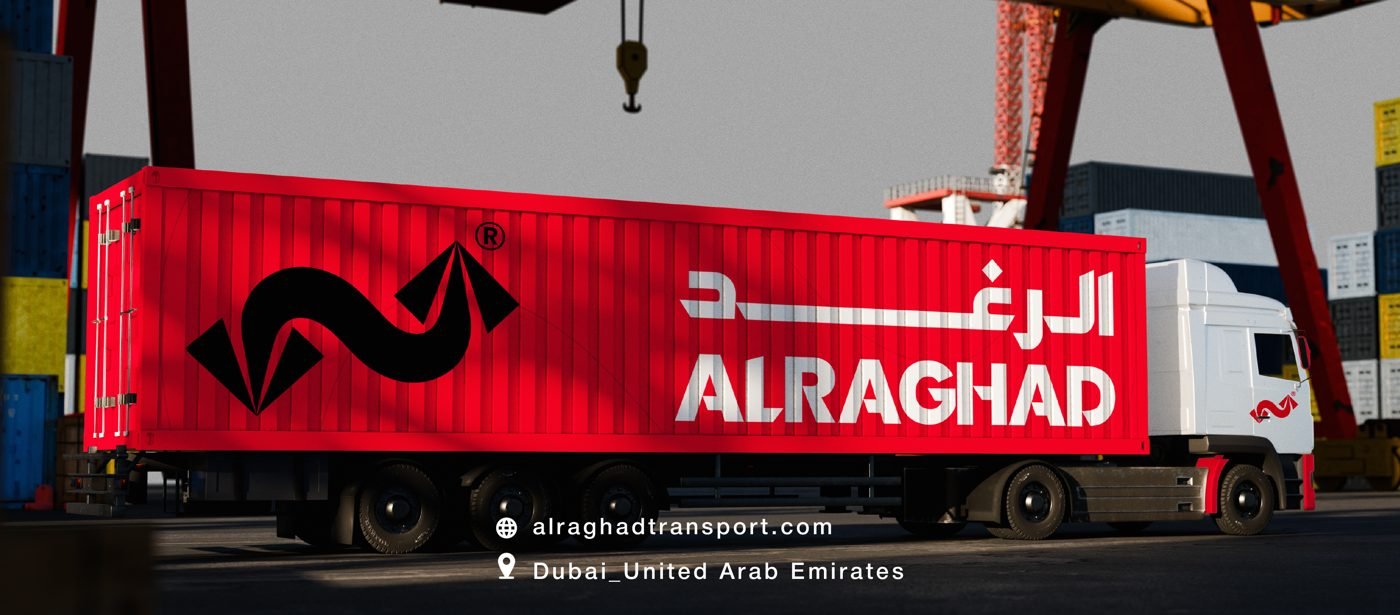
Preparing this pack is partly a brand and communication task: structuring the profile, aligning the identity across documents and building a bilingual site. RX’s brand identity and positioning work covers profiles and consistent identity systems; for example, our Alraghad project produced an identity and a company profile for a road, sea and air freight company. The financial, legal and regulatory content, however, belongs to your finance and legal advisers. A designer can make a statement of accounts readable, but cannot make it accurate.
If you are unsure which parts of your public information would hold up to a banker’s reading, a business diagnosis session with RX is a paid, one-to-one review of your profile, website and online presence, with clear next steps.
Frequently asked questions
What licence does Absa's Dubai branch hold?
Absa Bank Limited (DIFC Branch) holds a DFSA Category 4 licence. According to the 29 October 2026 release, it permits arranging deals in investments, advising on financial products, and arranging and advising on credit.
Which sectors and clients is the branch targeting?
The release lists infrastructure, energy, logistics, agriculture and fast-moving consumer goods, and names regional corporates, sovereign-linked entities, institutional investors and trading houses as target clients.
Can any Gulf exporter now get trade finance from Absa in Dubai?
The sources do not say. The release refers to eligible clients and does not state lending volumes, products or which African countries are covered, so approach it as an enquiry, not an assumption.
What should a company prepare before approaching a bank?
In RX's view: a one-page fact sheet with consistent legal details, a profile that explains how a trade flows from order to payment, a private financial summary, referenceable projects, current leadership profiles and a bilingual website. Each bank sets its own requirements.
Should financial statements go on the public website?
Generally no. Keep audited statements and customer details in a controlled data room shared on request, and publish only information you are comfortable having read by anyone.
- Mondo Visione (Absa press release), Absa establishes DIFC presence to connect Gulf capital with Africa (2026-10-29).
- Enterprise, Absa opens in DIFC; DFSA fines Moody's for data privacy failings (2026-10-30).