- DataReportal's Digital 2026 Saudi figures are advertising reach from platform tools, not active users, and some, such as TikTok's, exceed 100% of the audience they describe.
- Snapchat, YouTube and TikTok post the largest ad-reach figures; LinkedIn's 12.0 million is registered members, and X's ad reach fell 6.8% in a year.
- Map platforms to three buyer types — consumers, SME owners and corporate procurement — and give each platform a role, not a share of a habit.
- Search earns budget wherever buyers already look for what you sell; social platforms earn it where you need to create demand or stay remembered.
A common answer to where a Saudi advertiser should spend is Snapchat and TikTok, because “everyone is on them”. The reach numbers support the first half of that sentence. They do not support the second half, which is that reach should decide the budget. When nearly every adult in the Kingdom can be reached on three or four platforms, reach stops being the variable that separates good plans from wasteful ones. Who your buyer is, and what state of mind they are in when the ad appears, matters far more.
This analysis reads the latest figures properly, including the caveats most summaries leave out, and then maps each platform to the three buyer types most Saudi companies sell to.
The 2026 numbers, as published
The most widely used public source is DataReportal’s Digital 2026: Saudi Arabia, published on 8 November 2025 and based on Kepios analysis. Its platform figures are advertising audience estimates taken from each platform’s own planning tools, mostly as of October to late 2025. That makes them about a year old at the time of writing (October 2026), so check whether a newer edition is out before relying on them.
| Platform | Ad reach, late 2025 | Share of adults 18+ | Change over the year | Female share of ad audience |
|---|---|---|---|---|
| YouTube | 27.5 million | Not given (80.0% of internet users) | +1.1% | 41.0% |
| Snapchat | 25.3 million | 89.0% | +4.1% | 43.5% |
| TikTok (18+ only) | 38.6 million | 154.3% | +17.7% | 39.1% |
| 18.2 million | 71.0% | +13.8% | 41.1% | |
| 17.7 million | 70.0% | +17.3% | 22.9% | |
| X | 15.0 million | 57.2% | -6.8% | 38.5% |
| LinkedIn (members) | 12.0 million | 48.0% | +9.1% | 24.7% |
For context, the same report puts the population at 34.7 million and internet users at 34.4 million, a 99.0% adoption rate. The General Authority for Statistics’ 2024 population estimates give a mid-2024 total of 35.3 million, of whom 55.6% are Saudi and 44.4% non-Saudi. That split matters for language and creative, and it is invisible in platform reach tables.
The Communications, Space and Technology Commission’s Saudi Internet Report 2025, announced on 19 July 2026, adds the usage picture: 61.3% of users spend seven hours or more online each day, and average mobile data consumption is 53 GB per person per month. The audience is not scarce. Attention is the constraint.
Four things the reach figures do not tell you
The full methodology notes, and the figures for other Gulf countries, are in our GCC social media statistics for 2026; the points below are the ones that change a Saudi budget.
1. Ad reach is not active users
DataReportal is explicit that these figures come from ad planning tools and are not monthly active users. It quotes Meta’s own warning that estimated audience size “is not a proxy for monthly or daily active users, or for engagement”. A platform with a larger reach figure is not necessarily where your buyers spend more time.
2. Some figures are larger than the audience they describe
TikTok’s 38.6 million covers users aged 18 and above only, yet it equals 154.3% of Saudi adults and 112.3% of all internet users. DataReportal republishes the source data as it is and acknowledges that such figures may look implausible. It does not give a single cause; plausible explanations include duplicate or non-personal accounts, differences between how platforms and official statistics count residents and visitors, and the platform’s own audience modelling. Treat the TikTok number as a sign of very high reach, not as a head count.
3. LinkedIn counts members, not users
LinkedIn’s 12.0 million is registered members. Many of them rarely log in, so the figure is not directly comparable with the others. For B2B, the useful question is not how many members there are but how many people with the job titles you need sit inside a targetable audience. You only find that out by building the audience in Campaign Manager.
4. Declines can be corrections
X’s ad reach fell by 1.1 million (-6.8%) over the year. DataReportal cautions that reach can fall when platforms remove accounts, that X’s reported reach has fluctuated unusually, and that its counts may include accounts that are not individual people, such as business and brand accounts. A decline is a reason to test before committing budget, not proof that the audience has gone. The same caution applies to growth. DataReportal notes that Meta has changed how it reports ad reach and revises its figures regularly; our reading is that Facebook’s +17.3% and Instagram’s +13.8% should not be taken as a count of new people.
Start with the buyer, not the platform
Global channel advice tends to sort platforms by format: short video, search, professional network. A Saudi budget is better sorted by the buyer and the moment of purchase. Most companies sell to one or more of three buyer types.
Consumers
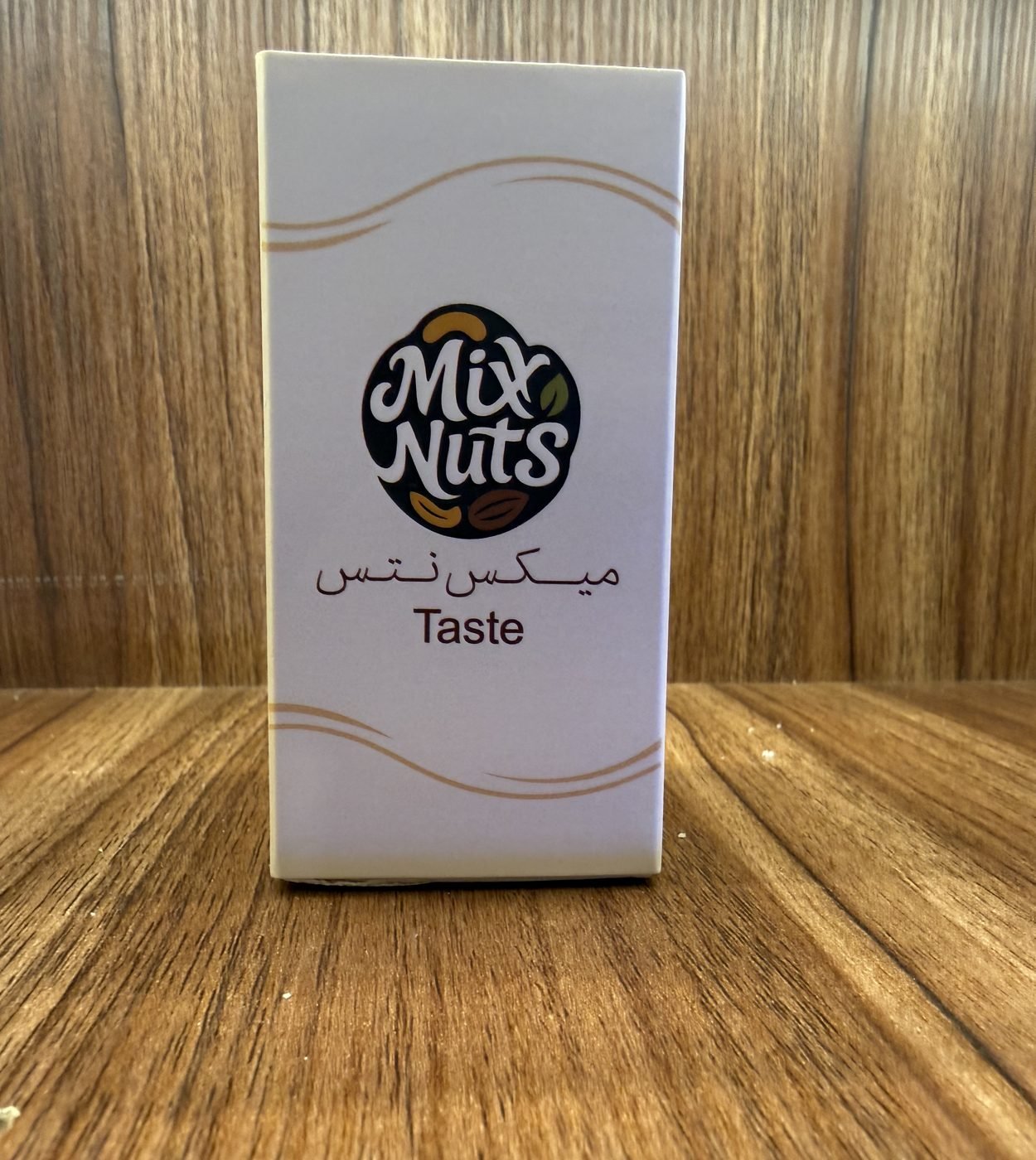
Households, young adults and families buying food, fashion, beauty, cars, clinics or property. Here the reach table is genuinely useful, because these buyers can be targeted by location, age, gender and language on every major platform. Snapchat’s targeting options cover location and demographics, customer-list Custom Audiences and Lookalikes; TikTok’s targeting dimensions add interests and behaviours. Note the gender splits: Facebook’s adult ad audience is 75.7% male, while Snapchat’s is the most balanced of the listed platforms at 43.5% female. A brand selling mostly to women should check this before copying a Facebook-heavy plan from another market. For Mix Nuts, a premium nuts and gifting store in Riyadh, RX built campaigns with HungerStation, Jahez, Keeta and Tabby so that posts led to a way to order, a reminder that for many Saudi consumer brands the conversion path is a delivery or payment app, not a website form.
SME owners and managers
The owner of a contracting firm, a workshop, a clinic or a trading company is a consumer in the evening and a buyer in the morning. They are reachable on Snapchat, Instagram and TikTok, but those platforms are not built for job-title targeting, so you reach them through location, interest, retargeting and creative that names their problem. When they actively need a supplier, they search. That is where Google Search takes over.
Corporate procurement and technical decision-makers
Procurement managers, consultants, engineers and department heads at large companies and government-linked entities buy through vendor registration, tenders and approved lists. Volume reach does little here. What matters is reaching named companies and roles, and being findable when they check you. LinkedIn is the platform in the table built around targeting by job title, company, industry and seniority, plus company and contact list targeting for account-based campaigns. We covered when its higher cost is justified in LinkedIn Ads for B2B in the GCC.
A role for every platform, by buyer type
The table below assigns roles rather than percentages. Percentages depend on your margins, sales cycle and current demand, and anyone who quotes a universal split without knowing those is guessing.
| Platform | Consumers | SME owners | Corporate procurement |
|---|---|---|---|
| Google Search | Capture demand for named products and “near me” searches | Primary: catches the moment they need a supplier | Primary for specific product and service searches; low volume, high value |
| Snapchat | Primary reach and offers, strong for younger and female audiences | Supporting: awareness and retargeting | Rarely; brand presence only |
| TikTok | Primary for video-led demand creation | Test: education and problem-led video | Rarely |
| Instagram / Facebook | Primary for catalogue, offers and WhatsApp inquiries | Supporting: retargeting and WhatsApp inquiries | Retargeting site visitors |
| YouTube | Reach and longer product stories | Supporting: explainers and demos | Supporting: technical videos people look up |
| X | Test: news, launches, public conversation | Test | Supporting: visibility around announcements and events |
| Rarely | Supporting: owners who are active on it | Primary: role and account targeting |
Google Search does not appear in the DataReportal reach table because it does not work on reach. It shows ads against what people type, with keyword match types setting how closely a search must match. With internet use at 99%, the limit on Search is not the audience but how many people search for your product. For niche B2B products that number can be small, which is why low-volume keyword strategy matters, and why Snapchat and TikTok, as we argued in our short-form B2B analysis, earn B2B budget only for specific jobs.
Events can change the roles: for Falcon Power Global’s Intersec Saudi Arabia 2025 participation, RX ran a B2B exhibition campaign across LinkedIn, TikTok, Meta and Snapchat together, because the stand was the conversion and every platform pointed to it.
Hypothetical example: turning roles into a starting split
The two businesses and every percentage below are invented to show the reasoning; neither is based on an RX client, including the cases linked above. They are illustrative starting shares that the test in the next section is meant to correct, not benchmarks, not RX budgets and not results. Your own margins, demand and sales cycle decide the real numbers.
| Hypothetical: a Jeddah casual-dining restaurant group | Role | Hypothetical starting share | What the test checks |
|---|---|---|---|
| Snapchat | Primary reach and offers | 30% | Cost per order through the delivery apps |
| Instagram / Facebook | Primary: menu, seasonal offers, WhatsApp bookings | 30% | Cost per booking and per delivery order |
| TikTok | Test: video-led demand creation | 15% | Whether it beats one of the two primaries on cost per order |
| Google Search | Branch searches and “near me” | 15% | Calls and direction requests from search |
| Delivery-app promotions | Conversion at the point of order | 10% | Orders against the app’s own reporting |
| Hypothetical: an MEP contractor selling to procurement | Role | Hypothetical starting share | What the test checks |
|---|---|---|---|
| Google Search | Primary: specific service searches | 45% | Quotation requests per month, not clicks |
| Primary: named accounts and roles | 40% | Conversations with target accounts and vendor-file requests | |
| Meta / Snapchat | Retargeting site visitors only | 15% | Whether returning visitors request a quotation |
Notice what the tables leave out. The restaurant group gives LinkedIn nothing, and the contractor gives TikTok nothing; each split funds the platforms that match its buyer and tests only one challenger at a time.
Run a test that settles the argument
A data table can narrow the choice. Only your own campaigns can settle it. A practical sequence:
- Define the conversion that matters. A WhatsApp conversation with a real requirement, a quotation request or a booked visit, not a click or a follower. Set up tracking for it before spending.
- Fund the intent channel first. If people search for what you sell, cover those searches before buying reach. Buyers who are already searching are the closest to a decision.
- Test one reach platform per buyer type. For consumers, compare two of Snapchat, TikTok and Instagram with the same offer and landing path. For B2B, compare LinkedIn against retargeting on Meta or Snapchat. Our guide to how to size a first test budget covers how much to put behind each test.
- Write for the audience, not the platform. With 44.4% of residents non-Saudi (GASTAT, mid-2024), decide deliberately whether each campaign runs in Arabic, English or both, instead of defaulting to one.
- Judge on qualified outcomes. Compare cost per qualified inquiry and how many inquiries your sales team actually followed up. Cheap leads that never answer the phone are expensive.
- Keep the accounts in your company’s name. Whoever runs the campaigns, the ad accounts, pixels and audience data should belong to you so test results stay with the business.
This is the structure RX uses on performance marketing work: one business objective per campaign, a conversion named for the buyer (a delivery-app order or a WhatsApp chat for consumers, a call for SME owners, a quotation request for corporate procurement), and reporting on what moves the business rather than on platform metrics.
When to revisit the split
Re-read the plan when any of these happen:
- The next DataReportal edition appears. A Digital 2027 edition may appear in the coming months; DataReportal does not announce a fixed date, so check its Saudi Arabia page. Compare like with like; DataReportal itself warns against calculating changes against earlier reports because platforms revise their base data.
- Your buyer mix changes. A consumer brand that starts selling to hotels or retailers needs a B2B channel, not more Snapchat budget.
- A platform’s cost per qualified inquiry moves for two or three months in a row. One bad month is noise; a trend is a signal.
- You enter a new season. Ramadan, back-to-school and major exhibitions shift where your buyers pay attention and what they search for.
If the harder question is which buyers to prioritise in the first place, that is a marketing strategy decision to settle before any media plan. Platform choice follows from it, not the other way round.
Frequently asked questions
What is the best social media platform for advertising in Saudi Arabia?
There is no single best platform. Snapchat, YouTube and TikTok post the largest ad-reach figures in DataReportal's Digital 2026 report, so the choice depends on your buyer: consumer brands usually lead with Snapchat, TikTok and Instagram, while B2B companies get more from Google Search and LinkedIn.
How many Snapchat users are there in Saudi Arabia?
DataReportal reports Snapchat ad reach of 25.3 million in late 2025, equal to 89.0% of adults aged 18 and above. This is an advertising audience estimate from Snap's tools, not a count of active users.
Why does TikTok's Saudi audience exceed 100% of adults?
TikTok's ad tools reported 38.6 million users aged 18 and above, which is 154.3% of Saudi adults. DataReportal republishes platform data as reported and gives no single cause; duplicate accounts and modelling differences are plausible explanations, so read it as very high reach, not a head count.
Is LinkedIn advertising worth it in Saudi Arabia?
For selling to companies, often yes, because LinkedIn is the platform built around targeting by job title, company and seniority. Its 12.0 million Saudi figure counts registered members, so build your actual audience in Campaign Manager before judging its size.
Should Google Ads come before social media ads in Saudi Arabia?
If people already search for what you sell, cover those searches first, because Search reaches buyers at the moment of need. Social platforms are better for creating demand and staying remembered between purchases.
- DataReportal (Kepios), Digital 2026: Saudi Arabia (2025-11-08).
- General Authority for Statistics (GASTAT), Population Estimates Publication 2024.
- Communications, Space and Technology Commission, CST highlights Saudi digital infrastructure via Internet Report 2025 (2026-07-19).
- AGBI, Snap opens Saudi office and creator hub (2024-12-10).
- Snapchat for Business, Snapchat Ads Targeting Options.
- TikTok Ads Manager Help, Ad Targeting Dimensions.
- LinkedIn Marketing Solutions, LinkedIn ad targeting.
- Google Ads Help, About keyword matching options.