- Map your trade buyers first: retail, wholesale and HORECA each evaluate the same product with different documents.
- Get GTINs, case data, certificates and approved images right before designing the catalogue; distributors use the brand owner's GTINs.
- Produce separate retail and foodservice catalogue editions from one source, with prices in a dated list of their own.
- Run a HORECA flow that reaches both purchasing and the chef, and keep consumer social working for the trade side too.
Many food importers in the Gulf and Egypt market themselves as if their buyer were the shopper. The Instagram feed is full of recipes, Ramadan visuals and product close-ups, and that content has a job. But the people who decide whether a pallet leaves the warehouse are rarely scrolling it. They are category buyers at supermarket chains, purchasing managers and executive chefs at hotels, owners of restaurant groups and wholesalers who resell to smaller outlets.
Those buyers need different things: clean product data, a catalogue they can compare against what they already stock, a price list they can trust, a sample when they ask for it and a fast answer on WhatsApp when an order runs short. This guide sets out how to build that trade side of a food import business and run it next to consumer social, not instead of it.
Map who actually buys, and what each buyer needs from you
Before designing anything, list your trade customers by type. Most importers sell through three or four channels at once, and each one evaluates a product differently.
| Buyer | What they are deciding | What they ask you for |
|---|---|---|
| Supermarket or hypermarket category buyer | Whether a product earns shelf space and can be listed in their system | Barcodes, product data, pack and case details, images, shelf life, the retail price you recommend and your promotion plan |
| Distributor or wholesaler | Whether the line will move to their own customers at a margin | Trade price list, case and pallet configuration, minimum order, delivery terms, sales material they can pass on |
| Hotel purchasing manager and executive chef | Whether the product performs in the kitchen and fits the cost of a dish | Foodservice pack sizes, yield and usage notes, samples, consistent supply, certificates and storage requirements |
| Restaurant group or café chain | Whether it suits the menu and can be supplied to every branch | Application ideas, branch delivery, a named contact, quick reorder on WhatsApp |
The table usually shows two things. First, the retail and foodservice conversations need different documents, even when the product is the same. Second, most buyers start with data, not with a brand story. That is where the work begins.
Fix the product data before you design a single page
Retail listing systems are built around product identifiers, so data comes before design. GS1, the organisation behind the barcode numbers used in retail, says that many marketplaces and retailers require a GS1 GTIN (Global Trade Item Number) to sell online, and supermarket supplier forms typically ask for barcodes as well. The same GS1 guidance draws a distinction that matters to importers: brand owners and manufacturers get their GTINs from their local GS1 member organisation, while resellers and distributors supply the product’s existing GTIN, which may mean asking the brand owner or manufacturer for it. GS1 also says it is the only official provider of GS1 GTINs and EAN/UPC barcodes and that different GTINs must be allocated to every different product the brand owner is responsible for.
For an importer, that typically splits the range in two:
- Brands you import as an agent or distributor: collect the manufacturer’s GTINs for every unit and case, and check that the barcodes on the imported packs scan and match the numbers you send to buyers.
- Your own or private-label brands: you are the brand owner, so the numbering is your responsibility. Contact the GS1 member organisation in the country where you register, and ask what it offers if you plan to sell the same brand in several Gulf markets.
Change control matters as much as the first allocation. GS1’s GTIN decision support tool says any increase or decrease in the legally required declared net content printed on the pack needs a new GTIN. The allocation rules fact sheet published by GS1 New Zealand adds two more that importers meet often: a change to the number of trade items in a case, and a change of more than 20% to any physical dimension or to gross weight. Check the current GS1 GTIN Management rules, or ask your GS1 office, before relying on these for a specific product. If a supplier moves from 400 g to 380 g, or from 12 to 10 units per carton, your catalogue, price list and every buyer’s system need the new number. Treat these changes as a formal update, not a quiet artwork swap.
The product data sheet every SKU should have
Build one data record per product, in Arabic and English, before the catalogue. The exact fields vary by retailer, so ask each buyer for their supplier form; in practice, requests commonly cover the following:
- Product name, brand, variant and net content as printed on the pack
- GTIN for the unit, the case and, where used, the inner pack
- Case configuration: units per case, cases per layer and per pallet
- Unit and case dimensions and gross weight
- Country of origin, shelf life from production and the shelf life you can guarantee on delivery
- Storage conditions (ambient, chilled, frozen) and handling notes
- Ingredients, allergens and nutrition, matching the label exactly
- Certificates you hold for the product, such as halal certification, with issuer and expiry date
- Approved images: front, back, side and the case
Product images are part of the data, not decoration. GS1 maintains product image standards and guidelines as a common framework for exchanging product photos between suppliers and retailers as e-commerce grows, including issues such as image format, computer-generated or enhanced images and usage rights. Some national GS1 bodies go further: GS1 Canada’s grocery checklist, for example, tells suppliers to publish their product data to trading partners and says images sent to GS1 Canada are evaluated against global standard image requirements. Requirements differ by country, so confirm what your target retailers use, but plan for clean packshots on a plain background alongside the lifestyle visuals used on social.
Build the trade catalogue around how food is bought
A general catalogue structure (applications, standard specification tables, a separate dated price list) is covered in our guide to B2B product catalogues for distributors. Food adds its own requirements.
- Two editions, one source file. A retail edition organised by category and aisle, with consumer packs, recommended shelf prices left to the price list, and promotion ideas. A foodservice edition organised by kitchen use (bakery, pastry, hot kitchen, beverages, breakfast buffet) with catering packs, yields and preparation notes.
- Logistics on every product, not at the back. Case configuration, shelf life and storage temperature belong on the product entry. A chef is unlikely to order a frozen line if the kitchen has no freezer space for a full case.
- A dated price list kept separate. Food prices move with exchange rates, freight and harvests. Put prices in their own document with a validity date and the terms (minimum order, delivery areas, payment), so the catalogue does not go out of date every month.
- Origin and story kept short. One paragraph per principal brand on origin and production is useful for hotel menus that name their suppliers. Long brand histories belong elsewhere.
- A WhatsApp-sized version. Buyers will forward a single page to a colleague. Each product or category should work as a standalone image or a short PDF.
If you represent international brands, check what the principal allows before redesigning their packshots or translating their claims, and keep their guidelines next to yours. This is the kind of work our distributor and product marketing team handles under both the importer’s brand and the principal’s rules.
A HORECA sales flow: from first contact to the reorder
Hotels and restaurant groups usually buy through more than one person: typically a purchasing or procurement manager handles suppliers and terms, while the executive chef or F&B manager has the main say on whether the product goes on the menu. A sales flow has to reach both.
1. Find the decision-makers
LinkedIn is useful for identifying purchasing managers, executive chefs and F&B directors at hotel groups and larger restaurant operators, and for making the company look established when they check you. Keep the company page current with product arrivals, certifications and the hotels or outlets you can publicly name with their permission. The account holder stays in control of the page and approves what is posted. Follow LinkedIn’s current terms on messaging and automation.
2. Lead with a sample and a use, not a brochure
For chefs, a first meeting usually goes further with a product in hand and one or two concrete applications: what it replaces, how it is prepared and what it yields per pack. A one-page application sheet per product, written for kitchens, often does more than the full catalogue.
3. Make the follow-up written and specific
After a tasting, send the foodservice pages for the products tried, the price list with validity date, the certificates the purchasing team will ask for and the person to contact for orders. Prepare these as saved replies so every salesperson sends the same accurate set.
4. Move repeat business onto WhatsApp, with structure
Once an outlet is buying, reorders and urgent requests often arrive on WhatsApp. Give the team a short set of message templates for order confirmation, delivery time, out-of-stock substitution and new arrivals, and a rule on who answers which accounts. Our WhatsApp sales flow for B2B inquiries shows how to structure those replies.
Trade shows: plan the follow-up before you book the stand
Exhibitions remain one of the few places where retail buyers, distributors and hotel purchasing teams from several countries walk past the same stand. In the Gulf, Gulfood in Dubai is a fixed point in many food importers’ calendars; the organiser’s site lists the next edition for 15 to 19 March 2027 at “Dubai World Trade Centre & Dubai Exhibition Centre” (its header names the second venue as Dubai Expo City). Check dates and venues on each organiser’s own site before committing budget, since third-party listings are often out of date.
For a food importer, a show pays back only if the material is ready before it opens:
- Listing packs prepared for the retail buyers you plan to meet, with data sheets and images ready to send the same week.
- A foodservice tasting plan: which products, which preparations, and who on the stand can talk to a chef.
- A simple way to record each contact’s buyer type, products of interest and agreed next step, so retail, wholesale and HORECA leads go to the right person.
- Follow-up messages written in advance for each buyer type, sent within days, not weeks.
Why that last point decides the return is covered in our piece on exhibitions that produce badge scans but no pipeline.
Keep consumer social, but give it a trade job too
None of this means abandoning consumer channels. Visible demand can help a buyer say yes: a category buyer tends to be more comfortable listing a product that shoppers already recognise, and a hotel is likely to feel more confident in a supplier whose brand looks active and established. For a food importer, social content also does work for the trade side if you plan for it:
- New-arrival and shipment posts double as announcements to existing trade customers.
- Recipe and preparation reels can be cut into short clips for chefs and shared on WhatsApp.
- Seasonal campaigns (Ramadan, Eid, national days, winter) give retail buyers a reason to plan promotions with you; our Ramadan campaign plan for food and gifting brands covers how to plan one.
- Professional packshots shot once serve the feed, the catalogue and the retailer’s listing.
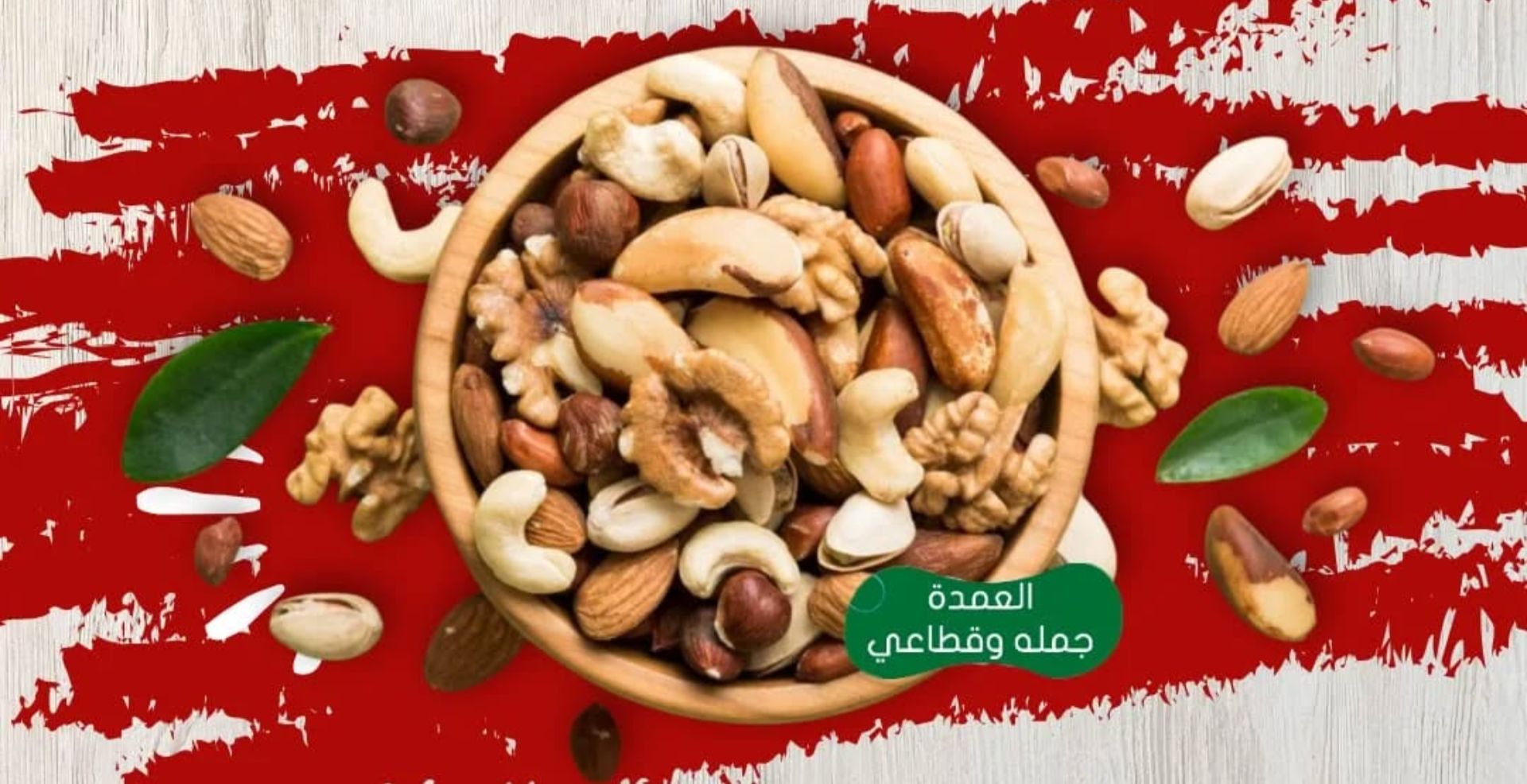
For Elomdaa, a Saudi food importer with thirty years of food trading, RX produced social content, campaigns and reels that bring the company’s range to life.
Where to start: an order of work
If the trade side has grown informally, with each salesperson keeping their own PDFs and price screenshots, rebuild it in this order:
- Audit the range: every SKU, its GTINs (unit and case), current label and certificates. Flag missing or mismatched numbers.
- Create the data sheet for each product in Arabic and English, and agree who owns updates when a supplier changes a pack.
- Shoot or collect approved images to a consistent standard.
- Build the catalogue editions and the dated price list from that single source.
- Write the sales flow: application sheets, follow-up sets and WhatsApp templates by buyer type.
- Align social and exhibitions with the trade calendar, so launches, shows and seasons reinforce the same message.
Start with step one this week: put every SKU into one sheet with its unit and case GTIN, net content and certificate expiry dates, then scan a pack of each from the warehouse against it. The mismatches you find are the ones a category buyer would find first.
Frequently asked questions
Do I need my own barcodes to sell imported food to supermarkets?
It depends on who owns the brand. GS1 says brand owners and manufacturers get GTINs from their local GS1 member organisation, while resellers and distributors supply the product's existing GTIN, which may mean asking the brand owner or manufacturer. For your own or private-label brands, the numbering is your responsibility.
What product information do retailers usually ask a food supplier for?
Most supplier forms cover the GTIN for unit and case, net content, case and pallet configuration, dimensions and weight, origin, shelf life, storage conditions, ingredients, allergens and nutrition, certificates and approved product images. Ask each retailer for its own form, as fields vary.
Is consumer social media still worth it for a B2B food importer?
Yes, if it is planned to support trade sales as well. Visible consumer demand helps listing conversations, and packshots, arrival posts, recipe reels and seasonal campaigns can be reused in catalogues, WhatsApp follow-ups and retailer promotions.
- GS1, Why do I need a GS1 GTIN to sell my product?.
- GS1, Get barcodes.
- GS1, GTIN decision support tool: Declared net content.
- GS1 New Zealand, Fact sheet: GTIN allocation rules.
- GS1, Product image standards and guidelines.
- GS1 Canada, Supplier Excellence Checklist for Grocery.
- Gulfood (organiser website), Gulfood 2027: show dates and venue.