- In our experience, social media works for a logistics company as a background check and a reminder between shipments, rather than as an instant booking channel.
- Five repeating pillars cover most needs: route explainers, customs tips, shipment milestones, fleet and people, and real company news.
- Every customs tip needs an official source, a date and a quarterly review; every client shipment needs written consent.
- A shared content inbox from operations plus one monthly batch session makes four to five posts a week realistic.
A food brand can post its product every day. A freight forwarder can’t do the same with a container. Most logistics feeds end up as stock photos of ships at sunset, a “Happy National Day” card and the occasional “we are hiring” post. None of that tells a shipper why they should send the next consignment to you.
A freight, shipping or customs company has plenty to post. It just isn’t a product. What you sell is knowledge of routes, documents, timing and problems that come up halfway through a shipment. This guide sets out a content system built on that knowledge: five content pillars, where each one belongs, how to keep customs tips accurate, what to get approved before you show a client’s shipment, and a weekly rhythm a two-person team can keep up.
What social media actually does for a logistics company
In our experience, a shipper rarely finds a forwarder on Instagram and books a container on the spot. Social media tends to help in three narrower ways:
- The background check. Before an importer sends a quote request, or before a procurement officer adds you to a vendor list, someone opens your LinkedIn page or Instagram profile. A feed that is active, specific and consistent tells them the company is real and working. A feed whose last post was eight months ago raises doubts.
- Being remembered between shipments. Many importers appear to ship on a cycle: seasonal stock, project cargo, monthly replenishment. Useful posts keep your name in front of them when the next booking comes up.
- Making your expertise visible. Most freight companies claim to be “reliable” and “fast”, so those words don’t separate you from anyone. A clear post on which documents a shipment to Egypt needs before it leaves the origin port shows that you know the work.
That sets the goal. Each post should either answer a question a shipper actually has or prove that you handle real cargo competently. Anything that does neither is filler.
Five content pillars for a business with no product to photograph
Build the calendar on a small number of repeating pillars, so the team never sits down wondering what to post. These five cover most freight, shipping and clearance businesses:
| Pillar | What it looks like | Best home | What it needs before posting |
|---|---|---|---|
| Route and service explainers | One lane or service per post: road freight Jeddah to Amman, LCL from China to Jebel Ali, door-to-door customs clearance. What is included, what the shipper must provide, typical steps. | LinkedIn, Instagram carousel, website service page | Operations sign-off on every step listed |
| Customs and documentation tips | Short, practical guides: documents for a declaration, broker authorisation, pre-shipment registration rules for a destination. | Instagram carousel, LinkedIn document post, WhatsApp status | A cited official source and a review date |
| Shipment milestones | Loading an oversized unit, a full-truckload convoy leaving the yard, a project cargo arriving on site. | Instagram reels, LinkedIn video | Written client consent (see below) |
| Fleet, warehouse and people | A driver’s safety routine, a warehouse team counting a delivery, the clearance team on a busy morning, a new truck in your livery. | Instagram, TikTok, LinkedIn | Staff consent and a check that nothing confidential is in frame |
| Company news | New route, new branch, new warehouse, licence or membership obtained, exhibition participation. | LinkedIn first, then other channels | Management approval; a document behind every claim |
For a team posting four or five times a week, a split we find workable is roughly two educational posts (explainers and tips), one or two proof posts (milestones, fleet and people) and company news when there is real news.
In our view, the route explainer is the pillar forwarders most often skip and the one buyers tend to find most useful. Pick the lanes you want more of, not every lane you have ever handled. Explain each one in plain language: origin and destination, mode, the shipper’s documents, the points where delays usually happen and what you do about them. Our guide to lead-generation websites for freight forwarders covers how those pages turn into quote requests.
Customs tips: useful, but only if they are correct
In our experience, customs content is often the strongest pillar for logistics companies because it answers a question the shipper is stuck on that day. It is also the easiest pillar to get wrong. Rules change, they differ by port and authority, and a confident post with an outdated rule can cost a client a delayed shipment. Before any tip goes out:
- Take it from the authority, not from another company’s post. Use ZATCA in Saudi Arabia, the relevant emirate’s customs authority in the UAE (Dubai Customs for Dubai, for example), and the Egyptian Customs Authority and the Nafeza platform in Egypt.
- Name the country, the authority and the date. “As of [month, year], according to [authority]” in the caption protects you and shows the reader you track changes.
- Keep it general and send specifics to a person. End with “every shipment is different; send us your details before you ship” rather than presenting the post as advice for every case.
- Review evergreen tips every quarter. Keep a simple list of published tips with the source link and the last-checked date. Archive or correct anything that has changed.
Here are three examples of the kind of tip that works, each checked against a source at the time of writing. Treat them as illustrations and check the current rules before you publish your own version.
- Saudi Arabia: authorise your customs broker on Fasah. ZATCA’s customs broker authorisation service lets an importer or exporter authorise a licensed broker through the Fasah platform, for import, export or both. It needs an activated Fasah account, the broker’s licence number and the authorisation period, and ZATCA lists it as free.
- UAE (Dubai): register before you declare. The Dubai Customs Services Guide 2025 says businesses using its services must register to obtain a Dubai Customs business code based on their trade licence. It lists the invoice, packing list, certificate of origin and any permits from restriction entities as the documents for submitting a customs declaration.
- Egypt: no ACID, no entry. Egypt’s Advance Cargo Information (ACI) system requires the importer to obtain an ACID number through Nafeza before shipment, and the foreign exporter to upload shipping documents through the CargoX platform. It became mandatory for sea freight on 1 October 2021 (DHL Global Forwarding), and the Egyptian Customs Authority made it mandatory for air freight from 1 January 2026, as reported by the German-Arab Chamber of Industry and Commerce and a Netherlands government agricultural trade update (February 2026). The same update describes a temporary exception for small express shipments, so check the current position before you post. A post aimed at overseas suppliers shipping to Egyptian clients (“before you book, check the ACID is on your documents”) reaches exactly the people who get this wrong.
Showing a client’s shipment: get permission first
Real cargo is the strongest proof a logistics company has, and it is the content most likely to cause trouble. A client may not want competitors to know who their supplier is, what volumes they move or when stock arrives. Personal data laws in Saudi Arabia, the UAE and Egypt can also apply when a post identifies people, so treat faces, names and number plates with care and check the current rules. Agree on a written process before anyone films on a job:
- Ask the client in writing before you post their shipment, and say what you plan to show and where.
- Remove identifying details unless the client has approved them: consignee names, container and seal numbers, bill of lading numbers, delivery addresses and visible labels.
- Get consent from the people in frame, including your own drivers and warehouse staff, before their faces appear in a post.
- Respect site rules. Ports, free zones, airports and client warehouses often restrict filming. Ask the site before you start.
- Post afterwards, not live. Publishing after delivery avoids revealing a cargo’s location while it is in transit.
- Keep the approval on file with the post date, so anyone can later check that the post was cleared.
When a client says no, describe the job without naming them and show your equipment and team, not their goods.
A weekly rhythm a small team can keep up
Most logistics companies can’t give social media a full-time person. The rhythm below assumes one coordinator spends a few hours a week and operations staff spend a few minutes a day sending raw material. Adjust the days to your market’s working week.
| Day | Post | Where the material comes from |
|---|---|---|
| Day 1 | Customs or documentation tip (carousel) | A question a client asked last week, checked against the official source |
| Day 2 | Short video: loading, fleet or warehouse (15–30 seconds) | Phone footage from site staff, with consent cleared |
| Day 3 | Route or service explainer | Operations manager’s 10-minute voice note, written up by the coordinator |
| Day 4 | People or milestone post | A completed job (client-approved) or a team moment |
| Day 5 | Optional: company news or a re-share of a client or partner mention | Management, partners |
Two habits make this sustainable:
- A shared “content inbox”. Create a WhatsApp group or shared folder where drivers, clearance staff and sales people drop photos, short clips and client questions. Five raw items a week from the field is usually enough to fill the following month.
- Batch production once a month. Plan, write in Arabic and English, design and get the month approved in one sitting. Leave one or two open slots for timely posts. Daily posting depends on having the month ready, not on improvising each day.
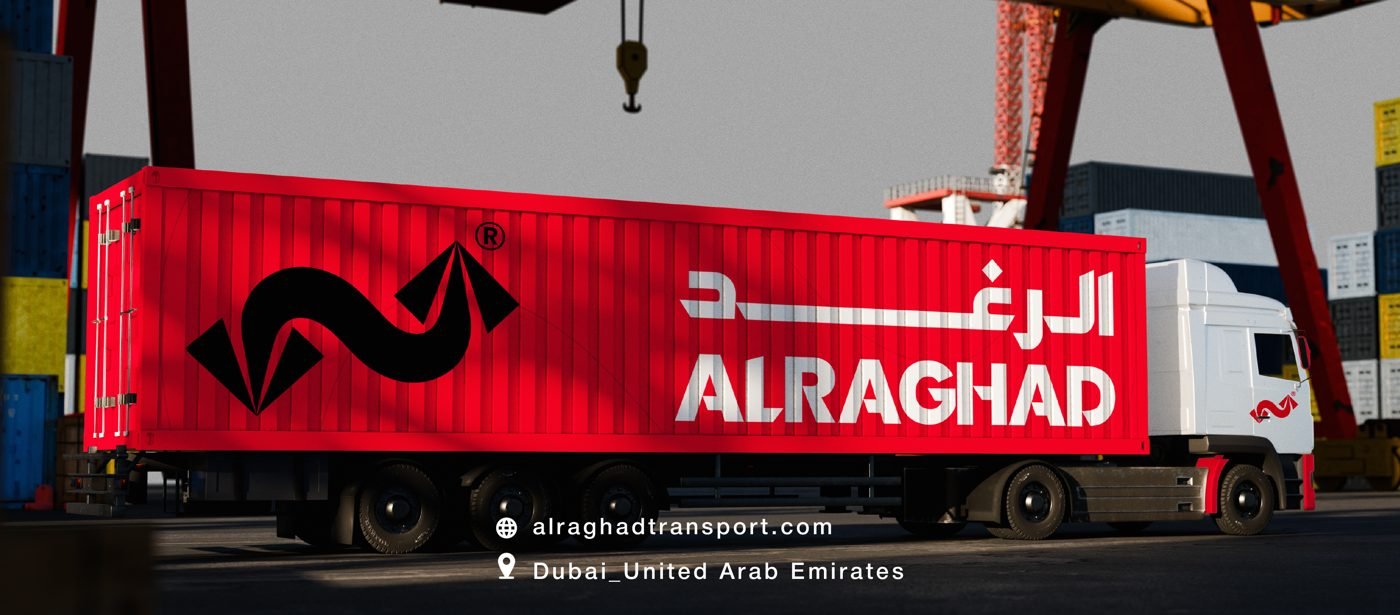
A consistent look matters more in this sector than many owners expect. Using the same livery colours, template and caption style each time makes your posts recognisable before anyone reads the name. In our work for Alraghad, a road, sea and air freight company, the identity, fleet branding and social channels used one visual system. The always-on content mixed campaign visuals with practical shipping guides, such as the documents UAE shipments require.
Which platform for which job
Don’t try to be equally active everywhere. Choose based on who decides on the shipment.
- LinkedIn is usually where procurement managers, supply-chain heads and industrial buyers check suppliers. Lead with route explainers, company news and longer documentation guides as document (PDF) posts. LinkedIn’s own Page best practices report that companies posting weekly see twice the engagement with their content, and that Pages with complete information get 30% more weekly views. Before you spend effort on posting, fill in the overview, locations, industry and website. LinkedIn also suggests involving employees, and for a freight company that means your operations and sales staff sharing posts with their own networks.
- Instagram suits small importers, traders and e-commerce sellers who choose a forwarder on trust and convenience. Saveable tip carousels and short loading or fleet reels do best here.
- Facebook and TikTok can reach small traders and drivers for recruitment in some markets. Treat them as secondary unless your clients are clearly there.
- WhatsApp status is often overlooked. Your existing clients and contacts already have your number, so a weekly tip or route update there reaches the people most likely to book again.
In our view, video does the most for logistics content because it shows movement, which a still image can’t. You don’t need a film crew for every post. Steady phone footage, good subtitles and a short, consistent intro frame are enough for weekly reels. A professionally shot company or fleet film is useful once a year for your profile, website and exhibitions.
What to measure, and what to fix first
Likes don’t tell a freight company much. Track signals that connect to business:
- Saves and shares on tip posts. These show content people find useful enough to keep or forward to a colleague.
- Profile visits and website clicks after explainer posts, especially to the matching service page.
- Inquiries that mention a post (“I saw your post about ACID”). Ask sales to record the source when a new shipper gets in touch.
- Follower quality on LinkedIn. Check whether your followers are in importing, manufacturing, retail and procurement roles, not just other forwarders.
If your current feed is inactive or generic, fix things in this order:
- Complete the profiles: logo, cover, overview, routes, contact button, consistent names across platforms.
- Agree on the consent process and the source-checking rule for customs content.
- Write four route explainers and four documentation tips. That is the first month’s backbone.
- Set up the content inbox and ask operations for five raw items a week.
- Review after 90 days: which pillar drove saves, visits and inquiries? Do more of it.
If you would rather not run this in-house, our social media management service plans the month, writes bilingual copy and designs the creatives for your approval before anything goes out. If you’re not sure whether social is where your logistics business should focus at all, a business diagnosis session is a good place to work out the priority.
Frequently asked questions
What should a logistics company post on social media?
Rotate five pillars: route and service explainers, customs and documentation tips, client-approved shipment milestones, fleet, warehouse and people stories, and genuine company news such as a new route, branch or licence.
Can we post photos of our clients' shipments?
Only with the client's written consent. Even then, hide consignee names, container, seal and bill of lading numbers and addresses unless the client has approved them, get consent from anyone shown, follow site filming rules and post after delivery.
Which platform is best for a freight forwarder?
LinkedIn for procurement and supply-chain decision-makers, Instagram for small importers and traders, and WhatsApp status for existing clients. Choose by who books the shipment rather than trying to be equally active everywhere.
How often should a logistics company post?
A small team can keep up four to five posts a week if the month is planned and approved in one batch. LinkedIn reports that companies posting weekly see twice the engagement, so weekly is the minimum to aim for on LinkedIn.
How do we make sure our customs tips are accurate?
Take each rule from the customs authority itself (ZATCA, the relevant UAE emirate's customs, the Egyptian Customs Authority or Nafeza), state the country and date in the post, keep it general, and review every published tip each quarter.
- Zakat, Tax and Customs Authority (ZATCA), Customs Broker Authorization (e-service).
- Dubai Customs, Dubai Customs Services Guide 2025 (2025).
- DHL Global Forwarding, Shipping to Egypt: new ACI rules apply (2021-08-24).
- German-Arab Chamber of Industry and Commerce (AHK Egypt), Egypt to enforce mandatory ACI for air freight starting January 1, 2026 (2025).
- Agroberichten Buitenland (Netherlands Ministry of Agriculture), Mandatory ACI implementation for air freight to Egypt (2026-02-12).
- LinkedIn, LinkedIn Pages best practices.
- RX Designer, Alraghad case study.