- Write a brief with the registered names, real uses, what to avoid and who decides before design starts.
- Design the Arabic and English versions together as one family, with every lockup you will need.
- Receive editable vector masters, every version, colour values and font licence details, not a single PNG.
- Search and file the trademark with SAIP through a qualified agent, and get a written transfer of rights.
Good logo design for a Saudi company starts long before anyone opens a design file. The logo has to carry an Arabic and an English name with equal weight, work on a quotation and a vehicle as well as on a phone screen, belong to the company in writing, and be registrable as a trademark with the Saudi Authority for Intellectual Property (SAIP). Most logo problems come from skipping one of those steps, not from the drawing itself.
This guide walks through the process in the order it should happen: the brief, the Arabic and English versions, how the design work should run, the files you must receive, trademark registration and ownership. It does not cover prices. If you are planning a new logo or a full identity, our Brand Identity and Positioning service covers the work described here.
What a logo has to do, and what it cannot do
A logo is a signature. Its job is to be recognised, to be legible in both languages at the sizes where people actually meet it, and to look like it belongs to a company of your size and sector. It does not need to explain everything you sell. A fire protection contractor does not need a flame, an extinguisher and a building in one mark; a logistics company does not need a truck, a ship and a plane.
What a logo cannot do on its own is make a company look consistent. That comes from the system around it: colours, typefaces, layouts and rules. Our article on what a visual identity includes explains the difference. If you only need a logo now, design it so the system can be built on it later.
Start with a written brief
A designer can only solve the problem you describe. A useful brief fits on two pages and answers these questions:
- The name, exactly as registered. The Arabic and English names on your commercial registration, and whether the logo must show both, one, or an abbreviation.
- Who buys from you. Government entities, contractors, distributors, consumers. A mark aimed at procurement committees reads differently from one aimed at shoppers.
- Where the logo will appear. List the real uses: website header, social profile picture, WhatsApp Business avatar, quotations, uniforms, vehicles, shop sign, packaging, exhibition stand, product labels, embroidery. Small uses and uses in a single colour are where most logos fail.
- What you must avoid. Competitors’ colours and shapes, symbols that carry unintended meanings, and anything too close to an existing mark in your sector.
- What must stay. If this is a refresh, which elements customers already recognise. Our guide to rebrand versus refresh helps with that decision.
- Who decides. Name the person who approves, and who must be consulted. Logos that pass through a large committee without one person who decides tend to end up as compromises.
Design the Arabic and English versions together
In Saudi Arabia the bilingual lockup is not an afterthought. If the English logo is designed first and an Arabic name is typed underneath in a system font, the Arabic will look weaker, and customers who read Arabic notice. Both versions should be drawn as one family, with matching visual weight, height and spacing.
Agree which versions you need at the start. A typical set:
- A horizontal lockup with symbol, Arabic name and English name.
- A stacked lockup for square spaces such as social profiles and signs on narrow façades.
- Versions in Arabic only and in English only, for materials in one language.
- The symbol alone, for app icons, favicons, stamps and embroidery.
Decide the reading order deliberately. On a layout that reads from right to left the Arabic usually leads on the right; on an English document the order may flip. Both arrangements should be designed, not improvised by whoever lays out the next brochure.
The style of the Arabic lettering matters as much as the English typeface. Geometric letterforms based on Kufi tend to sit comfortably beside modern Latin type without serifs and stay legible at small sizes. Calligraphic styles such as Thuluth or Diwani can be beautiful but often become hard to read on a profile picture or a pen. Test every option at its smallest real size before choosing. Our article on Arabic logo design for bilingual brands covers lettering and pairing in more depth.
How the design work should run
A sound process has clear stages, each ending with a decision:
- Research. The designer reviews your market, competitors’ marks and the uses listed in the brief.
- Concepts. A small number of distinct directions, each explained in a sentence or two: what idea it carries and why it suits the business. Ten variations of one idea are not ten concepts.
- Refinement. One direction is developed: proportions, the Arabic and English pairing, spacing, colour.
- Testing. The logo is shown at real sizes and in real contexts: a profile picture, a letterhead, a vehicle door, a sign at night, one colour on a dark background. A mark that only works large and in full colour is not finished.
- Finalisation. Every version is built, checked and exported, and the basic usage rules are written down.
Ask to see the logo in black only. If it is not recognisable without colour, it will struggle on stamps, embossing, engraving and photocopied tender documents.
The files you should receive
A logo delivered as a single PNG is not a finished logo. At the end of the project you should receive:
| File or item | Used for |
|---|---|
| Editable master files (for example AI) and vector exports (PDF, EPS, SVG) | Signage, vehicles, packaging, large formats and future edits |
| PNG files with transparent backgrounds, in several sizes | Documents, presentations, websites and social media |
| Every lockup: horizontal, stacked, Arabic, English, symbol alone | Different spaces and languages |
| Versions in full colour, in one dark colour and in one light colour (reversed) | Light backgrounds, dark backgrounds, production in one colour |
| Colour values for each output: HEX and RGB for screens, CMYK for production, and a Pantone reference if used | Keeping colour consistent across suppliers |
| Names of the typefaces and their licence terms | Matching typography and staying within the font licence |
| A short usage sheet: clear space, minimum sizes, what not to do | Briefing production suppliers, sign makers, agencies and your own team |
Check font licences before approval. Licence terms differ by foundry. Adobe, for example, states that its Adobe Fonts can be used in a logo and that the logo can be registered as a trademark, while the typeface design itself cannot (Adobe Help Center). Other fonts, especially free downloads, may come with different terms.
Register the logo as a trademark with SAIP
Your trade name on the commercial registration and your trademark are separate protections. The trademark is what lets you stop others using a confusingly similar mark for the same goods or services. In Saudi Arabia trademarks are handled by the Saudi Authority for Intellectual Property (SAIP), under the GCC Trademark Law approved by Royal Decree No. M/51 of 26/7/1435H, as amended (WIPO Lex).
Points to plan for:
- Search before you finalise. Run a clearance search on the name and the mark before the design is approved, not after. Changing a logo after launch costs far more than changing a concept.
- Specify goods and services carefully. Applications are classified under the Nice Classification. Since 5 November 2023, according to the IP firm AGIP, SAIP’s online filing system has required applicants to choose specific goods or services from the 12th edition rather than whole class headings (AGIP). The same firm notes that a separate application is filed for each class (AGIP).
- Publication and opposition. Accepted applications are published so that third parties can object. SAIP’s IP Gazette lists trademark applications filed on or after 19 December 2023, together with later changes such as renewals and ownership transfers (SAIP). Check SAIP’s current procedures for the opposition period that applies to your filing.
- Term and renewal. Practitioner guides describe a protection term of ten years that can be renewed (AGIP). Put the renewal date in your company calendar.
- Which version to file. Ask your trademark agent or lawyer whether to file the combined bilingual lockup, the Arabic and English word marks and the symbol separately or together. Each filing protects the mark as it was filed.
Rules, fees and procedures change, so confirm the current requirements on SAIP’s website or with a registered trademark agent before filing.
Make sure the company owns it
Paying for a logo does not always mean owning it. Ask for a written transfer of the rights in the final design to your company, signed when the project is paid, and keep it with your trademark file. If concepts were produced with AI image tools or built on stock elements, ask how, because that can affect what can be owned and registered. Our articles on logo ownership and handover and logos made with AI explain the risks.
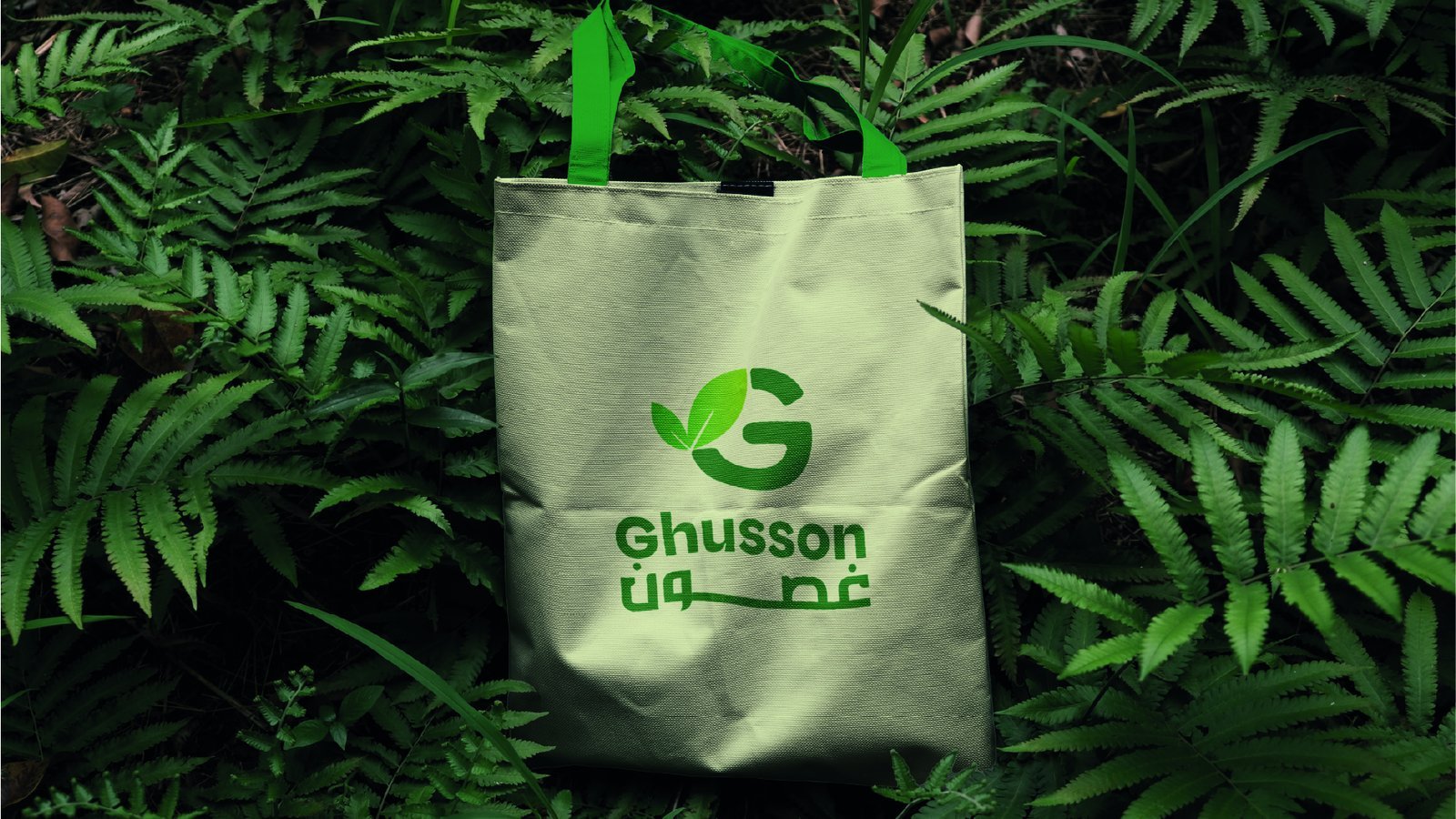
For an example of a bilingual identity designed as a system, from tote bags to packaging, see the Ghusson case study.
What to do next
- Write the brief: registered names, buyers, real uses, what to avoid, what to keep and who decides.
- List the lockups and language versions you need before design starts.
- Run a trademark clearance search on the name before approving a concept.
- At approval, test the logo at its smallest sizes, in one colour and in both reading directions.
- Collect the full file set, colour values and font licence details, and sign the rights transfer.
- File the trademark with SAIP through a qualified agent and diary the renewal date.
If you want a logo designed as part of a complete bilingual identity, RX’s Brand Identity and Positioning team can scope it with you, or you can book a paid business diagnosis session to review your current logo and decide whether it needs a refresh or a new design.
Frequently asked questions
What files should I receive after a logo design project?
Editable master files and vector exports (such as AI, PDF, EPS and SVG), transparent PNG files, every lockup and language version, versions in full colour and in one colour, colour values for screen and production, the typeface names and licence terms, and a short usage sheet.
Does my logo need both Arabic and English?
For most companies operating in Saudi Arabia, yes. Design both versions together with equal visual weight, plus versions in Arabic only and in English only for materials in one language.
Who registers trademarks in Saudi Arabia?
The Saudi Authority for Intellectual Property (SAIP). Applications specify goods or services under the Nice Classification, are examined and published so others can object, and the registration is renewed periodically. Confirm current requirements with SAIP or a registered trademark agent.
Is my trade name the same as a trademark?
No. The trade name on your commercial registration and a registered trademark are separate protections. Registering the logo as a trademark is what lets you act against confusingly similar marks for the same goods or services.
Do I own the logo once I pay for it?
Not automatically in every case. Ask for a signed written transfer of the rights in the final design to your company, together with the editable files.
- Saudi Authority for Intellectual Property (SAIP), Trademarks.
- WIPO Lex, Royal Decree No. M/51 dated 26/7/1435 AH approving the Trademark Law of the GCC (Saudi Arabia), amended up to Royal Decree No. M/49 dated 1/6/1442 AH.
- Abu-Ghazaleh Intellectual Property (AGIP), Saudi Arabia: Major Change to the Trademark Registration Process (2023-10-30).
- Abu-Ghazaleh Intellectual Property (AGIP), Trademarks in Saudi Arabia.
- Adobe Help Center, Font licensing.