- Read the licence as a brief: its activities, VAT status and trade name limit what you can sell and advertise.
- Write one provable sentence on why a named buyer should switch from what they use today.
- Check eligibility and rules early: Google Business Profile, the Advertiser Permit for any creators you brief, and promotion permits.
- Use the first 90 days to learn which buyer, message and channel produce qualified inquiries, then scale.
The business-setup consultant has done their job. You have a trade licence, a bank account in progress, perhaps a flexi-desk in a free zone and a visa or two. Then the questions change. Who will buy from us first? Why us and not the companies already here? What do we say, in which language, on which channels, and with what budget? Much of what you find when you search for “business strategy consulting” in Dubai is built around the first set of questions, not the second.
This guide covers the second set. It is written for founders starting from zero in the UAE and for regional companies, from Saudi Arabia, Egypt or elsewhere, opening a UAE entity and needing it to win work rather than simply exist. It is organised as decisions, in the order we would take them.
1. Read your licence as a marketing brief
Your licence is more than paperwork. It sets the limits of what you can sell, to whom and from where, and those limits shape your go-to-market plan before any creative work starts.
- Licensed activities. List the activities on the licence and compare them with the services you plan to advertise. If the website promises installation and maintenance but the licence covers only trading, fix the gap with your setup adviser before the launch, not after a client’s procurement team spots it.
- Free zone or mainland. Free-zone and mainland entities can face different conditions on serving customers in the wider UAE, and the detail varies by free zone. Confirm with your setup adviser or free-zone authority exactly how you can invoice and deliver to mainland clients, because that decides which buyers your campaigns should target.
- VAT. According to the Federal Tax Authority, registration is mandatory for UAE-resident businesses whose taxable supplies and imports exceed AED 375,000 over the past 12 months, or are expected to within the next 30 days; voluntary registration is possible above AED 187,500 (for voluntary registration, taxable expenses also count). The standard rate is 5%. This matters for marketing because your quotations, price lists and proposal templates need to show prices correctly from the first one you send.
- Trade name versus brand. Under Federal Decree-Law No. 36 of 2021 on Trademarks, the Ministry of Economy and Tourism (renamed from the Ministry of Economy in June 2025) keeps the trademark register, and a registration protects the mark for ten years, renewable. A licensed trade name and a registered trademark are separate things. If the name you will spend money building is not the one you can protect, settle that before you commission a logo.
These points are a planning checklist, not legal or tax advice. Check the current rules with the relevant authority or your adviser.
2. Position against the companies already here
A new UAE company rarely enters an empty market. Buyers already have a supplier, a habit or a workaround. Positioning means deciding, in one sentence, why a specific buyer should switch or try you. Without that sentence, every later decision (brand, website, ads) turns into a matter of taste.
Work through four questions with your leadership team:
- Who is the first buyer? Name the segment narrowly: “facility managers of mid-size residential towers in Dubai”, not “property companies in the UAE”.
- What do they use today? An established local supplier, an importer that sells on price, an in-house team, or nothing. Each alternative calls for a different argument.
- What can you prove that the alternative cannot? Faster delivery from stock held locally, an exclusive brand, certifications, a track record in another GCC market, a named team. If you cannot prove it, it is not a position yet.
- What will they risk by switching? In B2B, the buyer’s main worry is being blamed. Your launch materials should reduce that risk with references, guarantees and visible local presence.
A simple way to test the result is a comparison table your sales team could defend in a meeting:
| Buyer question | Typical incumbent answer | Your answer (must be provable) |
|---|---|---|
| Can you deliver this month? | Yes, from a local warehouse | State stock location and lead time |
| Who has used you here? | A long UAE client list | Regional references, plus first UAE projects as they land |
| Who do I call when it fails? | An established service team | Named contact, response commitment, WhatsApp line |
| Why should I take the risk? | “We have always done it” | Your one-sentence position |
Regional companies entering from Saudi Arabia or Egypt have a particular trap here: assuming the reputation travels. UAE buyers may not know your name, so the position has to be stated, not implied. Our marketing strategy and launch planning work starts at this step for exactly that reason.
3. Build the bilingual brand and the basic proof
In our experience, for most B2B companies in the UAE English carries the working conversation, while Arabic signals respect for government entities, Emirati-owned clients and Arabic-speaking decision-makers. The practical answer is a bilingual identity designed as one system from the start, not an Arabic name added later in a different style.
Before launch, the following should be consistent everywhere a buyer might check you:
- One name, spelled one way, in Arabic and English, across the licence, website, email signatures, LinkedIn page and signage.
- A Google Business Profile, if you are eligible for one. Google’s profile guidelines say a rented mailing address where the business does not operate is not eligible, and a coworking office qualifies only with clear signage, staff present and customers received during business hours. Many new companies on flexi-desk licences do not meet that test. Plan to rely on the website and LinkedIn until you have a real, staffed location, rather than risk a suspended profile. Our guide to Business Profiles on a UAE free-zone flexi-desk covers the options.
- A website that explains the offer in under a minute: what you supply, to whom, in which emirates, with a clear inquiry path to WhatsApp, phone or a quotation form. For a new entity, proof matters more than design flourishes: certifications, partner brands you represent, regional project photos and a named leadership team.
- Data handling. Inquiry forms collect personal data. The UAE’s official portal explains that Federal Decree-Law No. 45 of 2021 restricts processing personal data without consent except in specified cases, while the DIFC has its own law (DIFC Law No. 5 of 2020). Know which regime applies to your entity, publish a privacy notice that matches it and check the current text, as data rules are still being filled in by regulations.
We cover the page-by-page detail in what a UAE company website should show. For the build itself, see our website design service.
4. Check the rules before the first campaign
Three checks prevent most early mistakes:
Creators and influencers
The UAE Media Council introduced an Advertiser Permit for people who publish promotional content on social media. An Al Tamimi & Company update (edited December 2025) reports that the system was announced on 30 July 2025 and applies whether the promotion is paid, gifted or unpaid. The sources differ on when the grace period ended: Al Tamimi gives late October 2025, while Gulf News reported in October 2025 that the Council had extended the deadline to 31 January 2026. Either way, it has now passed. Gulf News, citing the Council, also reported an exemption for individuals promoting a business they own on their personal accounts.
The regulator itself is changing: the UAE Legislation portal announced in December 2025 a decree-law creating the National Media Authority, which replaces the UAE Media Council. If your launch plan includes creators, ask each one for a valid permit before you brief them, and check the authority’s current requirements, including whether any apply to your founders’ own accounts. The checks themselves are set out in our guide to what brands must check before paying a creator.
Promotions, discounts and prize draws
Launch offers such as opening discounts, giveaways or prize draws can need a permit from the emirate’s economic authority (in Dubai, the Department of Economy and Tourism). Prize draws in particular carry extra conditions, and the rules have changed over time, so confirm the current requirements with the authority before announcing any offer.
Regulated sectors and claims
Healthcare, real estate, financial services and some technical products can fall under sector regulators with their own advertising rules. In every sector, avoid claims you cannot document: “the UAE’s leading” is a hard line to defend when your licence is a few weeks old.
5. The first 90 days: channels in sequence
A new company’s budget is limited and its data is thin. The aim of the first 90 days is not scale; it is to learn which buyers respond, to which message, through which channel, so the next quarter’s spend has a reason. The sequence below is the one we would suggest for a typical B2B launch; adjust the timing to your sector and sales cycle:
| Period | Focus | What “done” looks like |
|---|---|---|
| Weeks 1–4 | Foundations | Position agreed, bilingual identity, website live with tracking, LinkedIn company page and founder profile ready, sales kit drafted |
| Weeks 5–8 | Direct reach to a named list | Founder-led outreach to 50–100 target accounts, an announcement on LinkedIn, first search campaign on your highest-intent service terms |
| Weeks 9–13 | Test and decide | Two or three message tests in paid social or search, one event or seminar if your sector has a relevant date, a review of cost per qualified inquiry by channel |
On budget, the principle matters more than the percentage: fund the foundations first, then put paid spend behind the one or two channels where your buyer is already searching or scrolling. In our view, for B2B that is often search for urgent needs and LinkedIn for considered purchases. Hold back a portion to scale whatever performs in weeks 9–13. If your sector has a major trade show in Dubai, such as Intersec for fire and security, plan around its date rather than treating it as an extra.
6. Equip sales before the first meeting
New companies often launch marketing before sales can answer the inquiries it produces. For a new entity, three items matter most before campaigns go live:
- A bilingual company profile that states the position, the offer, the proof and the people, so a buyer who has never heard of you can check you in five minutes.
- A quotation template that carries the new entity’s licence details and VAT status, so the first document a client receives matches the company they will contract with.
- Founder and sales-team LinkedIn profiles that match the company’s position, because buyers often look up the person before they reply.
The wider sales-readiness kit (price lists, reply scripts, the internal briefing) is covered in our 90-day product launch plan.
Ad accounts, domains and social pages should be opened in the company’s own name from day one, so the business keeps control as people and suppliers change.
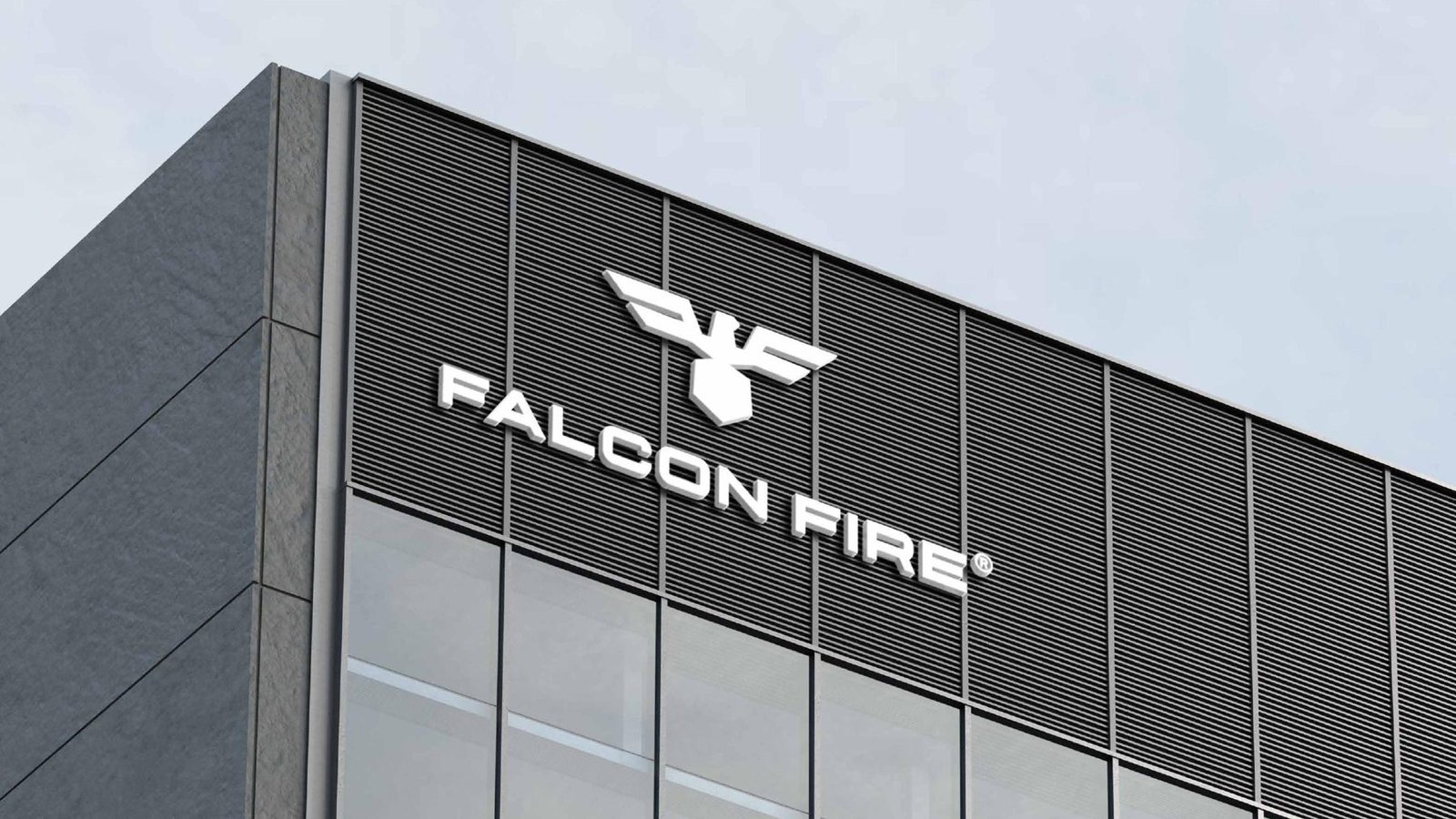
Our Falcon Fire project for a Dubai fire-fighting and fire-alarm solutions company shows the idea in practice: one bold identity and a social campaign carried from business cards to trucks to the feed. That consistency is what a launch should aim for, so every place a buyer meets the company tells the same story.
Frequently asked questions
What is the difference between business setup consultants and go-to-market planning?
Setup consultants handle licensing, visas, banking and compliance. Go-to-market planning decides who you sell to first, why they should choose you, how the brand and website present you, which channels you use and how sales follows up on inquiries.
Do influencers in the UAE need a permit to promote my company?
Generally yes. The Advertiser Permit introduced by the UAE Media Council covers people publishing promotional content on social media, paid or unpaid, according to Al Tamimi & Company; its grace period has ended. The Council is being replaced by the new National Media Authority, so ask creators for a valid permit and check the authority's current requirements.
Can a free-zone company on a flexi-desk get a Google Business Profile?
Often not. Google's guidelines say a mailing address where the business does not operate is ineligible, and a coworking office qualifies only with signage, staff present and customers received during business hours.
When does a new UAE company need to register for VAT?
The Federal Tax Authority says registration is mandatory once taxable supplies and imports exceed AED 375,000 over the past 12 months, or are expected to within 30 days. Voluntary registration is possible above AED 187,500. Confirm with the FTA or your tax adviser.
- Federal Tax Authority (UAE), VAT Registration.
- Federal Tax Authority (UAE), Value Added Tax (VAT).
- UAE Legislation, Federal Decree-Law No. 36 of 2021 on Trademarks.
- The Official Portal of the UAE Government (u.ae), Data protection laws.
- Google Business Profile Help, Guidelines for representing your business on Google.
- Al Tamimi & Company, UAE Introduces Mandatory Advertiser Permit for Content Creators (2025-12-11).
- Gulf News, UAE's content creator licence deadline has been extended (2025-10-22).
- Gulf News, Advertiser Permit now mandatory for social media promotions in the UAE (2025-08-07).
- UAE Legislation, UAE Government issues a Federal Decree-Law establishing and organising the National Media Authority (2025-12-18).