- Much of Qatar's B2B demand comes from government, semi-government and energy buyers and their contractors, so start from a named account list, not an audience.
- Map the technical reviewer, procurement contact and consultant inside every priority account before spending on media.
- Use executive LinkedIn presence and company-targeted campaigns to stay visible to those people, and measure at account level.
- Formal procurement, including in-country value requirements, means your profile, pre-qualification file and ICV evidence carry much of the decision.
Most B2B marketing plans start from reach: an audience, a budget and a target number of leads. In Qatar that starting point often wastes money. The market is small, a large share of major projects is commissioned by government, semi-government and energy-sector entities, and much of the work then flows through the main contractors and consultants they appoint. If you sell engineering services, building systems, equipment or professional services, the buyers who matter to you are usually people you could name, not an audience you need to discover.
This guide sets out an account-based plan for that situation: build the account list first, map who decides inside each account, make your executives visible to those people, run narrowly targeted LinkedIn campaigns, and give your sales team documents that survive a formal evaluation. It is written for CEOs, sales directors and marketing directors at companies selling into Qatar, whether they are based in Doha or entering from Saudi Arabia, the UAE or Egypt.
Why broad reach underperforms in Qatar B2B
Three features of the market push you toward named accounts rather than mass targeting.
- Scale. Qatar’s population was 3,214,609 at the end of December 2025, according to National Planning Council figures reported by Qatar Tribune. Only a small share of any population sits in procurement, engineering or management roles that buy what you sell, so the professional audience you can reach with paid media is limited before you apply a single filter.
- Who commissions the work. The US International Trade Administration’s Qatar commercial guide (last published 29 July 2024) states plainly that “the Qatari government is the biggest end user of a wide range of products and services.” In energy, QatarEnergy and its affiliates sit at the centre of a large supply chain.
- Formal procurement. Government buying runs under Law No. 24 of 2015 regulating tenders and auctions. Its executive regulations were amended by Cabinet Resolution No. 11 of 2022, which, as The Peninsula reported on 10 August 2022, requires bidders to submit local value (in-country value) certificates with financial bids and gives preference to national products and to companies with high local value. A PwC summary of the amendments describes participation in tenders valued below QAR 5 million as limited to qualifying SMEs, while The Peninsula describes small and medium-sized enterprises taking part in those tenders on a limited basis; the two summaries word the rule differently. Both reports date from 2022, so check the current text of the regulations and the specific tender documents before relying on any of this. This is not legal advice.
Put together, this means a lead form that collects hundreds of contacts is the wrong scoreboard, and the marketing strategy has to start from accounts, not audiences. A supplier can win a year’s revenue from a handful of accounts and lose it by being invisible at the moment a consultant compiles an approved-vendor list. The plan below is built around that reality.
Step 1: Build the account list before you spend on media
Start with a spreadsheet, not a campaign. List every organisation that could realistically buy from you in the next 24 months, then sort them into three tiers.
| Tier | Who belongs here | What you need from them |
|---|---|---|
| 1. Owners and anchor buyers | Ministries, public authorities, semi-government companies and energy-sector operators that commission projects or run large facilities | Vendor registration, approval of your products or services, awareness among technical and procurement leads |
| 2. Specifiers and main contractors | Design consultants, project management firms and main contractors working for Tier 1 | Being named in specifications and approved-vendor lists, invitations to quote |
| 3. Adjacent and private buyers | Private developers, facility managers, hospitality and logistics operators, subcontractors | Direct orders and repeat business, often with shorter cycles |
For each account, record what it buys, which projects or facilities are active, who its consultants and main contractors are, whether you are registered or approved, and the last real contact your team had. Most companies discover that their sales team already knows half of this informally; writing it down is what turns it into a plan.
Use national priorities to decide where to look for growth. Qatar’s Third National Development Strategy (NDS3) runs from 2024 to 2030. Official summaries group its sectors differently: the Investment Promotion Agency Qatar lists manufacturing, logistics and tourism as growth clusters, education and financial services as enabling clusters, and green technology and creative industries as emerging clusters, while the International Media Office discusses energy separately and then groups tourism and transport and logistics as growth sectors, IT and digital, financial services and education as enabling sectors, and food and agriculture as a resilient sector. The two lists overlap but do not match (manufacturing, for example, appears only in the first). Read the strategy document itself before building a plan around a single sector. In practice, if your offer serves warehouses, hotels, factories, schools or data infrastructure, the accounts behind those sectors deserve a place in Tier 1 or 2.
Step 2: Map the people inside each account
Large B2B buyers, in Qatar as elsewhere, rarely decide through one person. A typical purchase touches an end user or facility manager, an engineering or technical reviewer, a procurement or contracts officer, a consultant who writes or checks the specification, and a senior manager who signs. Each one asks a different question, and each one can stop the deal.
For every Tier 1 and Tier 2 account, aim to name at least the technical reviewer, the procurement contact and the consultant’s lead engineer. Note where the relationship already exists, where it is missing and which of your people owns it. This is the map that tells you whom to target on LinkedIn, whom your executives should know, and what each piece of collateral must answer.
Step 3: Make your executives visible to the accounts that matter
In a small market where senior buyers and consultants are likely to know each other, the reputation of your general manager, technical director or country head carries much of the brand. When a procurement manager or consultant hears your company’s name, looking up the people behind it is an easy first check. An empty or outdated LinkedIn profile at that moment costs you credibility you cannot buy back with ads.
A practical executive presence for a Qatar account plan includes:
- A profile that states clearly what the company delivers in Qatar, for which sectors, with relevant approvals, projects and credentials named where they can be shared.
- Two to four posts a month built from real work: a completed handover, a lesson from a technical review, a site visit, a regulation explained in plain terms. Specific beats frequent.
- Deliberate connection building with the people on your account map, followed by genuine engagement with what they and their organisations publish.
- A clear approval process: whoever drafts or manages the content, the executive reviews and approves it before it goes out and remains in control of the account and its security. Check LinkedIn’s current terms for how accounts may be managed.
This is the part of an account plan that busy executives most often leave undone. If your leadership team needs help writing, designing and managing profiles under their approval, that is the work of RX’s LinkedIn and personal branding service.
Step 4: Run LinkedIn campaigns against the list, not the country
Paid LinkedIn activity in an account plan has a narrow job: make sure the people on your map keep seeing credible, relevant proof from your company between sales conversations. It is not a lead-volume machine, and judging it as one will make it look expensive.
- Target by company first. Build the audience from your Tier 1 and Tier 2 accounts where Campaign Manager allows company-level targeting, then narrow to the functions on your account map, such as engineering, operations and purchasing. Targeting options change, so check what is available in your own account.
- Let the account list decide when to widen. A Qatar-only account audience can be too small to run. If it is, add accounts from Tier 3 or from the contractors working for your Tier 1 owners before you widen to the whole country; audience size is covered in the guide linked below.
- Sequence the message. Start with proof (a project, a test, an approval), follow with a useful asset (a specification guide, a compliance checklist, a short technical video), and only then ask for a meeting or a site visit.
- Use executive voices. Posts from your leaders can be promoted as ads; LinkedIn calls this format Thought Leader Ads, and its ads guide notes that posts with multiple images, polls or documents cannot be promoted this way. Promote the posts that mention your target accounts’ sectors or projects, so the executive work in Step 3 and the paid work reinforce each other.
- Measure at account level. The useful questions are which target accounts engaged, which people from them visited your site or replied, and which moved to a meeting, a vendor registration or an invitation to quote.
For cost logic, audience size, formats and test design, see our guide to LinkedIn ads for B2B in the GCC. Search ads still have a place for urgent, specific needs such as maintenance or spare parts, but they should not carry an account plan on their own.
Step 5: Give sales documents that survive a formal evaluation
Account-based marketing earns you a hearing. The documents decide whether that hearing turns into registration, approval and an award. Three gaps are common.
- The company profile and pre-qualification file. A profile written as a brochure struggles in a formal evaluation even when the company is strong. Evaluators generally look for legal registration, relevant approvals and certifications, comparable projects with values and dates, quality and safety systems, and named key personnel, set out so they can be checked quickly. Our guide to the company profile that wins pre-qualification sets out that structure section by section.
- Local value evidence. If you supply the energy sector, QatarEnergy’s Tawteen in-country value programme assesses contributions “based on local purchases, capability development, and capital investment”, and says suppliers that invest in ICV “gain a competitive edge in tenders issued by QatarEnergy.” The sources disagree on when Tawteen ICV began: QatarEnergy’s own page says it was launched in 2020, while World Oil reported the launch of Tawteen, including an ICV policy, in February 2019. We have not resolved the difference, so avoid quoting a launch year in your documents. QatarEnergy also announced an enhanced ICV programme in October 2024; check whether it applies to your tender. How to present the score in each document is covered in our guide to ICV certificates and local content in GCC tenders.
- Bilingual, consistent sales tools. Technical submittals, product data sheets, method statements and presentations should match each other and your profile in names, figures and claims, in both Arabic and English where the buyer expects it.
Also prepare one short, account-specific brief for each Tier 1 target: what you already supply in Qatar or the region, which of their projects you can support, and which approvals you hold or are pursuing. Sales teams use a two-page brief far more readily than a forty-page profile.
How to run the plan quarter by quarter
An account plan works when it becomes a routine rather than a campaign. A workable rhythm looks like this:
| Period | Focus | Signs it is working |
|---|---|---|
| First quarter | Account list, stakeholder map, executive profiles rebuilt, profile and pre-qualification file updated | Named contacts in most Tier 1 accounts; documents sales are willing to send |
| Second quarter | Company-targeted LinkedIn campaigns, regular executive posts, account briefs in use | Engagement from target accounts; meeting requests; site visits |
| Ongoing | Monthly review of each account’s status with sales; content fed by real project milestones and events | Vendor registrations, approvals, invitations to quote, awards |
Events belong inside the same plan. Project Qatar, the construction and building-materials exhibition organised by IFP Qatar, was scheduled to hold its 22nd edition at the Doha Exhibition and Convention Center from 9 to 11 June 2026, Qatar Tribune reported in May. That edition has now passed; check the organiser’s dates for the next one. Treat a show like this as a meeting programme with your Tier 1 and Tier 2 contacts, booked in advance, rather than a hope for walk-in traffic.
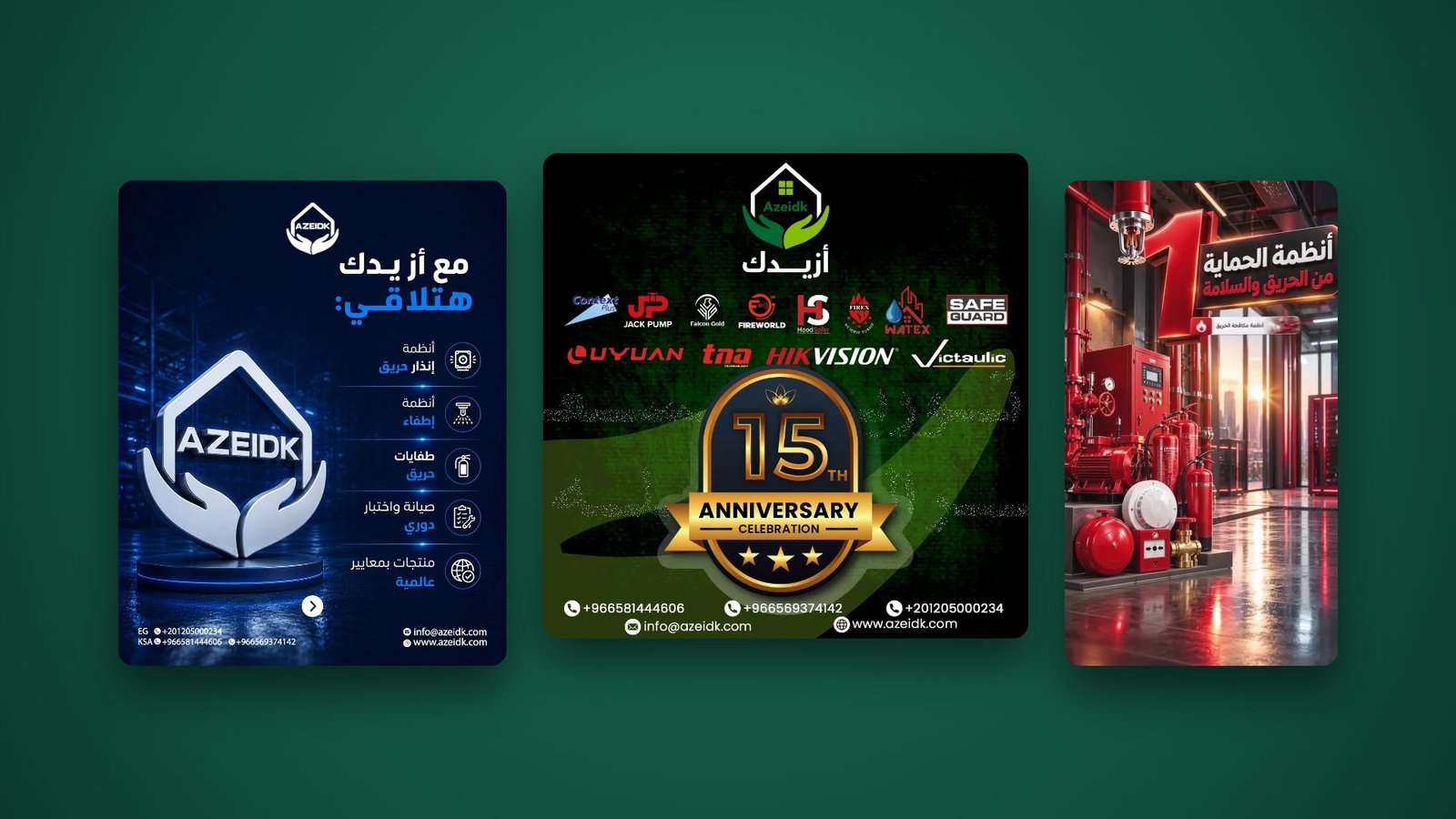
The plan depends on one team keeping brand, content, campaigns, events and sales communication pointing in one direction. The Azeidk case study shows that kind of marketing control centre for a contracting and MEP company in Saudi Arabia and Egypt; it is not a Qatar project, which is why the Qatar plan has to start from its own account list.
So start there this week: list your Tier 1 accounts and, next to each, the people you can already name and the document they would ask for first. The empty cells on that sheet are your first quarter’s work.
Frequently asked questions
Is account-based marketing worth it for a mid-sized company selling in Qatar?
Usually, yes, if your revenue depends on a limited number of large buyers and their contractors. You do not need special software to start: a well-kept account list, a stakeholder map and coordinated sales and marketing activity cover most of the value.
How many people can LinkedIn ads reach in Qatar for my audience?
Check the audience forecast in LinkedIn Campaign Manager for your exact targeting rather than relying on estimates. If the audience is too small, widen by job function or add more accounts before widening to the whole country.
Do I need an ICV certificate to bid for work in Qatar?
It depends on the buyer and the tender. The Peninsula reported in 2022 that amendments to the tenders law's executive regulations require government bidders to submit local value certificates with financial bids, and QatarEnergy says suppliers that invest in ICV under its Tawteen programme gain a competitive edge in its tenders. Check the specific tender documents and the current rules, and take professional advice where needed.
- Qatar Tribune (citing National Planning Council data), Qatar's population surpasses 3.21 million by end of 2025 (2026-01-05).
- International Trade Administration, US Department of Commerce, Qatar Country Commercial Guide: Selling to the Public Sector (2024-07-29).
- The Peninsula, Qatar to implement local value system in govt tendering (2022-08-10).
- PwC Middle East, Qatar Tenders Law amendments (2022-08).
- Investment Promotion Agency Qatar, Qatar's third national development strategy: The road ahead (2024-02-06).
- International Media Office, State of Qatar, Which key sectors will shape Qatar's future economy?.
- QatarEnergy, Social and Economic Development (Tawteen).
- World Oil, Qatar Petroleum launches energy sector localization program – Tawteen (2019-02-18).
- The Peninsula, QatarEnergy announces introduction of enhanced In-Country Value program (2024-10-07).
- LinkedIn Marketing Solutions, Thought Leader Ads.
- Qatar Tribune, Project Qatar kicks off on June 9 to boost networking, business opportunities (2026-05-10).