- In Saudi B2B, the person who clicks is rarely the person who approves you as a supplier.
- Map 20 stalled leads to the gate where they stopped: identity, vendor file, local content or technical approval.
- A procurement-ready page and a forwardable profile can recover more stalled deals than a new campaign.
- Report campaigns on leads that reach approval, and check every outbound list against the PDPL marketing consent rules.
The campaign is doing its job. Engineers, project managers and site staff fill in the form or send a WhatsApp message, the sales team has a first call, and the buyer sounds interested. Then the lead goes quiet. Weeks later you learn that procurement asked for your vendor file, an approved-vendor list was closed, or a consultant could not find enough about your company to support the recommendation.
In Saudi B2B selling, an inquiry is rarely a decision. Before a purchase order is issued, your company usually has to pass a series of checks run by people who never saw your ad. This diagnosis looks at leads that stall at those checks, not leads that were poor from the start. If your problem is that most leads are the wrong people altogether, start with our earlier diagnosis on leads that never turn into customers.
The symptoms: leads that are real but do not move
These leads look good on the first call. The pattern only shows when you look at where they stop. Three or more of the following point to a vetting problem rather than a targeting problem.
- The first contact is enthusiastic, the second contact is a document request. “Send your company profile, CR and certificates” arrives, and then nothing.
- The person who inquired cannot buy. They are a site engineer or a technical manager who needs procurement, a consultant or a manager to approve you as a supplier.
- Deals stall between interest and RFQ. You never receive a formal request for quotation, or you receive it months later for a different scope.
- Buyers ask questions your marketing never answers. Your classification, your Saudi presence, your project references, who the manufacturer is, whether you hold the local agency.
- Losses are explained as “not on our list” or “not approved”. Price and product are not the stated reason.
- Your best leads come from referrals, not campaigns. Referred buyers arrive already trusting you; campaign leads have to be convinced from zero.
The common thread: marketing persuaded the person who clicked, but nobody prepared the material for the people who check.
Why the lead stalls: four vetting gates
There is no single official sequence, but in our experience a B2B purchase in the Kingdom, especially in contracting, MEP, industrial supply, safety and technology, tends to pass some or all of the four gates below. The grouping is our working model for diagnosis, not a legal or procurement standard. A campaign can be excellent and still lose the deal at any one of them.
| Gate | Who checks | What they look for | Why marketing leads stall here |
|---|---|---|---|
| 1. Identity check | Procurement, finance, the buyer’s own manager | That the company exists, under which legal name, with which activities, and that the sales contact belongs to it | The brand name in the ad, the website and the CR do not obviously match; the website has no address or named people |
| 2. Vendor registration and pre-qualification | Procurement and supplier-management teams | A complete, consistent vendor file and evidence of capability | The file is assembled in a hurry after the request, with gaps and contradictions |
| 3. Local content (government and designated procurements) | The procuring entity, under rules administered by LCGPA | Local content baseline, commitments and the ability to report | The supplier has never measured its local content and cannot answer the question |
| 4. Technical approval | Consultants, engineers, the end user | Specifications, data sheets, approvals, project references and a credible technical contact | The campaign sold a benefit; the approver needs evidence |
In the buyers we see, gates 1 and 4 come up with almost every serious inquiry, and gate 2 with most large private buyers and government entities. Gate 3 matters mainly when you sell into government tenders and public-sector projects, directly or through a contractor that bids on them.
The local content gate in more detail
Local content in Saudi public procurement is principally derived from the Government Tenders and Procurement Law (Royal Decree No. M/128 of 2019) and the Regulations on Preference for Local Content and Local SMEs (Council of Ministers Resolution No. 245 of 2019), and is administered by the Local Content and Government Procurement Authority (LCGPA), according to Clyde & Co’s September 2026 overview. The same overview notes that in certain designated procurements bidders may be required to disclose their existing local content baseline and commit to a targeted local content percentage, and that the regulations contemplate local content plans, periodic reporting and final reporting. A new Government Tenders and Procurement Law has since been issued (Royal Decree M/76, published in Umm Al-Qura on 4 September 2026; law firms report it takes effect around 2 January 2027), and Clyde & Co say its impact on the local content framework remains to be seen.
For marketing, the point is practical. If you sell to companies that bid on government work, they may need your local content information to complete their own submissions. A supplier who can explain its Saudi workforce, local spend and local assets clearly is easier to include. For how local content is evidenced across the region, see our guide to local content and ICV requirements in GCC tenders.
How to check which gate is losing your leads
Most teams can run this diagnosis internally over a couple of weeks, with the sales team in the room. Do the steps in order.
1. Map the last 20 stalled leads to a gate
Take 20 leads from the last six months that had a genuine first conversation but did not produce an RFQ or an order. For each one, ask the salesperson one question: what was the last thing the buyer asked for? Then assign the lead to a gate. In our experience one or two gates usually account for most of the losses, and those are the ones to fix first.
2. Run a three-minute procurement test on your website
Ask someone outside sales to play a procurement officer who has just been given your company name. Can they find, within three minutes and without calling you:
- the legal company name as it appears on the commercial registration, and how it relates to your brand name;
- a physical address in the Kingdom and named contacts with roles;
- what you are approved, certified or authorised to supply, and for which brands you are agent or distributor;
- project or client references in the sector they work in;
- a current company profile they can download and forward.
Every “no” is a reason for the lead to wait while someone asks you, and some buyers simply move on to a supplier whose details are easier to find.
3. Lay the materials side by side
Put the ad, the landing page, the company profile, the vendor file and a recent quotation on one table. Check the company name, the scope of services, the brands represented, the address and the certificates. If they disagree, a vetting team sees risk. Our guide to vendor registration documents in Saudi Arabia covers the file itself; here the test is only whether your marketing tells the same story. When the registration itself is the bottleneck, RX has handled supplier and tender registration for clients on Saudi platforms such as Etimad, with the account kept in the client’s name.
4. Test your answers to the local content question
If any of your buyers work on government or public-sector projects, ask your finance and HR leads a direct question: if a client asked tomorrow for our local content information, who would answer, and from which data? If nobody knows, that is a gap, even if no buyer has asked yet.
5. Look your people up the way a buyer does
Before approving a new supplier, technical managers and consultants commonly look up the company and the person who contacted them. According to DataReportal’s Digital 2026 report for Saudi Arabia (published November 2025, using data available in October 2025), LinkedIn had 12.0 million members in the Kingdom in late 2025, and its ads reached the equivalent of 48.0% of people aged 18 and above. That data is about a year old at the time of writing, so check the latest edition before quoting it. DataReportal stresses that these are registered members, not monthly active users, so the figure tells you the audience is reachable, not how often it logs in. Even so, an empty company page or a salesperson’s profile with no photo, no role and no history weakens a lead that otherwise looks sound.
6. Ask where every outbound list came from
Some teams try to skip the vetting problem by buying contact lists of procurement managers and messaging them directly. Check the origin of every list your team uses. The Implementing Regulations of the Personal Data Protection Law (the law dates from September 2021, the regulations from September 2023) require consent to process personal data for advertising and direct marketing, and an easy way to opt out at any time (Clyde & Co, September 2023); SDAIA is consulting until 5 November 2026 on tightening those rules (Al Tamimi & Company). We have not seen a carve-out for B2B contacts, so treat a named manager’s work email or mobile number as covered. The full consent and opt-out position is in our guide to PDPL consent for direct marketing.
What to fix first
Fix the gate that loses the most leads in your mapping, but in most cases the order below gives the fastest improvement for the least work.
- Make the identity check effortless. Show the legal name next to the brand name, the address, named contacts and the brands you represent on the website and on every campaign landing page. It is usually the cheapest fix on this list.
- Build a “for procurement” page and a forwardable pack. One page, linked from the footer and from every landing page, that summarises registrations, certifications, agencies, sectors served and how to request the vendor file. Pair it with a short company profile designed to be forwarded internally, so the engineer who inquired can make your case for you; our guide to a company profile built for pre-qualification covers what goes in it.
- Prepare the technical evidence before the campaign, not after the lead. Data sheets, approvals and two or three relevant project references, ready to send in the first reply. Our sales enablement work covers exactly these replies, proposals and pre-qualification files.
- Write down your local content answer. Even a one-page internal note on how you would answer a baseline or reporting request makes you easier to include in a client’s government bid. Get the figures from finance, not marketing.
- Give the sales team credible profiles. Complete, consistent LinkedIn profiles for the people whose names appear on quotations, and an active company page, so a buyer’s search confirms what the campaign claimed.
- Replace bought lists with consented ones. Use lead forms, events and content that people choose to engage with, record consent and keep opt-out simple.
What the “for procurement” page contains
Professional recommendation: build the page from the questions vetting teams ask, in this order, and reuse the same content in the downloadable pack.
| Element | Where it lives | Gate it clears |
|---|---|---|
| Legal name exactly as on the commercial registration, beside the brand name, with the CR number and registered activities | The page itself, the footer of every page and the first page of the PDF pack | 1. Identity check |
| Kingdom address and named contacts with roles (sales, technical, the person who handles vendor files) | The page, campaign landing pages and the pack | 1. Identity check |
| Brands represented, with the agency, distributor or partner status for each and who issued it | The page and the pack; certificate copies only in the vendor file | 1. Identity check and 4. Technical approval |
| Certifications and product approvals, with issuing body and validity date | The page (list) and the pack (copies on request) | 2. Vendor registration and 4. Technical approval |
| Sector references: two or three projects or client types per sector, named only with permission | The page, sector landing pages and the pack | 4. Technical approval |
| How to request the full vendor file, and your local content contact if you sell into government-linked work | A short form or email address on the page, repeated in the pack | 2. Vendor registration and 3. Local content |
Then change what the campaign optimises for
Once the gates are visible, add them to your CRM as stages: inquiry, technical fit, vendor file requested, registered or approved, RFQ, quotation, order. Report campaigns on how many leads reach “registered or approved”, not on form fills. Google Ads can learn from these later stages through offline conversion import, which links outcomes recorded in your CRM back to the original ad click (Google now recommends its upgraded version, enhanced conversions for leads); check the equivalent options in each platform you use. The likely trade-off is fewer form fills in exchange for leads that are further along. Our performance marketing team sets campaigns up around those stages, with ad accounts kept in the client’s name.
Who should own the fix
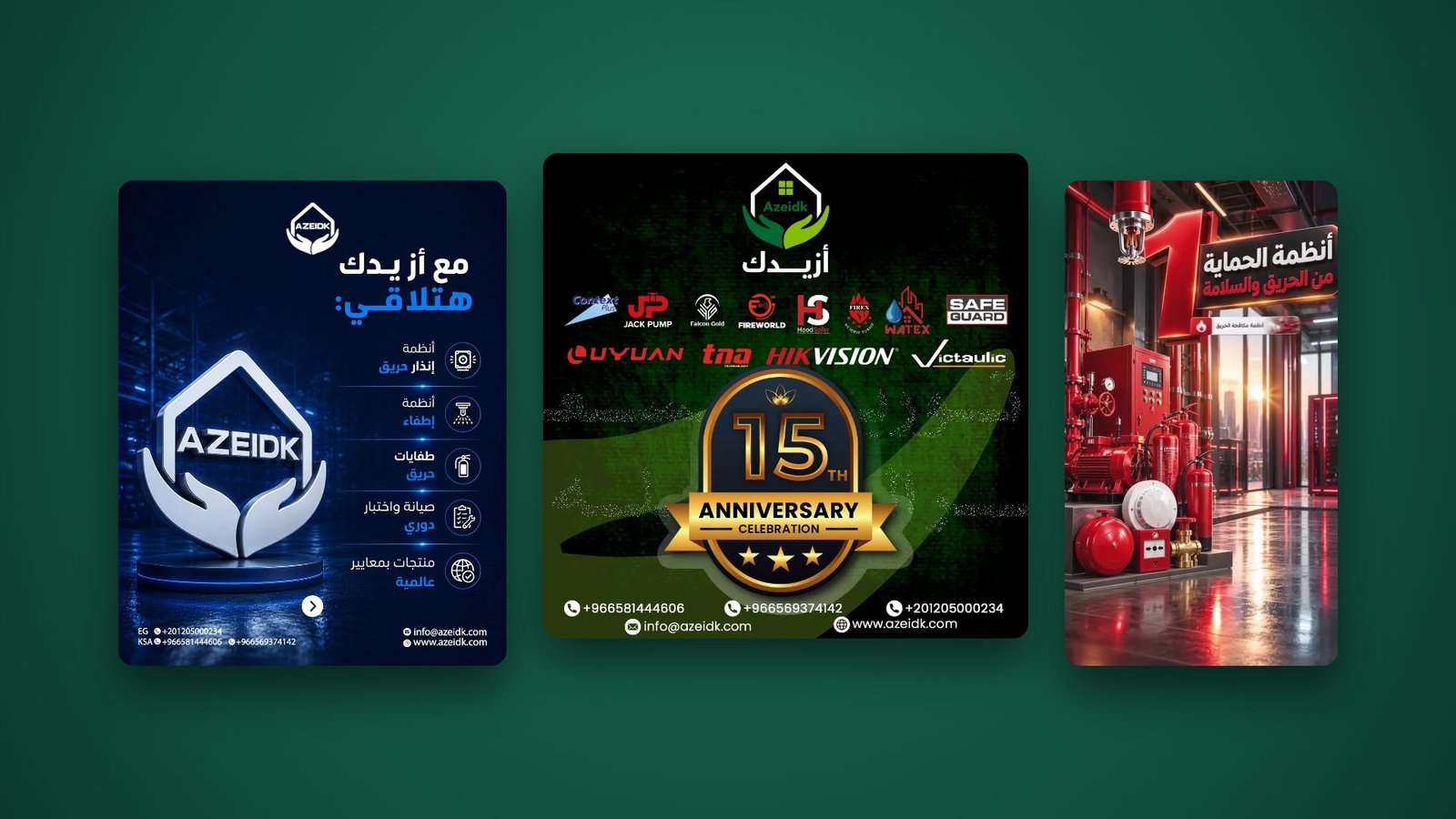
The gates cross departments: sales owns the replies, marketing the website and campaigns, admin the vendor file, HR and finance the local content answer. Name one owner for the “for procurement” pack and give them the 20-lead map. If no one internally can own all five materials (website, company profile, vendor file, sales replies and LinkedIn profiles), that is the case for an outside team. For Azeidk, a contracting and MEP company in Saudi Arabia and Egypt, RX grouped fire fighting, fire alarm, MEP, CCTV, maintenance and technical supply into one service architecture used on the website, the company profile and every campaign, and wrote the WhatsApp, email, LinkedIn and proposal content the sales team uses, so a buyer who checks the company meets the same story at every step. If you have the 20-lead map, bring it to a business diagnosis session and we will start from the gate it points to.
Frequently asked questions
Why do my B2B leads in Saudi Arabia stall after the first call?
Often because the lead has to pass checks run by people who never saw your ad: procurement verifying your company, a vendor registration or pre-qualification file, local content questions on government-linked work, and technical approval by consultants. Find out what the buyer last asked for; that usually shows the gate where the deal stopped.
Does LinkedIn work for B2B lead generation in Saudi Arabia?
It can reach the audience: DataReportal's Digital 2026 report (published November 2025, data as of October 2025) counts 12.0 million LinkedIn members in the Kingdom. Those are registered members, not active users, so treat the platform as a way to reach and reassure decision-makers, and make sure your company page and your sales team's profiles support what the campaign claims.
Can we buy a list of procurement managers and contact them directly?
Be careful. Under the Saudi PDPL Implementing Regulations, consent is required to process personal data for advertising and direct marketing, and people must be able to opt out easily. Do not assume B2B contacts are exempt. SDAIA is consulting on amendments to these rules (until 5 November 2026), so check the current text before any outbound campaign.
Do local content rules affect private-sector suppliers?
Directly, they apply to government tenders and public-sector projects. Indirectly, a private supplier may be asked for local content information by a client that is bidding on government work.
What should a B2B landing page in Saudi Arabia include?
Beyond the offer, the facts a vetting team checks: the legal name alongside the brand name, a Kingdom address, named contacts, brands you represent, certifications and approvals, relevant project references and a way to request the full vendor file.
- DataReportal (Kepios), Digital 2026: Saudi Arabia (2025-11-08).
- Clyde & Co, Local Content in Saudi Public Procurement: Key Considerations and the Broader Localisation Landscape (2026-09-01).
- Clyde & Co, Saudi Arabia issues Implementing Regulations to the Personal Data Protection Law (2023-09-08).
- Al Tamimi & Company, SDAIA opens public consultation on proposed amendments to the PDPL Implementing Regulation (2026-10-09).
- Saudi Data and AI Authority (SDAIA), Personal Data Protection portal.
- Google Ads Help, About offline conversion imports.
- Umm Al-Qura, Royal Decree M/76 approving the Government Tenders and Procurement Law (2026-09-04).
- Baker McKenzie, Saudi Arabia: Key changes under the new Government Procurement Law (2026-10-21).