- Confirmed: on 13 Oct 2026 Agility agreed to sell its entire Tristar stake to Aegis Logistics at a US$1.5bn enterprise value; closing is expected before the end of March 2027, subject to approvals.
- Reported: Aegis will hold 89.8% of Tristar for US$809m after also buying from Gulf Investment Corporation and Diamond Holdings.
- Not announced as of 31 Oct 2026: any change to Tristar's name, management, staff, contracts or suppliers.
- RX view: Tristar was run as a standalone brand under Agility, which makes the change easier to communicate; the signing-to-closing window is when customers and staff need clear answers.
On 13 October 2026, Abu Dhabi-listed Agility Global announced that it had agreed to sell its entire stake in Tristar, the Dubai-based energy logistics group, to India’s Aegis Logistics. If the deal closes as planned before the end of March 2027, a business that has been part of a Gulf logistics group for 23 years will have a new controlling shareholder from outside the region. For the oil companies, airlines, contractors and suppliers that work with Tristar across the GCC, very little changes on the day of signing. Much more can change between signing and closing, and in the months after. This piece separates what has been announced from what has not, as of 31 October 2026, and then sets out RX’s labelled view of what an ownership change like this means for customers, suppliers and the acquired company’s brand.
What happened
The agreement
- Announcement. Agility Global PLC announced on 13 October 2026 that it would sell 100% of its stake in Tristar to Aegis Logistics Limited, which it described as India’s leading integrated oil, gas and chemical logistics company. The deal values Tristar at US$1.5 billion enterprise value and US$882 million equity value, about 6.0 times 2025 EBITDA. Closing is expected before the end of March 2027, subject to regulatory approvals (Agility, 13 Oct 2026).
- Stakes. Enterprise reported that Agility’s stake is 65.12%, and that Aegis is also buying smaller stakes from Gulf Investment Corporation and Diamond Holdings, taking it to 89.8% of Tristar for US$809 million in total (Enterprise, 15 Oct 2026).
- Buyer entity. The buyer is Aegis Logistics International Pte Ltd, a wholly owned step-down subsidiary of Aegis Logistics Ltd. The US$809 million includes contingent consideration and interest on deferred consideration. Completion depends on approvals under applicable competition and anti-trust laws and customary closing conditions, and is expected in Aegis’s fourth quarter of FY27 (Business Today, 14 Oct 2026).
- Payment to Agility. Up to US$581 million for Agility’s stake: US$425 million at closing, US$110 million one year later, and up to US$46 million more if agreed conditions are met. Agility keeps its directly held interests in a strategic fuel-storage asset consolidated in Tristar’s accounts, which it values at about US$145 million in equity and plans to sell separately (Enterprise, 15 Oct 2026).
What was said
- Agility chairman Tarek Sultan: “Exactly 23 years ago, we invested $7 million into Tristar when it was generating just $13.5 million in revenue” (TradeArabia/WAM, 15 Oct 2026). Agility expects the investment to return more than US$1 billion, an internal rate of return of about 16%, and calls it its second major strategic exit after the 2021 sale of its Global Integrated Logistics business to DSV.
- Aegis chairman and managing director Raj Chandaria: “The acquisition of Tristar will kick-off Aegis’ transformation from a domestically focused operator into an international energy logistics platform” (Business Today, 14 Oct 2026).
- Tristar’s founder and CEO, Eugene Mayne, is named in the announcements but not quoted in the sources we opened.
The company being sold
According to Agility’s announcement, Tristar operated in more than 30 countries in 2025, with more than 1,000 trucks, 26 ocean-going and coastal vessels, 14 fuel farms and more than 60 remote fuel sites, and reported US$1.4 billion in revenue and US$257 million in EBITDA. In 2022 it took a majority stake in Aquarius Energy, a fuel-storage joint venture with Glencore with 3.5 million cubic metres of capacity and its major energy partners include Adnoc, Shell and Total (Agility, 13 Oct 2026; also reported by Container News, 14 Oct 2026).
Tristar’s own website, opened on 31 October 2026, describes a head office in Downtown Jebel Ali, Dubai, five business lines (road transport and warehousing, maritime logistics, fuel farms, remote fuels and commercial fuels) and a cryogenics division whose technical centre and fleet maintenance workshop are in Dammam, Saudi Arabia. It also names units such as Africa Fuels & Lubricants (AFAL) in Kenya, Tristar Terminals Guam and Tristar Chemical Terminal in Jebel Ali. The site carries the headline “Tristar Group signs agreement for Aegis Logistics to become majority shareholder”, dated 14 October 2026. We found no mention of Agility on the pages we opened (Tristar Group).
Background. Enterprise notes that Tristar called off a planned Dubai listing in April 2021, saying shareholders’ expectations had not been met.
Not announced (as of 31 October 2026)
No source we opened says whether the Tristar name, management team, head office, staff or customer contracts will change. Nothing has been said about rebranding, integration with Aegis’s Indian operations, or changes to suppliers. Anything said about these points elsewhere is speculation.
Why it matters
- A long interim period. Between a signing in mid-October and a closing expected by the end of March 2027, Tristar remains under its current owner while everyone knows the owner will change. That is when customers ask questions, competitors approach accounts, and staff wonder what comes next. The communication in this window often matters more than the closing announcement.
- A change of controlling shareholder, not of operator. For a customer, the trucks, depots and people they deal with are the same on the day after closing. What can change later is the parent’s policies: procurement rules, safety and compliance standards, investment priorities and, eventually, the brand.
- A buyer with an international plan. Aegis’s chairman describes the deal as the start of its move from a domestically focused operator to an international energy logistics platform (Business Today). A buyer with that stated aim is likely to treat Tristar’s Gulf operations as a base to build on. In our reading, that makes continuity of the operating business more likely than a quick merger into Aegis’s Indian operations, but nothing has been announced either way.
For Saudi Arabia and Egypt. Tristar’s website places its cryogenics technical centre in Dammam, so the change of ownership touches Saudi operations directly. Saudi customers and procurement platforms that hold supplier records with ownership and shareholder details will need those records updated after closing. For Egyptian logistics and maritime companies, the deal is a clear public example of how a founder-led business can sit inside a larger group for years, keep its own name, and then change hands as a complete, recognisable brand.
RX analysis: what the ownership change means
1. The brand starts from a strong position: it was never merged
Agility owned Tristar for 23 years, but on the Tristar website pages we opened the company presents itself as Tristar, with its own tagline and its own business lines, and does not mention Agility. In brand-architecture terms, Tristar has been run as a standalone brand inside a portfolio. That makes a change of owner much easier to communicate: there is no parent logo to remove from trucks, vessels, tank farms or uniforms. In our view, the most likely first step for any new owner in this position is to keep the operating brand and add, at most, a short ownership line. That is a judgement, not a forecast.
2. Customers will ask three questions
Oil majors, airlines, contractors and government buyers rarely worry about the shareholder register itself. They ask whether the contracts and service levels stay the same, whether the safety and compliance standards stay the same, and whether the people they call stay the same. A company in Tristar’s position answers those questions best in writing and in person, account by account, before rumours fill the gap. The answer, where it is true, is short: same company, same contracts, same team, new majority shareholder after closing.
3. Suppliers should expect paperwork, not drama
For fuel suppliers, workshops, port agents, subcontracted hauliers and service providers, a change of controlling shareholder usually shows up as administration: updated ownership declarations, new group policies on procurement and compliance, possibly new approval thresholds. In our view, suppliers that prepare early, with an up-to-date company profile and clear documents, are better placed than those that wait to be asked.
4. Internal audiences come first
A business with more than 1,000 trucks and dozens of sites has drivers, operators and site staff who hear the news from the press, not from a memo. Clear internal messages, in the languages the workforce actually uses, are part of the brand. They decide what staff tell customers at the depot gate.
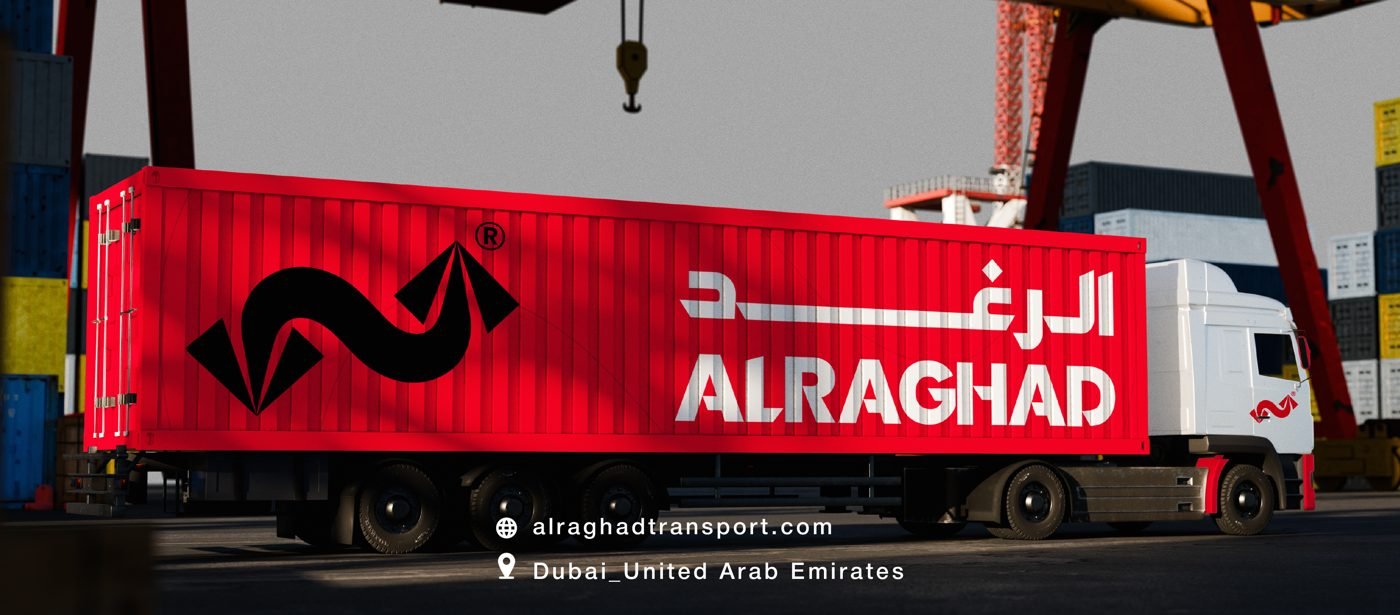
A related RX case, for context only. RX’s Alraghad case shows a different situation, not an ownership change: a bold red identity, a company profile and a daily social campaign for a road, sea and air freight company. We cite it only for the building blocks any logistics brand needs before a transition: a recognisable identity, a profile that explains the services clearly, and steady communication.
Practical implications: a checklist for this deal, or your own
If you are a customer of a logistics company that is changing hands
- Ask in writing which legal entity holds your contract and whether that changes at closing.
- Confirm your named account manager and operations contact, and who handles incidents and claims.
- Check whether your contract has change-of-control provisions, and take legal advice if it does.
- Note the expected closing date in your vendor file and diarise a review after it.
If you are a supplier or subcontractor
- Keep your company profile, certificates and vendor-registration documents current, so you can respond quickly to a new owner’s onboarding requests.
- Do not assume that new policies will copy the old ones. Ask who your contact will be after closing.
- Prepare a short, factual line for your own customers if your business depends on the account.
If you own or run a Gulf or Egyptian logistics company and may one day sell
| Stage | Brand and communication task |
|---|---|
| Years before a sale | Keep the operating brand clear and consistent across fleet, sites, documents and digital channels. A clean, standalone brand is easier to value and easier to hand over. |
| Signing | Brief staff and key accounts before or at the moment of announcement. Publish one short statement on your own website, as Tristar did. |
| Signing to closing | Hold a simple “what changes and what doesn’t” note for sales and operations teams. Answer customer questions account by account. |
| After closing | Decide the brand relationship (standalone, endorsed or merged) before changing any livery, uniforms or signage. Update supplier registrations in Saudi Arabia, the UAE and Egypt first, then customer-facing materials. |
For the physical side of any later change, see our guides to fleet branding design for transport companies and the rebrand rollout plan.
Sources
- Agility newsroom, 13 October 2026: the primary announcement (valuation, closing timing, returns, Tristar’s 2025 assets, revenue, EBITDA and partners).
- Enterprise, UAE edition, 15 October 2026: stake percentages, other sellers, payment structure, retained asset, 2021 IPO background.
- Business Today, 14 October 2026: Aegis buyer entity, conditions, Raj Chandaria’s comments.
- TradeArabia carrying WAM, 15 October 2026, and Container News, 14 October 2026: Tarek Sultan’s comments and corroboration of the Agility figures.
- Tristar Group website, opened 31 October 2026: business lines, head office and units.
We could not open Aegis’s Indian stock-exchange filing or Agility’s ADX disclosure directly; the stake percentages and payment terms are as reported by Enterprise and Business Today. Full links are in the references below.
Related RX services
Deciding whether an acquired business keeps its name, carries an ownership line or moves to the parent’s identity is brand identity and positioning work. Rolling a decision out on trucks, vessels, depots and uniforms is covered by brand applications and signage.
Frequently asked questions
Will the Tristar brand change after the sale?
Nothing has been announced. As of 31 October 2026, none of the sources we opened says whether the Tristar name, management or operations will change after closing.
When will the Tristar sale close?
Agility expects closing before the end of March 2027, subject to regulatory approvals, including competition and anti-trust approvals reported by Business Today.
What is the difference between the US$1.5bn and US$882m figures?
US$1.5 billion is enterprise value, the value of the whole business including its debt. US$882 million is equity value, what the shares are worth. By our arithmetic the gap is about US$618 million, which broadly reflects net debt and other adjustments; Agility has not published the breakdown.
Does a change of controlling shareholder end a customer's existing contract?
Not usually. The contract stays with the operating company that signed it, because only its shareholders change. The exception is a change-of-control clause, which can give either side rights to review or exit, so check the contract and take legal advice.
Should an acquired company repaint its fleet straight away?
No. Fleet livery, uniforms and site signage are the slowest and most visible assets to change, so change them once, after the new owner has decided the brand relationship. Documents, the website and an ownership line in email signatures can be updated first.
- Agility, Agility Announces Sale of Tristar to Aegis Logistics for $1.5 Billion Enterprise Value (2026-10-13).
- Enterprise (UAE), ADX-listed Agility sells its stake in Dubai's Tristar to India's Aegis (2026-10-15).
- Business Today, Aegis Logistics arm to buy 90% stake in Tristar for $809 mn (2026-10-14).
- TradeArabia (WAM), Agility sells Tristar to Aegis Logistics for $1.5bn (2026-10-15).
- Container News, Agility agrees to sell Tristar to Aegis Logistics in US$1.5 billion deal (2026-10-14).
- Tristar Group, Tristar Group website (business lines, head office, news) (2026-10-31).