- Draft the post-event calendar before booking a crew; every clip should have a destination.
- Read the exhibitor manual's filming rules early: some shows, such as MWC Doha, ban privately hired photographers.
- The organiser's admission consent is given to the organiser; don't rely on it for your own ads, and collect written releases from anyone featured.
- Shoot for vertical and horizontal at once, subtitle in Arabic and English, and keep the raw footage.
Most exhibitors leave a show with a hard drive full of footage and no plan for it. A videographer was booked, the stand was filmed from every angle, a few visitors were interviewed in a noisy aisle, and one highlight reel went out a week later. After that the folder sits untouched until the next edition.
The fix is to plan exhibition video coverage backwards. Decide first what you want to publish in the twelve weeks after the show, then work out which shots, interviews and permissions each post needs. Three show days can then supply a full quarter of posts, reels and sales material. This guide gives you the calendar, the shot list, the organiser and consent checks that stop footage from becoming unusable, and the formats to deliver.
Start with the post-event calendar, not the shot list
Every clip should have a destination before anyone presses record. Draft the quarter first, then turn each slot into a shot requirement. A typical B2B plan might look like this:
| When | What goes out | What it needs from the show |
|---|---|---|
| Each show day | Same-day reel or story set: “today at the stand” | Arrival shot, busiest moment, one product close-up, one short quote |
| Week 1 | Highlight reel (60–90 seconds) and a thank-you post | Wide booth shots, crowd moments, handshakes, partner logos in context |
| Weeks 2–3 | Product demo series, one product per post | Clean demo of each hero product, filmed early before the stand gets busy |
| Weeks 3–5 | Client and partner testimonials | Seated interviews with signed releases, in Arabic and English |
| Weeks 5–7 | Booth walkthrough and “meet the team” clips | A planned walkthrough route, staff introductions |
| Weeks 6–9 | Seminar or talk cut-downs, with the full session for LinkedIn or YouTube | Clean audio from the speaker, slides as files, the organiser’s permission to film the session |
| Weeks 8–12 | Educational posts built on questions visitors asked, and a teaser for the next show | Notes from the sales team on the questions they heard most, plus spare B-roll |
Two things follow from this. Sales and marketing need to agree the calendar before the show, because the demo series and testimonials depend on who is on the stand and when. And the calendar tells you how many people to book, which is one of the main cost drivers set out in our guide to corporate film costs in Saudi Arabia. A single shooter can manage same-day reels or seated interviews, but not both while the stand is at its busiest.
A shot list by show day
Exhibition days have a predictable rhythm, so you can plan the coverage around it.
Build-up day
- Time-lapse or a few progress shots of the stand going up, if the venue’s build-up access rules allow your crew in. At Dubai World Trade Centre, for example, the Intersec exhibitor information says hall access is restricted to people holding valid contractor passes, and personal protective equipment is required.
- Clean product shots on the finished stand before visitors arrive. This is the only quiet time you will have.
- Logo and signage close-ups for partner announcements.
Day one
- Opening-hour wide shots and the first visitors arriving.
- Demos of hero products while staff are fresh and the stand is still tidy.
- The first same-day reel, cut and published before the show closes.
Day two (usually the busiest)
- Crowd and conversation moments. Most of the energy in your highlight reel will come from this day.
- Scheduled testimonials. Book client and partner interviews in advance and hold them in a quieter corner, not in the aisle.
- Any seminar, talk or live test on the stand.
Final day
- Pick-up shots for anything missing from the calendar.
- Team introductions and the booth walkthrough, once the pressure is off.
- A short “thank you for visiting” clip to post the same evening.
Testimonials that survive the edit
Most testimonials fail because of the setting rather than the speaker. Exhibition halls are loud, people are short of time, and a wireless microphone clipped on in a hurry picks up the stand next door. Some rules that hold up:
- Book them. Ask clients and partners before the show whether they will give two minutes on camera, and agree a time slot.
- Prepare three questions, not ten. What problem were you solving? Why did you choose this supplier or product? What would you tell a peer? Short answers are easier to cut.
- Record in the speaker’s preferred language. Let Arabic speakers answer in Arabic and subtitle in English, rather than asking for a stiff English answer.
- Get approval to use the brand as well as the face. A partner’s representative speaking on camera is not the same as permission to show their logo in your ads. Agree with the partner how their brand will appear.
- Collect a written release before you record. More on this below.
Organiser and venue rules: check before you book the crew
Filming rules differ from show to show, and they are set out in the exhibitor manual, which may not be available until close to the show. Intersec Dubai’s exhibitor page, for instance, says the manual link will be made available closer to the show dates. Read the manual as soon as it is published and look for these points:
- Whether outside crews are allowed at all. Some shows restrict photography to official photographers. The MWC Doha 2026 exhibitor rules state that privately hired photographers are not permitted within the venue at any time, and that other stands may be photographed only by official photographers. If you planned your own crew for a show like that, you need a different plan, such as the official service or filming before and after the show.
- Filming other stands. The same MWC Doha rules prohibit photographing stands or products on stands without the prior authorisation of the exhibitors concerned. Frame wide shots so that a neighbour’s stand is not the subject.
- Badges. Find out whether your videographer is registered as exhibitor staff or as a contractor, and which pass covers build-up days. Organisers such as UKi Media & Events require external photographers and videographers to register as part of the exhibitor’s team and wear the badge they are issued.
- Seminar and conference sessions. Filming a talk in the organiser’s theatre may need separate permission, even if your own team is speaking. Ask before you schedule the crew.
- Wireless audio and security restrictions. Some organisers restrict wireless microphones or footage of security companies’ stands. The UKi guidelines cited above do not permit wireless audio at the event and do not allow external crews to film security-based companies or their stands.
Also, the organiser’s admission terms do not cover you. The Gulfood admission policy, for example, has attendees agree that they may be photographed or filmed as part of event coverage, and that the organiser may use that material. That consent is given to the organiser. Our reading is that an exhibitor should not rely on it to put a visitor’s face in its own paid advert; collect your own release instead.
Consent and personal data in Saudi Arabia, the UAE and Egypt
The safe working assumption is that a recognisable person in a video counts as personal data, and Saudi Arabia, the UAE and Egypt all have data protection laws in which consent plays a central role. The current marketing rules are covered in our guides to the Saudi PDPL and direct marketing and Egypt’s data protection law. For a UAE show, the UAE government portal says Federal Decree-Law No. 45 of 2021 prohibits processing personal data without the owner’s consent, apart from defined exceptions, and lists the DIFC’s separate data protection law, so check which regime applies to your company and the venue. Treat this section as practical guidance, not legal advice, and check paid campaigns built around identifiable people with counsel.
In practice, a workable consent setup for a stand looks like this:
- A filming notice at the stand entrance, in Arabic and English, saying that the stand is being filmed for the company’s channels and how to ask not to be included. This covers background crowd shots. It is not enough for close-ups.
- A one-page written release for anyone featured: interviewees, people shown up close, anyone whose face carries a shot. List the uses (organic social, website, paid ads, sales presentations), the period of use and how to withdraw. A QR code linking to a short form works on a busy stand.
- No identifiable children unless a parent or guardian has signed.
- A release log that links each signed form to file names, so an editor can see who is cleared for ads and who is cleared only for organic posts.
- A deletion route. If someone withdraws, you need to find every cut they appear in, which the log makes possible.
Formats to deliver, and how to shoot for them
Shoot so that one take serves several platforms. Frame wide shots with enough headroom to crop to vertical, and film key moments, such as demos and testimonials, natively in vertical with a second camera where you can. Current limits worth knowing:
| Platform | What applies | Use it for |
|---|---|---|
| Instagram Reels | Extended to three minutes in January 2025, up from 90 seconds, with the profile grid changed from squares to a rectangular layout, as reported by Engadget. Check the current limit in the app before you edit. | Same-day reels, demos, highlight reel. Keep text away from the edges so the grid crop does not cut it. |
| YouTube Shorts | Up to three minutes, square or vertical (YouTube Help). A Short over one minute with an active copyright claim is blocked worldwide. | Demo and seminar clips. Use only licensed music, because a claim on a longer Short takes it offline. |
| LinkedIn video ads | Specs for paid video ads: 3 seconds to 30 minutes; 4:5, 9:16, 16:9 and 1:1 recommended; 75 KB to 500 MB (LinkedIn ads guide). Organic posts follow LinkedIn’s own upload limits, so check those separately. | Testimonials and seminar cut-downs aimed at decision-makers. Build them for viewing with the sound off, with burned-in subtitles. |
| Short vertical cuts the sales team can forward | Post-show follow-ups to the leads collected at the stand |
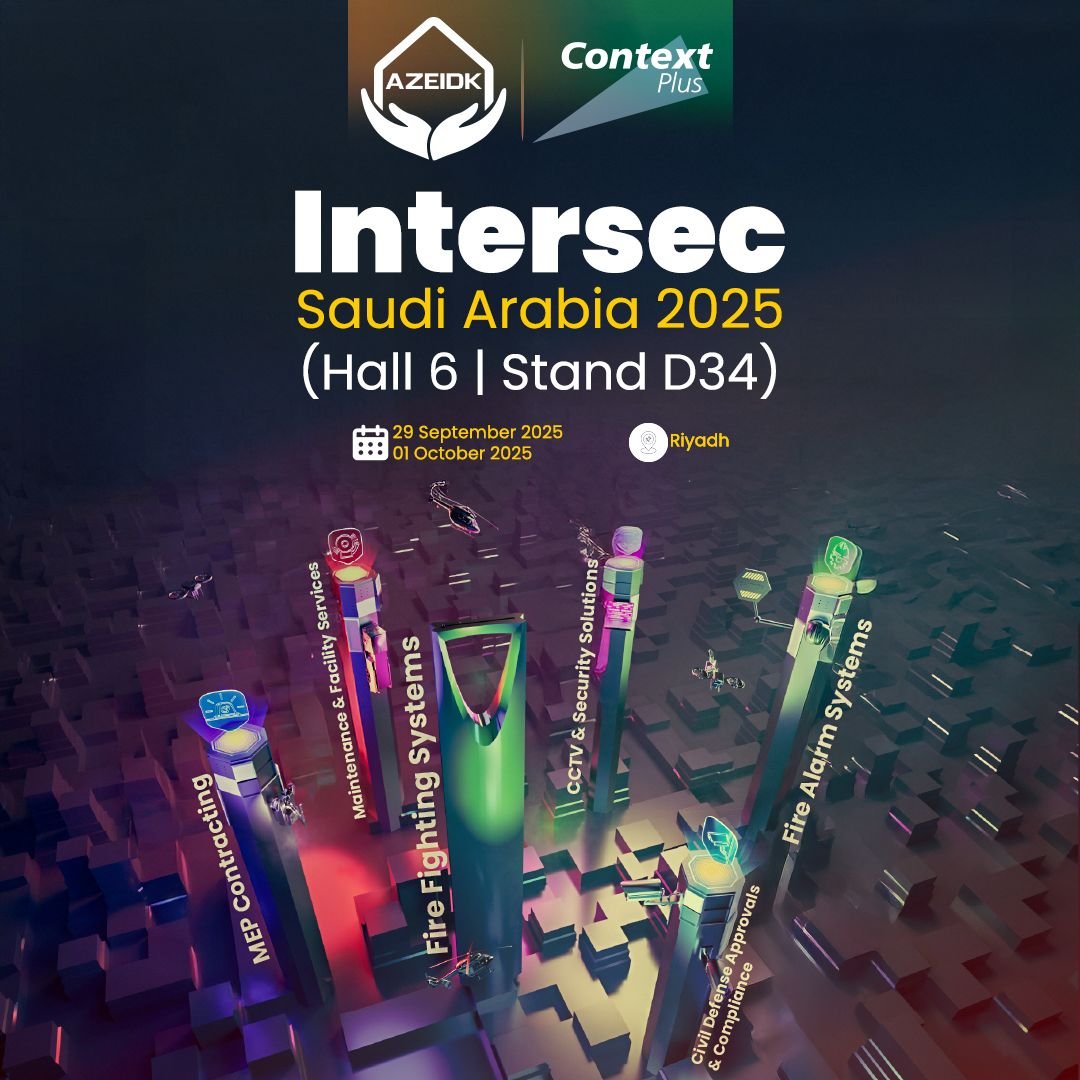
The last row matters more in the Gulf than many plans assume. For Azeidk’s Intersec Saudi Arabia 2025 campaign, RX cut the participation teaser for feed, stories and WhatsApp sharing, alongside invitations with the stand details that the sales team could share with the clients they were inviting. Ask for the same cuts from your show footage, so follow-up messages carry a clip of the product the visitor actually saw, and track those follow-ups through to pipeline as our guide to measuring exhibition ROI describes.
Subtitle everything in both Arabic and English, and agree who checks the technical terms before publishing. A wrong product name in a subtitle undermines a testimonial that took real effort to secure.
The one-page crew brief
Send this to whoever films, whether an in-house team or an agency, at least two weeks before build-up:
- The post-event calendar, with every slot that depends on show footage marked.
- The organiser’s filming rules from the exhibitor manual, with badge type and access times.
- Stand number, hall map and the planned walkthrough route.
- Hero products, in demo order, with the staff member who will present each one.
- The testimonial schedule, with names, companies, preferred languages and contact numbers.
- Seminar times, with confirmation from the organiser that filming is permitted.
- Release forms (paper copies and QR), the filming notice and the release log template.
- Same-day publishing rules: who approves a same-day reel, and by what time.
- Delivery list: formats, subtitle languages, file naming, and handover of all raw footage and project files to the company at the end.
The last point is easy to miss. Raw footage is what lets you build new cuts in month three, or reuse demo shots before the next edition. Make sure you receive the original files, not just the finished reels, and write that into the brief and the contract before the crew is booked, whether it is an in-house team or an event video production partner.
Frequently asked questions
How much content can one exhibition realistically produce?
If coverage is planned against a calendar, a three-day show can supply same-day reels, a highlight reel, a demo series, testimonials, a booth walkthrough, seminar cut-downs and B-roll for educational posts across roughly twelve weeks. Without a plan, most of the footage goes unused.
Can we film visitors at our stand without asking them?
Background crowd shots with a visible filming notice are common practice, but anyone shown close up or interviewed should sign a written release listing the uses. Saudi Arabia, the UAE and Egypt all have personal data laws in which consent plays a central role, and an organiser's admission consent is given to the organiser, so exhibitors should not rely on it for their own advertising. Check the current law and take legal advice for paid campaigns.
Can we bring our own videographer to any exhibition?
Not always. Rules are set in each show's exhibitor manual. Some organisers require external crews to register as part of the exhibitor's team and wear the badge issued, while others, such as MWC Doha 2026, do not allow privately hired photographers in the venue at all.
Which formats should we ask for?
At minimum, vertical cuts for Reels, Shorts, stories and WhatsApp, a horizontal master for LinkedIn, YouTube and the website, Arabic and English subtitles, and the complete raw footage and project files.
- GSMA, Photography & Filming — MWC Doha 2026 Exhibitor Manual.
- Messe Frankfurt Middle East, Information for exhibitors — Intersec Dubai.
- UKi Media & Events, Filming and Photography Guidelines for Exhibitors.
- Gulfood, Admission Policy.
- Saudi Data and AI Authority (SDAIA), Personal Data Protection.
- Al Tamimi & Company, An overview of Saudi Arabia's new Personal Data Protection Law.
- The UAE Government portal (u.ae), Data protection laws.
- CMS, Egypt's PDPL: Executive regulations issued – one year compliance countdown begins (2026-01-13).
- Engadget, Instagram swoops in with 3-minute Reels and rectangular profile grids (2025-01-18).
- YouTube Help, YouTube Shorts up to three minutes.
- LinkedIn Marketing Solutions, Video ads specs — LinkedIn Ads Guide.