- Decide who will execute the plan before you hire anyone to write it.
- Expect deliverables in order: findings, agreed positioning, then plan, budget and KPIs, then a roadmap with owners. Ask each consultant to put their own dates against that order.
- Compare proposals on scope, senior involvement, sign-off points, file ownership and tax treatment before price.
- A plan with no sales-team input, no named owners and no measures tied to sales is unlikely to leave the deck.
Most companies that hire a marketing strategy consultant are not short of ideas. They are short of a plan the sales team believes, a budget the finance team can defend and a first quarter of work that actually starts. The consultant’s job is to produce those three things, in that order of usefulness, and to leave something your team can run.
This guide is for the CEO or owner about to sign a strategy engagement. It sets out what the first 90 days should deliver and in what sequence, how to test each deliverable, how to compare proposals line by line, and the signs that a strategy will stay in a slide deck. It does not repeat the question of whether to build an in-house team or outsource the function; that comparison is covered in In-House Team, Agency or Outsourced Marketing Department?
What you are actually buying
“Marketing consultant” covers three different things, and proposals often blur them. Be clear which one you need before you compare prices.
- A strategy engagement. A defined piece of work: research, positioning, a written plan, a budget and channel split, measures and a roadmap. It has a start, an end and a set of files you keep.
- A fractional or part-time CMO. Senior direction for a set number of days a month, usually ongoing. Useful when you have an execution team but nobody senior to direct it. The output is decisions and oversight more than documents.
- An agency that also plans. Strategy written by the same people who will execute it. The advantage is continuity; the risk is a plan that leans towards the services that agency sells.
None of these is wrong. The mistake is paying for one and expecting another: buying a strategy document and expecting someone to run the campaigns, or hiring a fractional CMO and expecting a finished annual plan in four weeks. Write down, before you issue a brief, who will execute the plan once it exists. That answer shapes everything below.
The 90-day sequence: what should arrive, in what order
In our view, a sound engagement moves from understanding to positioning to a working plan to the first weeks of execution. The order matters more than the dates: a channel plan written before the positioning is agreed tends to be rewritten, and a budget written before the KPI framework has nothing to be judged against.
The table below is an illustrative sequence for judging a proposal, not a standard timetable or a record of any real engagement. It lists the stages in order and what should exist at the end of each. Scope, the number of markets and how quickly your team supplies data all change how long each stage takes, so ask every consultant to put their own week numbers against these stages. A proposal that cannot, or that schedules the budget before the positioning is signed off, is telling you something.
| Order | Stage | What should exist at the end | How to test it |
|---|---|---|---|
| 1 | Understand | Interview notes with management and sales; review of your data, materials and past campaigns; market and competitor findings; buyer profiles | Does it tell you something you did not know, backed by evidence from your own sales conversations? |
| 2 | Position | Positioning summary; target segments in priority order; key messages per audience | Can your sales director repeat the positioning in two sentences, and do they agree with it? |
| 3 | Build | Annual or launch plan; campaign calendar; channel mix and budget allocation; KPI framework and reporting template | Can finance trace each budget line to an objective and a measure? |
| 4 | Start | A roadmap for the first 90 days of execution with owners and dates; first campaigns briefed or live; first report issued against the KPI framework | Has anything gone out to the market yet? |
Two checkpoints deserve a formal sign-off, in our experience: the positioning at the end of stage two, and the budget and channel split in stage three. Agreeing direction before detailed planning is cheaper than rebuilding a finished plan because the board disagrees with its starting point.
What each deliverable should contain
What Gulf market findings should cover
Use this as a checklist when the findings arrive. Anything missing is a question for the consultant. Professional recommendation.
| Area | What the findings should show | Weak version |
|---|---|---|
| Search behaviour | The Arabic and English terms buyers use for your products, per country | “SEO opportunity” with no terms |
| Buying process | Who approves a supplier: consultants, procurement, vendor registration, pre-qualification files | A generic “B2B funnel” |
| Event calendar | The shows that matter in your sector, with a fallback. Intersec Saudi Arabia, for example, has been postponed to October 2027 (TradeArabia, 19 October 2026) | “Attend exhibitions” |
| Seasons | Ramadan, Eid, national days, and the budget and tender cycles of your main clients | A Western quarterly template |
| Competitors | How the three strongest present themselves in each country: claims, proof, languages, channels | A global SWOT table |
| Team constraints | Whether the roadmap depends on hires affected by the Saudisation rules for marketing and sales roles (MHRSD) | Hiring assumed |
| Your own evidence | Win/loss reasons from your sales team and a handful of customers | Desk research only |
If the findings could be pasted into a competitor’s file unchanged, they are not findings. If you are commissioning the research separately, our guide to market research companies in Saudi Arabia covers how to choose a supplier.
Positioning and messages
The positioning summary should name who you are for, what you do better than the alternatives and why buyers should believe it. Each audience should get its own key messages: the procurement manager, the consultant engineer and the owner do not care about the same things. A good test is whether the positioning rules something out. If every competitor could claim it, it is not positioning.
The plan and calendar
The plan should fit the year you actually work in. For most Gulf and Egyptian B2B companies that means allowing for Ramadan and Eid, national days, exhibition season and the budget cycles of public and private clients. A calendar copied from a Western template can put your biggest campaign in a month when many decision-makers are hard to reach. It should also say what you will stop doing, not only what you will start. Our annual marketing plan guide covers the calendar and the one-page plan format.
Budget and channel split
Expect a total, a split by channel and objective, and the reasoning behind both. Strategies routinely outgrow the money behind them, so a good consultant sizes the plan to your budget or shows clearly what more would buy; our guide to splitting a budget between brand and performance covers the theory behind the split.
KPI framework
Look for a short list of measures tied to sales outcomes: qualified enquiries, quotation requests, meetings, pipeline value and won business, alongside a few leading indicators such as reach in the target segment. Each measure needs a definition, a source and an owner. Followers and impressions on their own are not a KPI framework. The reporting template should be something your CEO would read in five minutes; our guide to the monthly marketing dashboard shows one format.
The 90-day roadmap
This is the bridge to execution. It should list the first campaigns and assets, who produces each, the approval steps, the launch dates and the first review date. If the roadmap has no names against tasks, it is a wish list.
What the consultant needs from you
Strategy engagements stall on the client side as often as on the consultant’s. Before the first meeting, line up:
- A decision-maker. One person who can approve positioning and budget without waiting for a quarterly board meeting.
- Sales access. Time with your sales director and two or three salespeople. They know why deals are won and lost; most plans that fail never asked them.
- Data. Sales by product, segment and country for the last two or three years, enquiry sources if you track them, past campaign results, and current ad and analytics account access.
- Existing material. Company profile, catalogues, proposals, website, social channels and any previous plans, including the ones that were never used.
- An honest view of capacity. Who will execute the plan: your own team, an agency or the consultant. If the plan depends on new hires, say so now; the team-constraints row in the findings checklist above is where that gets tested.
How to compare proposals
Proposals for strategy work are hard to compare because each one describes a different scope in different words. Put them into the same table before you look at price.
| Question | What a strong answer looks like |
|---|---|
| What exactly will be delivered? | A named list of documents and files, matching the deliverables above, with the format of each |
| How will they learn the business? | Interviews with management and sales, a review of your data, and where possible conversations with customers |
| Who does the work? | Named senior people for the research and positioning, not only at the pitch |
| What local knowledge do they bring? | Experience with buyers, channels and seasons in your specific countries, with relevant examples |
| Where are the sign-off points? | Formal approval of positioning and budget before the detailed plan is written |
| What happens after the plan? | A clear answer on who executes, how the consultant stays involved and how progress is reported |
| Who owns the output? | All files, research and templates handed over and yours to keep; ad and analytics accounts stay in your company’s name |
| Is the price comparable? | Same scope, same currency, and tax treatment stated |
On the last point, ask every firm to state the tax basis and currency of its quote, because VAT rates differ across the region (see PwC’s tax summaries for Saudi Arabia, the UAE, Egypt and Qatar). For a cross-border engagement in Egypt, PwC notes that VAT on services from a non-resident supplier is generally reverse-charged by the Egyptian business unless the supplier uses the simplified registration process.
Be cautious with two kinds of proposal. One promises specific results, such as a number of leads or a percentage growth, before the consultant has seen your data. The other offers a fixed template plan at a low price; it will look complete and fit nobody.
Warning signs that the strategy will not reach execution
In our experience, most strategy fails in the gap between the document and the first campaign. These signs usually show up early, and several of them are also why companies end up changing marketing suppliers again and again:
- The sales team was not interviewed. The plan will describe buyers the salespeople do not recognise, and they will quietly ignore it.
- The deliverable is a presentation, not a plan. Slides explain a direction; they do not assign tasks, dates or budget lines.
- The budget does not add up to your number. Either the plan assumes money you have not approved, or nobody asked what the budget is.
- Every channel is recommended. A plan that says yes to everything has not made the hard choices you are paying for.
- No measures are linked to sales. If success is defined as engagement and reach, nobody will be able to say in six months whether it worked.
- No owner for week one. If the roadmap does not say who briefs the first campaign and when, nothing will happen in week one.
- The consultant disappears at handover. The first quarter of execution is where the plan meets reality and needs adjusting. A plan with no review point after launch is left to drift.
The common failure looks like this, in a hypothetical case: a distributor approves a plan for a new product line in a board meeting, then hands it to a two-person marketing team with no extra budget and no agency, and later finds that only the social media part has happened. The plan was not wrong; nobody planned the execution.
Hypothetical example: what each stage should leave behind for a Saudi distributor of a new pump range.
| Stage | What exists at the end | The decision it forces |
|---|---|---|
| Understand | Interviews show that contractors ask first about local stock and after-sales support, not price. Arabic search terms for the range have been listed. | Lead with availability and support, not specifications |
| Position | One sentence the sales director signs: “The pump range consultants can specify knowing parts and service are in Riyadh.” | Drop the “premium European” claim, which every competitor makes |
| Build | Plan, channel mix sized to the approved budget, KPI sheet (quotation requests, consultant meetings), an owner for each line | Two channels done properly: LinkedIn plus a WhatsApp inquiry flow. Paid social is postponed |
| Start | First campaign briefed, the sales kit ready before launch, the first report date agreed | Who briefs, who approves, who answers inquiries |
Why this differs from the failed version: the same two-person team can run this plan, because the Build stage cut the channels down to fit the team. If the roadmap had assumed a third hire, the Start stage would have exposed it before launch rather than months later.
Where to start
If you are close to hiring, write a one-page brief first and send the same brief to every firm you consider. The quality of their questions will tell you more than the quality of their slides.
| Field | What to write | Hypothetical example |
|---|---|---|
| Sales target | The commercial result the plan must support, in your sales team’s terms | More quotation requests from consultant engineers for the new pump range, against the target the sales director has set |
| Markets and segments | Countries, cities and buyer types, in priority order | Saudi Arabia first, Riyadh and the Eastern Province; MEP contractors and consultants; the UAE later |
| Budget range you can commit | The range finance has approved, and whether it covers production and outside support or media only | An approved annual range covering media, content production and outside support |
| Who executes | The people who will run the plan once it exists | A two-person in-house team and a freelance designer; no new hires this year |
| The decision you need help with | The one question you most want answered | Whether to keep the exhibition budget or move it into digital and sales tools |
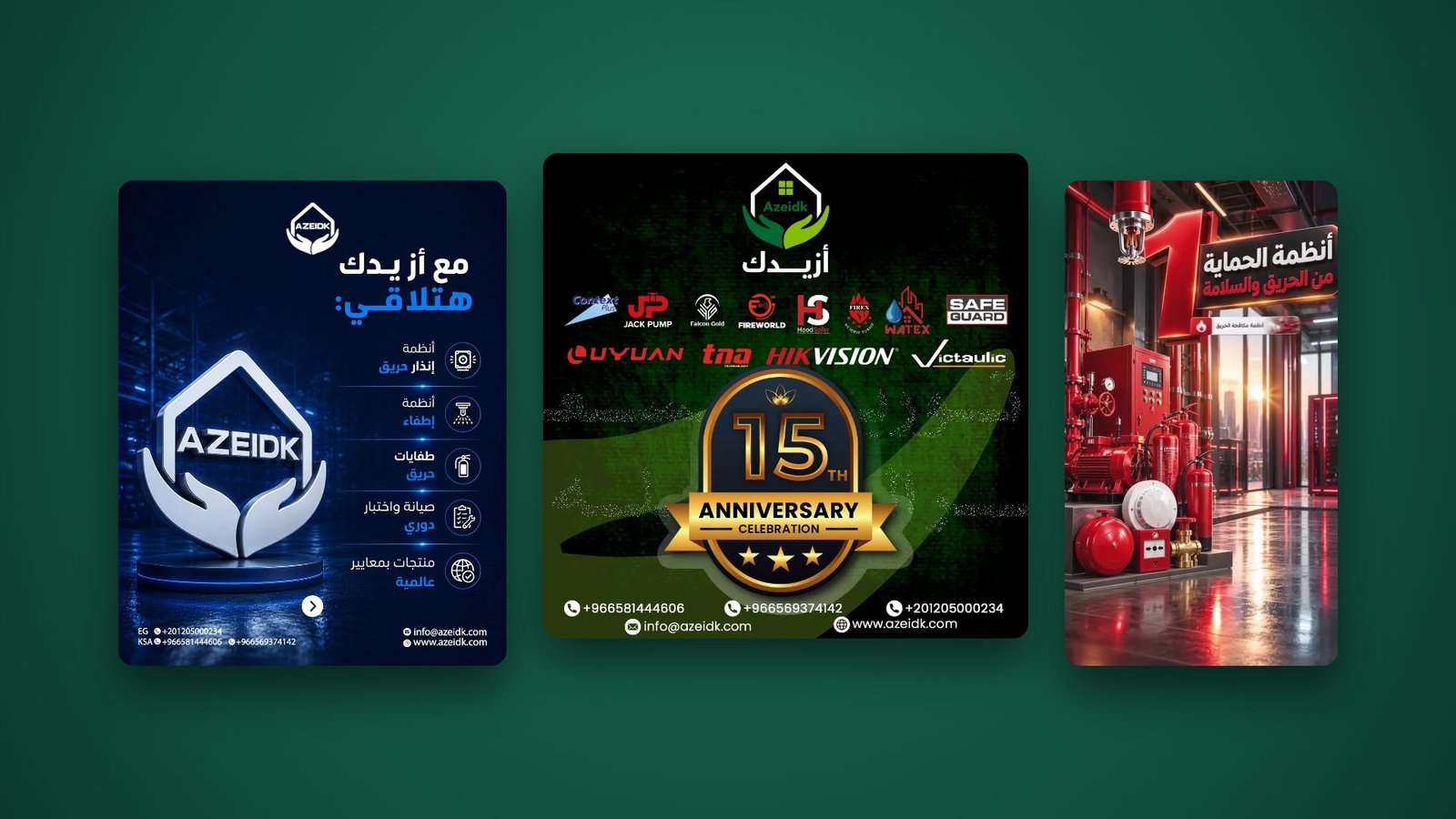
At RX Designer, marketing strategy and research follows the same order of work, Understand, Position, Build and Support, and the team stays on to execute the plan, continuing into sales messaging and enablement where the gap is in the sales conversation. The Azeidk case study shows one direction across brand, content, campaigns, events and sales communication, and GCS shows a new fire-safety brand taken from identity to a company profile and WhatsApp message flows for its sales team. If you would rather test the thinking first, a business diagnosis session ends with clear next steps.
Frequently asked questions
What does a marketing strategy consultant actually deliver?
A defined set of documents and files: market and competitor findings, buyer profiles, a positioning summary and key messages, an annual or launch plan with a campaign calendar, a channel mix and budget allocation, a KPI framework with a reporting template, and a roadmap for the first 90 days of execution. All of it should be editable and yours to keep.
Is a fractional CMO the same as a marketing strategy consultant?
No. A strategy engagement is a project with a start, an end and set deliverables. A fractional CMO provides ongoing senior direction for a set number of days a month, and the output is mainly decisions and oversight. Choose based on whether you need a plan written or a senior person to direct an existing team.
How long should a marketing strategy engagement take?
It depends on scope, the number of markets and how quickly your team supplies data. Treat the four stages (understand, position, build, start) as the order to check a proposal against, and ask each consultant to put their own week numbers against them. A quarter is a useful frame for asking what should exist by the end, not a standard. Be wary of anyone who commits to a fixed timeline before seeing your data.
How do I compare proposals from different consultants?
Put them into one table: named deliverables, how they will learn the business, who does the work, local market experience, sign-off points, what happens after the plan, who owns the files, and whether the price includes VAT in the same currency. Compare price only once scopes match.
What are the signs a marketing strategy will not be used?
The sales team was not interviewed, the output is slides rather than a plan, the budget does not match what you approved, every channel is recommended, success is measured only in reach and engagement, and the roadmap has no named owners or review dates.
- PwC Worldwide Tax Summaries, Saudi Arabia: Corporate – Other taxes (2026-07-29 (last reviewed)).
- PwC Worldwide Tax Summaries, United Arab Emirates: Corporate – Other taxes (2026-09-09 (last reviewed)).
- PwC Worldwide Tax Summaries, Egypt: Corporate – Other taxes (2026-08-17 (last reviewed)).
- PwC Worldwide Tax Summaries, Qatar: Corporate – Other taxes (2026-09-17 (last reviewed)).
- Ministry of Human Resources and Social Development (Saudi Arabia), Localisation in marketing and sales professions (2026-01).
- EY Tax News, Saudi Arabia increases Saudization rates for roles in the sales and marketing sectors (2026-02-09).
- RX Designer, Marketing Strategy & Research.
- RX Designer, Book a consultation.
- TradeArabia, Intersec Saudi Arabia postponed to October 2027 (2026-10-19).